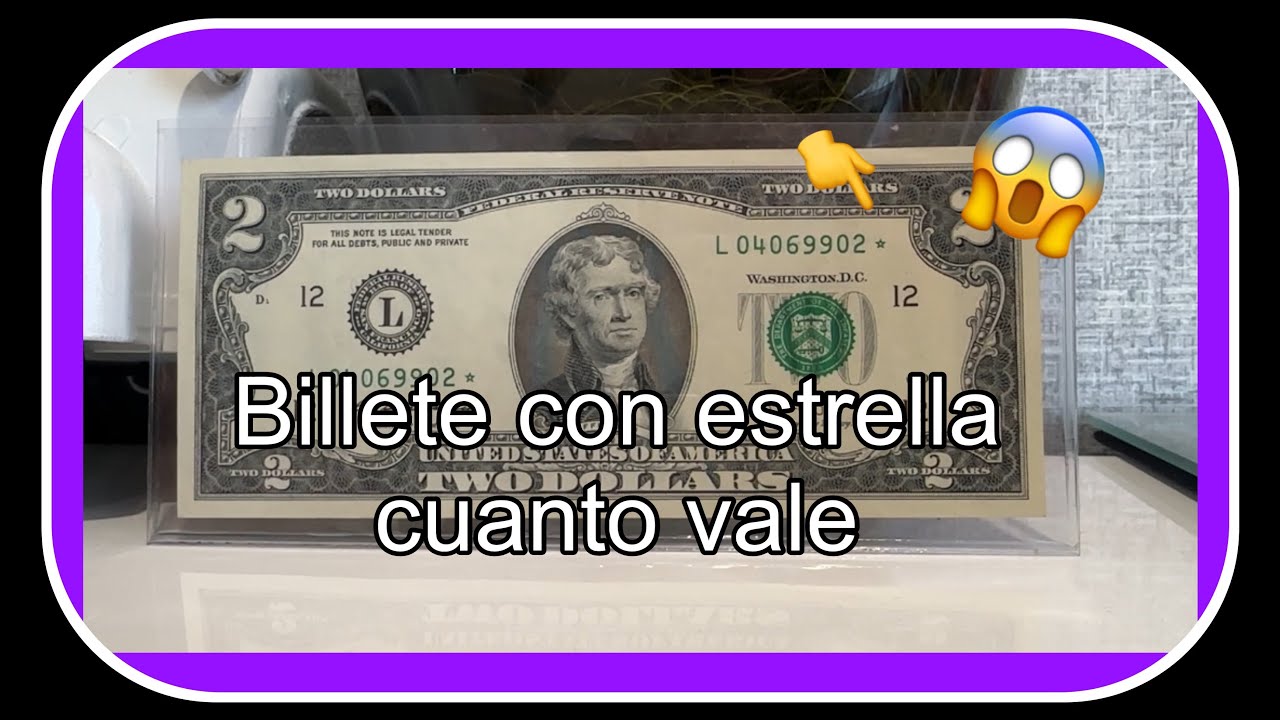
Como Saber Cuánto Vale Un Billete Con Estrella

Have you ever looked closely at your money? Really closely? You might have noticed a tiny star hiding on some of your dollar bills. Finding a star note can feel like discovering a little treasure! But what makes these bills special, and more importantly, how do you know if yours is worth more than just its face value? That's what we're going to explore – and trust me, it's a fun little rabbit hole to dive into.
So, why bother learning about star notes? Well, for beginners, it's simply a cool way to appreciate the details of everyday objects. It's like learning a secret code printed right on your money! For families, it can be a fun and educational activity to do with kids, teaching them about money and history. And for hobbyists, star notes can become a fascinating area of collecting, with the potential to uncover rare and valuable finds.
Essentially, a star note is a replacement bill printed when a printing error occurs. Instead of throwing away a whole sheet of bills, the Bureau of Engraving and Printing uses star notes to maintain the serial number sequence. That little star replaces one of the letters or numbers in the serial number. The real value comes from rarity. If fewer star notes were printed for a particular series, they become more desirable to collectors.
Must Read
Here are a few examples of what to look for: A 1957 $1 Silver Certificate star note can be worth significantly more than a 2017 $1 Federal Reserve Note star note simply because fewer of the 1957 ones were made. Also, notes with low serial numbers (like under 100) or those with fancy serial numbers (like repeating numbers or sequential patterns) can command a premium. Another variation to watch out for is the condition of the bill. Uncirculated notes are always worth more than those that are heavily used and worn.

Ready to get started? Here are some simple tips:
- Check your cash! The most obvious tip, but it's surprising how many people don't even notice the star. Look for the star symbol (*) next to the serial number.
- Note the year and series. This is crucial. The year is usually printed near the portrait on the bill. The series is a letter and number combination, also near the portrait.
- Consult online resources. There are many websites and forums dedicated to paper money collecting. These resources can help you determine the rarity and potential value of your star note. PMGnotes.com and eBay's sold listings are great places to start your research.
- Check the printing numbers. Websites like MyCurrencyCollection.com will allow you to input the series and find how many of those notes were printed, giving you an idea on rarity.
- Consider the condition. The better the condition, the higher the value. Handle your star notes carefully and consider storing them in protective sleeves.
While you might not find a fortune in your wallet, hunting for star notes can be a fun and engaging hobby. It's a way to connect with history, learn about the intricacies of money production, and maybe even discover a hidden gem. So, the next time you handle cash, take a closer look. You never know – you might just find a little piece of monetary magic! Happy hunting!