
Capital In Excess Of Par Value
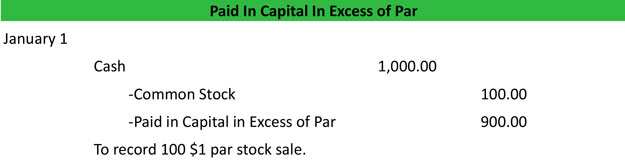
Imagine you're selling lemonade at a stand. Your sign says "Lemonade: $1!" That's your par value, the official price.
But what if people are lining up down the block, desperate for your tart and tangy refreshment? You could easily charge $3, maybe even $5! Suddenly, you're raking in the dough.
That extra cash, the money you made beyond that original $1 price tag? That, my friends, is kind of like capital in excess of par value. It's a fancy term for "extra money we got when we sold something."
Must Read
Stocks and Lemonade Stands: A Surprisingly Similar Story
Companies do this all the time when they sell shares of their stock. Let's say "AwesomeCorp" decides to sell shares for an official price (the par value) of, say, $0.01 each. A penny!
Sounds cheap, right? But everyone knows AwesomeCorp is the next big thing. Investors are clamoring to buy.
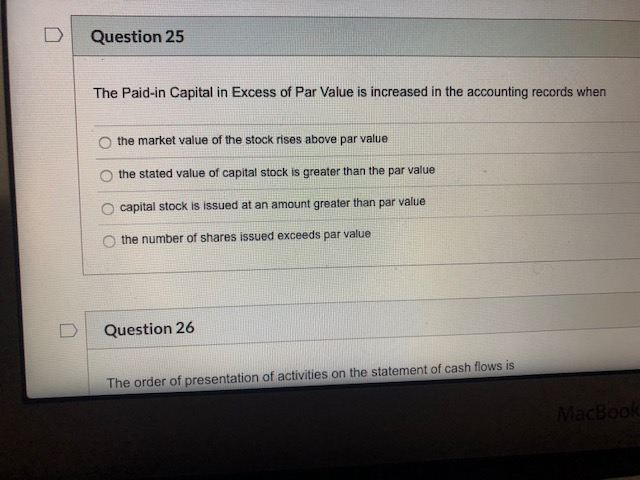
So AwesomeCorp sells those shares for $20 each. Whoa! That's a big difference. The $0.01 goes into one account, and the extra $19.99? That goes into our friend, capital in excess of par value.
Why Does This Even Exist? The Penny Stock Mystery
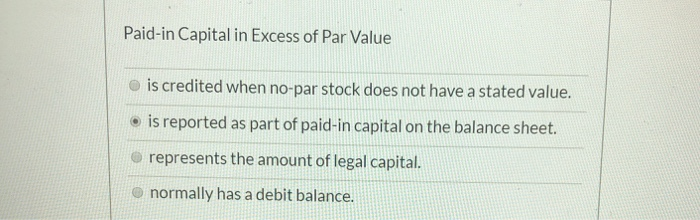
You might be wondering, "Why have a par value at all if it's so low?" Good question! Back in the day, it was meant to be a minimum amount investors paid. The par value represented the minimum amount the company had to keep in reserve.
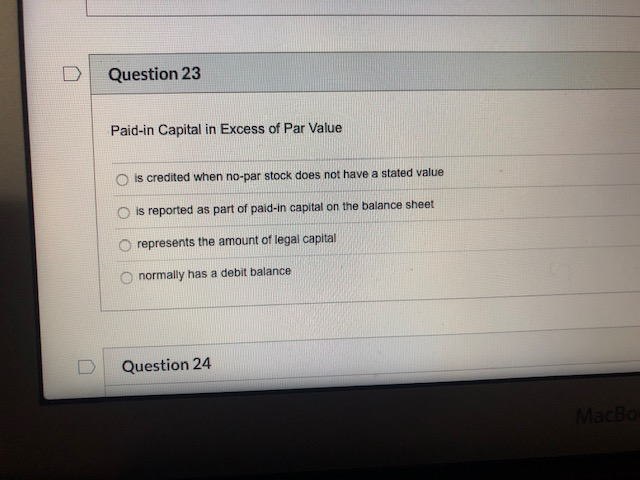
These days, it's mostly a formality. Many companies set the par value super low or even have "no-par" stock. It's a holdover from older regulations.
Think of it like this: imagine your grandma's antique car. It has a hand crank, even though it also has an electric starter. The hand crank is still there, even if nobody uses it.
Where Does All This Extra Money Go? (And Can I Have Some?)
So, AwesomeCorp is swimming in extra cash. What does it do with it? Well, that's up to the company. It could reinvest in the business, buying new equipment or hiring more employees.
Maybe they'll develop that self-stirring coffee mug they've been dreaming about! Or, they could pay dividends to their shareholders.
A dividend is like a little thank-you gift for investing. It's a share of the profits. Think of it as AwesomeCorp sending you a postcard saying, "Thanks for believing in us! Here's a little something for your troubles."
The Real-World Impact: More Than Just Numbers
Capital in excess of par value isn't just some boring accounting term. It represents investor confidence. It shows that people believe in the company's potential.
Imagine a small startup with a brilliant idea, say, biodegradable glitter (finally!). If investors are willing to pay way more than the par value for their stock, that says a lot. It means they see something special.
That money can fuel the startup's growth, allowing them to create jobs, develop new products, and maybe even save the planet, one biodegradable sparkle at a time.
Humorous Side Note: The Dangers of Overvaluation
Of course, sometimes investors get a little too enthusiastic. They might bid up the price of a stock to crazy levels, far beyond what it's really worth. This is what's commonly referred to as a "bubble."
It's like everyone suddenly deciding your lemonade is made of liquid gold and paying $100 a cup! It sounds amazing, but it's not sustainable. Eventually, reality hits, and the price crashes down.
Remember Tulip Mania? Back in the 1600s, people went nuts over tulip bulbs, driving the prices sky-high. Then, the bubble burst, leaving many people bankrupt. Lesson: Don't let hype cloud your judgment!
Beyond the Balance Sheet: A Story of Hope
At its core, capital in excess of par value tells a story. It's a story of entrepreneurship, innovation, and the power of belief. It's about people taking a chance on an idea and investors willing to support them.
It's not just about numbers; it's about dreams. It's about that lemonade stand owner who wants to open a whole chain of stands, or that biodegradable glitter company that wants to save the world.
So, the next time you see that phrase in a financial report, remember it's more than just accounting jargon. It's a sign that something exciting might be happening.
Final Thought: Invest Wisely (and Maybe Buy Some Lemonade)
Understanding capital in excess of par value won't necessarily make you a stock market guru overnight. But it will give you a little more insight into the world of finance.
It reminds us that behind every number, there's a company, a team, and a vision. And sometimes, those visions are worth a whole lot more than a penny.
So, do your research, invest wisely, and maybe treat yourself to a glass of lemonade. You never know; it might be the start of the next big thing!