
Can You Use Salt To Put Out A Grease Fire

Okay, so picture this: you're whipping up some crispy bacon, maybe some delightful fried chicken, and then BAM! A rogue flame, a little flare-up, and suddenly your pan is doing its best impression of a miniature volcano. Panic starts to set in, right?
Your mind races. What do you grab? Your first instinct might be to reach for... the salt shaker? I mean, it's right there! We use salt for everything else in the kitchen, from seasoning our food to warding off evil spirits (maybe not that last one, but you get the idea). So, can it really be your trusty sidekick in a grease fire emergency?
Let's have a little heart-to-heart, shall we? Because the internet, bless its heart, has a lot of opinions. And some of them are, well, a little salty themselves when it comes to grease fires.
Must Read
The Great Salt Debate: Is it a Hero or a Zero?
So, you’ve got a grease fire. It’s hot. It’s scary. And it’s definitely not what you signed up for when you decided to make dinner. The idea of using salt probably stems from the fact that it's a solid, it's granular, and maybe, just maybe, it looks like it could smother the flames.
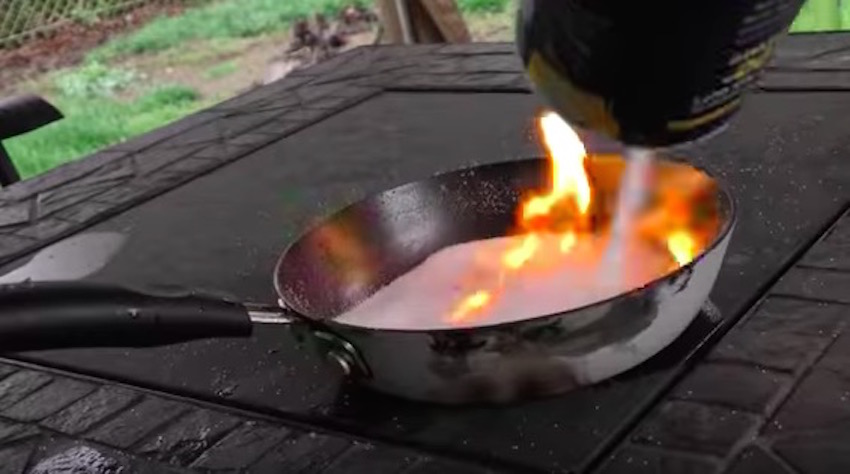
You sprinkle it on, hoping for that magical, Hollywood-esque "poof" where the fire just vanishes. Spoiler alert: life isn't a movie, especially when it comes to kitchen fires.
The truth is, for a tiny, tiny grease fire – we're talking a flicker, not a blaze – a very large amount of salt might help a tiny bit. But here's the kicker: it's not because salt is some kind of fire-extinguishing wizardry. It's simply because you're dumping a solid substance onto the flame, which can slightly reduce the oxygen. But emphasis on slightly and a very large amount.
And let's be real, who's got time to measure out a cup of salt when their kitchen is potentially turning into an inferno?

Why Salt is Probably Not Your Best Bet
Think about what a grease fire needs to keep going: fuel (the oil) and oxygen. To put it out, you need to remove one or both. Now, salt?
First, it's not a great smothering agent. It's crystalline, meaning it has gaps. Oxygen can still get through. It’s not like baking soda (which we'll get to) that can release carbon dioxide to truly suffocate the flame.
Second, and this is a big one: if you're throwing a small amount of salt onto a decent-sized grease fire, you're mostly just adding hot salt to hot oil. Which, let's be honest, sounds like a recipe for a bigger mess, and potentially, more danger. It could even cause the hot grease to splatter. And believe me, hot grease splattering is not a fun game. Not even a little bit.
So, while the idea of grabbing the salt shaker feels intuitive, it’s really more of a "grasping at straws" kind of move than an actual fire safety strategy.
What Does Work? Your Real Kitchen Fire Superheroes!
Alright, enough with the salt shaming (mostly). Let's talk about the real MVPs of grease fire fighting. These are the things you actually want to reach for:
1. The Lid! (Your #1 Go-To)
Seriously, this is your first and best defense. If your pan catches fire, gently slide a metal lid over the pan. This cuts off the oxygen supply instantly. No oxygen, no fire. It's simple, effective, and usually right there.
2. Baking Soda (Not Baking Powder!)

For smaller fires, baking soda is fantastic. It's a chemical compound that, when heated, releases carbon dioxide. This CO2 smothers the flames. But remember, we're talking about a significant amount – not just a sprinkle. Keep a box of baking soda near your stove, just in case.
3. A Class K Fire Extinguisher
These are specifically designed for kitchen fires (Class K). If you do a lot of deep frying or have a commercial kitchen setup, investing in one of these is super smart. Know how to use it, though! Read those instructions before the emergency.
4. Turn Off the Heat!

This sounds obvious, but in a panic, it can be forgotten. Turn off the burner! Remove the fuel source if you can safely do so (like sliding the pan off the hot burner, but only if you can do it without splashing or burning yourself!).
What to NEVER, EVER Do (Seriously, Don't Even Think About It)
This is the big one: never, ever, ever use water on a grease fire.
Why? Because water and oil don't mix, and water is heavier than oil. If you throw water on a grease fire, the water sinks to the bottom, instantly turns to steam, and super-heated steam expands rapidly, carrying flaming oil with it. This creates a terrifying, fiery explosion that can spread the fire everywhere. It's called a "flash fire," and it's incredibly dangerous. So, put down that glass of water!
Wrapping It Up: Stay Safe, My Friend!
So, there you have it. While a sprinkle of salt might seem like a good idea in a moment of panic, it's mostly a culinary seasoning, not a fire suppressant. Keep your salt for your fries, and keep your kitchen safe with a lid, some baking soda, or a proper fire extinguisher.
The next time your pan threatens to go up in flames, you'll know exactly what to do. And hey, if it ever gets out of hand, remember this golden rule: get out, stay out, and call 911. Your safety is always, always, always the top priority. Happy cooking!