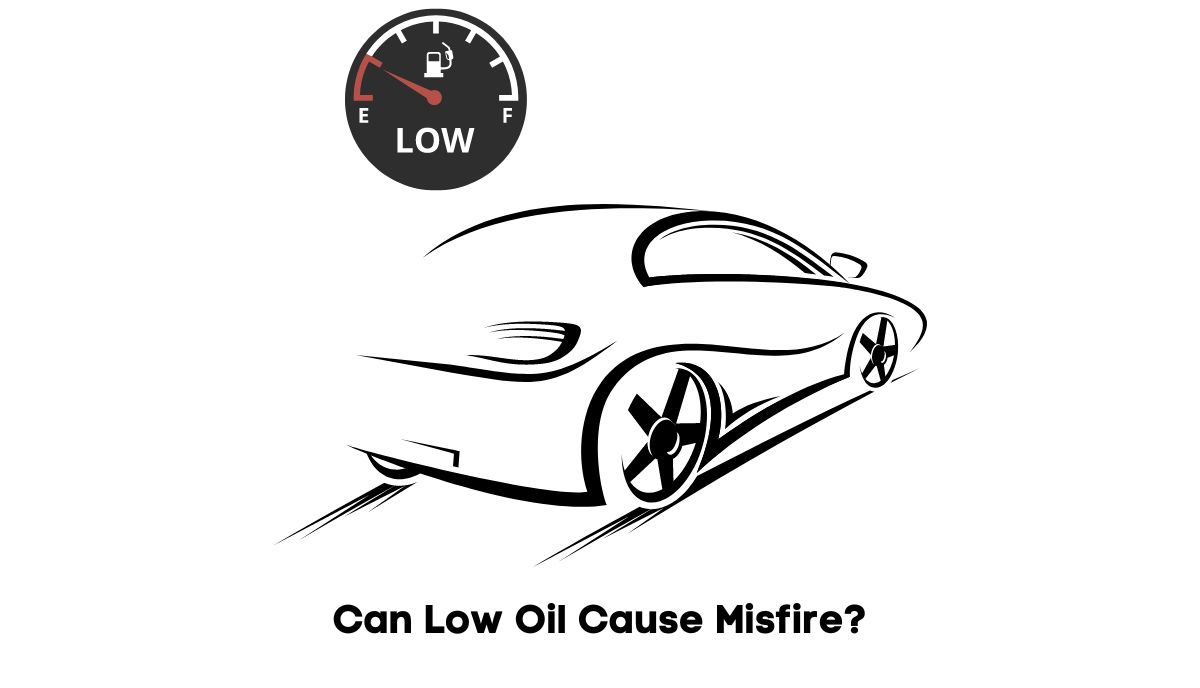
Can Low Oil Pressure Cause Misfire

Okay, picture this: you're trying to bake a cake. You've got your recipe, you've got your ingredients, but your oven's on the fritz. It's heating unevenly, sometimes it sputters out completely... that's kind of what low oil pressure can do to your car's engine. It can cause things to go wonky, and one of those wonky things? Misfires.
Now, a misfire isn't quite as dramatic as your cake collapsing (though that is a tragedy!), but it's definitely something you want to avoid. Think of each cylinder in your engine needing a perfectly timed explosion to push the piston and keep things humming along. A misfire happens when that explosion doesn't happen correctly, or doesn't happen at all.
Why Should I Care About Misfires?
Because misfires are the engine equivalent of a grumpy morning person! They make your car run rough, kind of like it's constantly clearing its throat. You might notice:
Must Read
- A shaky engine: It might feel like your car is vibrating more than usual, especially at idle.
- Poor acceleration: That "oomph" you usually feel when you hit the gas might be missing.
- Reduced fuel economy: Your gas tank empties faster than a teenager's snack stash.
- A flashing check engine light: This is your car waving a big red flag and shouting, "Something's wrong!" Don't ignore it!
Ignoring misfires is like ignoring a leaky faucet. It might seem minor at first, but it can lead to bigger, more expensive problems down the road. Imagine letting that leaky faucet go until the whole bathroom is flooded! Yeah, not fun.
So, How Does Low Oil Pressure Cause All This Mayhem?
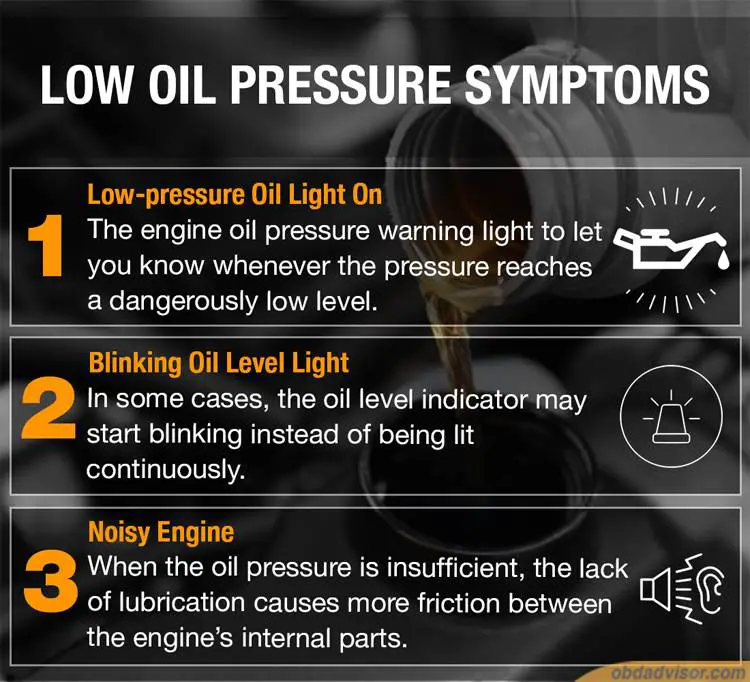
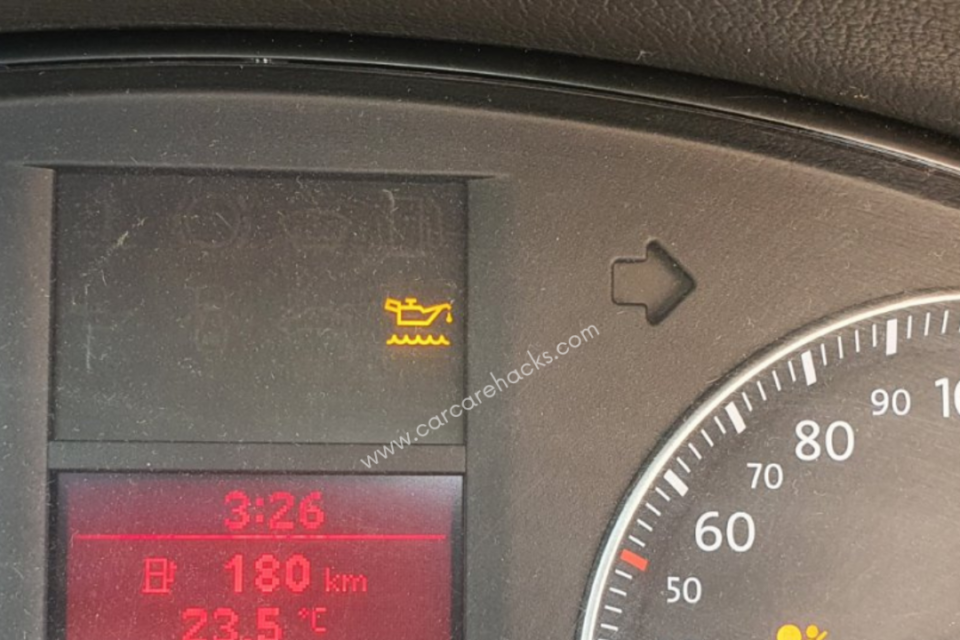
Here's where things get a little technical, but we'll keep it simple. Oil is like the lifeblood of your engine. It lubricates all the moving parts, preventing them from grinding against each other and causing friction (and ultimately, damage). Low oil pressure means those vital parts aren't getting enough lubrication.
Think of it like this: trying to ride your bike with a flat tire. You can do it, but it's hard work, it's uncomfortable, and you're probably going to damage the tire (and maybe the bike) in the process.
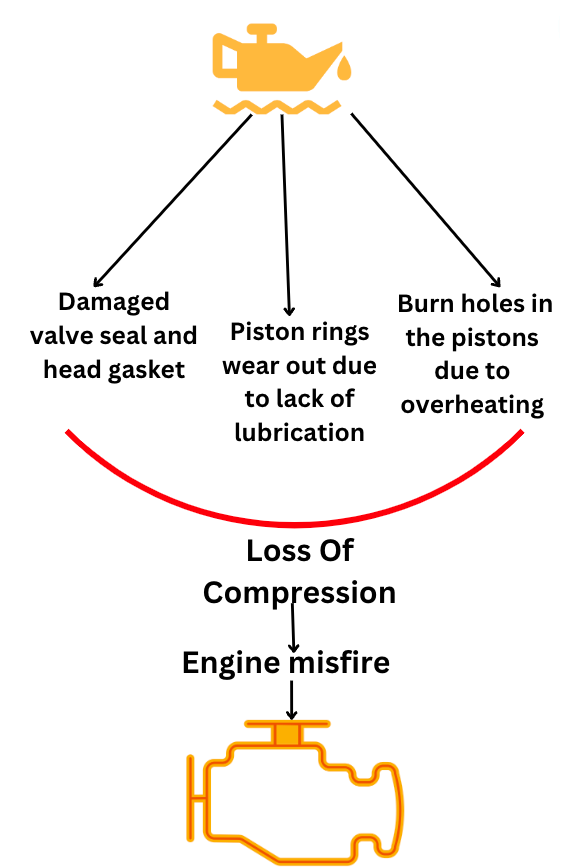
Specifically, low oil pressure can affect parts crucial for proper combustion:
- Valve train: The valves control the intake of air and fuel and the exhaust of gases. Proper lubrication is essential for their precise timing. Low oil pressure can lead to valve train wear and imprecise valve timing, leading to misfires.
- Hydraulic lifters: These little guys help keep the valves operating smoothly and quietly. They rely on oil pressure to function correctly. Low oil pressure can cause them to collapse or perform erratically, impacting valve operation and causing misfires.
Basically, if these components aren't getting the oil they need, they can't do their jobs properly, leading to that dreaded misfire.
What to Do if You Suspect Low Oil Pressure
First things first: don't panic! But don't ignore it either. Here's a quick checklist:
- Check your oil level: This is the simplest thing to do. If your oil is low, top it off.
- Monitor your oil pressure gauge (if your car has one): Keep an eye on the readings. If it's consistently low, that's a red flag.
- Listen for unusual engine noises: Ticking, knocking, or rattling sounds can indicate engine problems, possibly related to low oil pressure.
- Get a professional diagnosis: If you suspect low oil pressure or your check engine light is on, take your car to a trusted mechanic. They can properly diagnose the problem and recommend the appropriate repairs.
Remember, catching low oil pressure early can save you a lot of heartache (and money!) in the long run. Think of it as taking care of your favorite houseplant. A little water and sunshine goes a long way, just like regular oil changes and proper maintenance for your car.
So, keep an eye on your oil, listen to your car, and don't be afraid to ask for help when you need it. A happy, well-lubricated engine is a happy, smoothly running car!
And that, my friends, is something we can all appreciate. Drive safe!