
California Welfare And Institutions Code 300
Ever heard of California Welfare and Institutions Code 300? Sounds super exciting, right? Okay, maybe not at first glance. But trust me, there's some seriously heartwarming (and occasionally head-scratching) stuff hidden within those legal lines.
The "Help! My Parents Are..." Clause
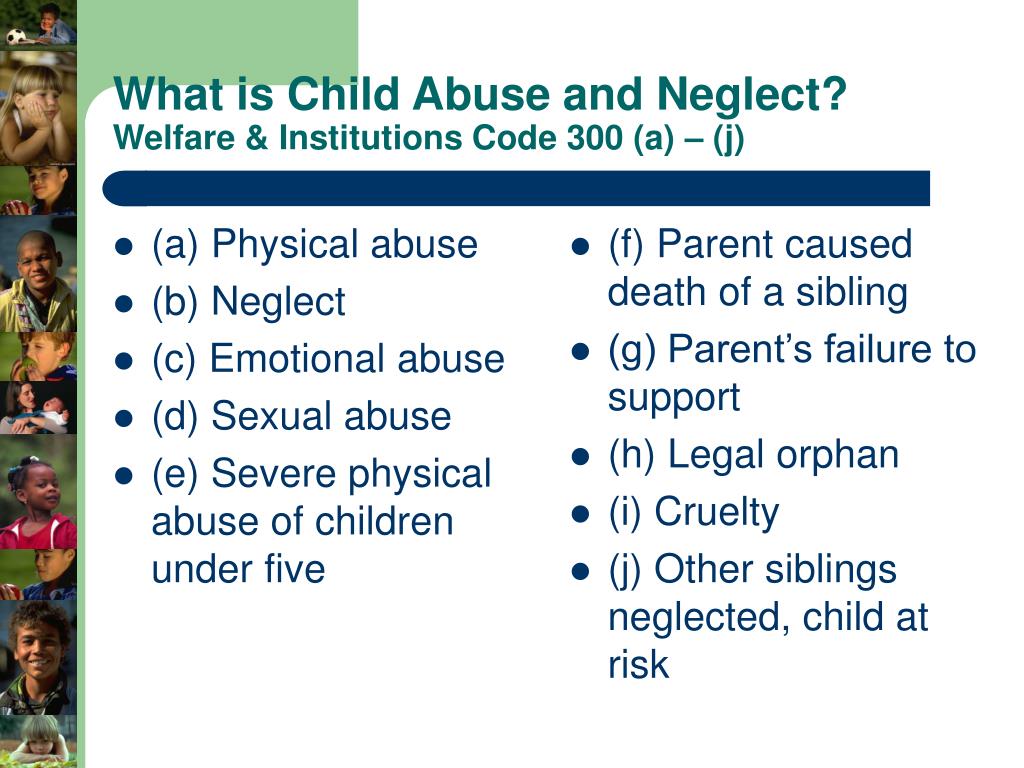
Basically, WIC 300 is all about protecting kids. It's the state's way of saying, "Hey, if a child isn't getting the care they need, we need to step in." Think of it as a safety net, woven with legal thread.
But what does "not getting the care they need" really mean? It's not just about being spoiled or not getting the latest video game. We're talking serious stuff: abuse, neglect, abandonment – the kind of situations that would make your stomach churn.
Must Read
Here's where things get a little… colorful. The code outlines specific reasons why a kid might need protection. And some of them are surprisingly specific. It's like reading a list of bizarre parenting fails.
Neglect: More Than Just a Messy Room
Imagine this: Little Timmy's parents are totally obsessed with their pet hamster, Hammy. Hammy gets a mansion-sized cage, gourmet sunflower seeds flown in from Belgium, and regular spa treatments. Timmy? He's lucky if he gets a shower once a week.
Okay, that's a bit extreme. But WIC 300 covers situations where a child's basic needs aren't being met. That includes food, shelter, clothing, and – you guessed it – medical care. Think about it: neglecting medical needs can have serious consequences.
And it’s not just physical needs. Emotional well-being counts too. Imagine a child living in a home filled with constant screaming and fighting. That kind of environment can be incredibly damaging, and WIC 300 recognizes that.
Abuse: It's Not Always Physical
While physical abuse is a big part of WIC 300, it's not the whole picture. Emotional abuse is another serious concern. Imagine a parent constantly belittling their child, telling them they're worthless or stupid.

That kind of treatment can leave deep scars, even if there aren't any visible bruises. WIC 300 acknowledges that words can hurt just as much as fists. It protects children from situations where their emotional well-being is being systematically undermined.
Then there's sexual abuse. This is, of course, incredibly serious and has devastating consequences for the child. WIC 300 provides a framework for protecting children and holding perpetrators accountable. It offers some recourse for the voiceless.
Abandonment: Where Did Mommy and Daddy Go?
Imagine a kid waking up one morning to find their parents gone, leaving only a note that reads, "Gone to Vegas. Be back maybe. There's cereal in the pantry." Yikes. That is abandonment, and it is illegal.
Abandonment can take many forms. It could be a parent who simply disappears without a trace, or a parent who leaves their child in the care of someone who is unable or unwilling to provide proper care. WIC 300 aims to ensure no kid faces this fear alone.
It’s a tough situation, highlighting the worst parental mistakes imaginable.
The "Beyond Bad Parenting" Threshold
Now, here's a crucial point: WIC 300 isn't about judging parents for minor mistakes. We all make them. It's about situations where the child's safety and well-being are seriously at risk. It is about crossing the threshold of negligence and abuse.

It is not the role of the state to micromanage parenting. It is there to protect children from substantial harm. Think of it as a last resort, a safety net for kids who have nowhere else to turn.
The system acknowledges that kids are not miniature adults, and require a nurturing environment to flourish.
The Role of the Professionals
When concerns arise, social workers and other professionals step in. They investigate the situation, gather evidence, and make recommendations to the court. Their job is to determine what's in the best interest of the child.
This process can be incredibly complex and emotionally charged. There are often conflicting perspectives and difficult decisions to be made. WIC 300 provides the legal framework for navigating these situations, ensuring that the child's voice is heard. The goal is always to protect the child first and foremost.
These trained professionals act as advocates, carefully considering all aspects of the child's life.

The "Best Interest of the Child" Standard
Ultimately, all decisions made under WIC 300 must be guided by the "best interest of the child" standard. This means that the court must consider what is most likely to promote the child's health, safety, and well-being.
This can involve a range of options, from providing support services to the family to removing the child from the home and placing them in foster care. The goal is always to find the solution that will provide the child with the most stable and nurturing environment.
It’s about ensuring that every child has the chance to thrive, regardless of their circumstances.
It's Not Always a Fairy Tale Ending
Now, let's be realistic. The child welfare system isn't perfect. It is complex and imperfect. Resources can be stretched thin, and mistakes can be made.
But the intent behind WIC 300 is noble. It's a recognition that every child deserves a safe and loving home, and that society has a responsibility to protect those who cannot protect themselves. It is a safety net against the cruelties of the world.
While the journey can be challenging, the ultimate goal is to create a brighter future for vulnerable children. That in itself is a cause worth fighting for.
Surprising Tidbits
Did you know that mandatory reporters like teachers and doctors are legally obligated to report suspected child abuse or neglect? WIC 300 actually mandates it. It's a law designed to cast the widest net of protection for kids. Imagine the pressure that puts on these professionals!
And here's another surprise: Sometimes, WIC 300 cases involve truly bizarre situations, like parents who insist on feeding their children only kale smoothies or parents who believe their child is an alien from another planet. Reality can be stranger than fiction, and those cases exist.
The line between eccentric parenting and neglect can be blurred. It's up to the courts to draw the line fairly. The cases highlight the intricacies of human relationships.
More Than Just Legal Jargon
So, the next time you hear someone mention California Welfare and Institutions Code 300, don't just glaze over. Remember that behind those legal words are real children, facing real challenges. It's a code that seeks to protect the voiceless.
It's a reminder that we all have a role to play in ensuring the safety and well-being of children. And that even in the darkest of situations, there is always hope for a brighter future.
Because every child deserves a chance to laugh, to learn, and to simply be a kid. A future free from fear and neglect should be afforded to every child.