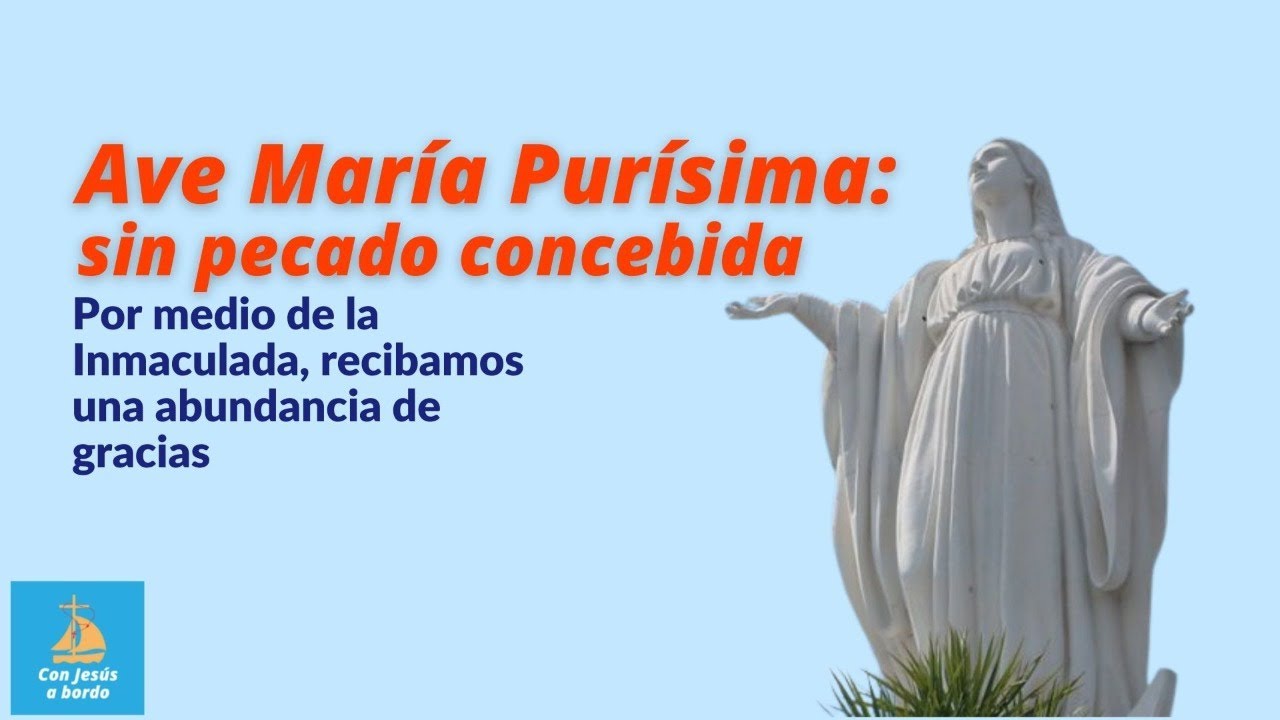
Ave Maria Purisima Sin Pecado Concebida In English
Ever stumbled upon a phrase in another language and felt a twinge of curiosity? Today, let's unlock the mystery behind a beautiful and resonant phrase: "Ave Maria Purisima, Sin Pecado Concebida." It's Spanish, it's evocative, and exploring its meaning offers a fascinating glimpse into faith, language, and history. Why should you care? Well, besides being a great conversation starter, understanding this phrase allows you to appreciate a core tenet of Catholic belief and recognize its echoes in art, literature, and culture.
So, what does it mean? "Ave Maria Purisima, Sin Pecado Concebida" translates to "Hail Mary, most pure, conceived without sin." It's a declaration affirming the Immaculate Conception of Mary, the mother of Jesus. This doctrine, significant in the Catholic faith, asserts that Mary was conceived without original sin. The purpose of this belief is to highlight Mary's unique role in salvation history, portraying her as a vessel perfectly prepared to bear the Son of God.
The benefits of understanding this phrase extend beyond religious context. It enhances your cultural literacy. Imagine visiting a cathedral in Spain or Latin America and recognizing this inscription on a statue or painting. Suddenly, the artwork becomes more meaningful, the cultural context richer. You gain a deeper appreciation for the artistic and historical narrative being conveyed. Understanding religious concepts, even if you don't share the belief, is essential for comprehending art, literature, and historical events shaped by faith.
Must Read
How might you encounter this phrase in education or daily life? Think about religious education classes, art history courses focusing on Renaissance or Baroque periods, or even literature exploring themes of faith and redemption. You might see it referenced in films or books depicting Catholic culture. Knowing its meaning provides valuable context and a deeper understanding of the narrative. It's also frequently used as a response during prayers, solidifying its place in daily religious practice for many.

Want to explore further? Here are a few practical tips:
- Listen to the Hail Mary prayer in Latin. Many versions are available online. Pay attention to how the phrase "Ave Maria Purisima" is pronounced and incorporated into the prayer.
- Research famous works of art depicting the Immaculate Conception. Examine how artists have visually interpreted this theological concept.
- Read about the history of the Immaculate Conception doctrine. Understanding its historical development will provide greater context for the phrase's significance.
- Simply use it! Trying to pronounce the phrase, even if imperfectly, is a great way to familiarize yourself with it.
Ultimately, exploring "Ave Maria Purisima, Sin Pecado Concebida" is more than just learning a phrase. It's about opening a window into a world of faith, art, history, and culture. It’s about broadening your understanding and appreciating the diverse tapestry of human belief and expression. So, take a moment to reflect on the beauty and significance of this phrase, and let it spark your curiosity to explore further.