At What Voltage Is A 9v Battery Dead

You know the feeling, right? That little chirp from the smoke detector at 3 AM. Or your trusty TV remote suddenly playing hard to get. Your mind instantly goes to the usual suspect: the battery. Specifically, if you're like me, you grab a 9V, pop it in, and hope for the best. But then you start to wonder, when exactly is that 9V battery truly, utterly, irrevocably dead? Is it zero volts? Can it be a little bit dead? It’s a classic battery mystery, my friend!
The Elusive "9V" – What Does It Even Mean?
First off, let's clear something up. When you buy a fresh 9V battery, it's not always precisely 9.0V right out of the wrapper. Nope! A brand-spanking-new alkaline 9V battery often starts closer to 9.5V or even 9.6V. Think of it like a new car with a full tank of gas – it’s got a little extra juice to start its journey. That "9V" is more like its nominal, or stated, voltage. It's the happy place it aims for, fresh and ready to rock.
But, much like our own energy levels throughout the day, batteries don't stay at peak performance forever. The moment you connect it to a device – even a tiny clock – it starts its slow, steady decline. No drama, just physics doing its thing.
Must Read
"Dead" Is Relative, My Friend
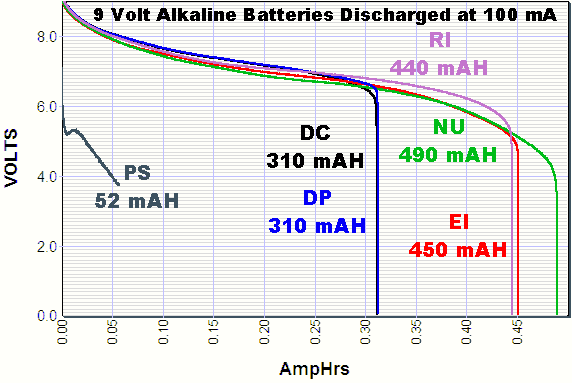
Here’s where it gets interesting, and frankly, a bit annoying. "Dead" for a battery isn't a single, sharp cliff edge. It’s more like a long, gentle slope into oblivion. What one device considers kaput, another might still limp along with, like a stubborn old mule.
Imagine you've got a device that needs a decent amount of oomph – maybe a power-hungry little toy or an active guitar pickup. That device might start complaining, acting buggy, or just outright refusing to work when the battery drops to, say, 7.5V or 7.0V. It's screaming, "I'm weak! I need sustenance!"

But then you take that very same "dead" battery, pop it into a low-power gadget, like a smoke detector (oh, the irony!), and it might hum along for a bit longer. Until... BEEP! BEEP! BEEP! That's its polite way of telling you, "Hey, I'm down to about 6.5V to 6.0V and I'm not feeling so hot."
The Nitty-Gritty Numbers (Still Casual, Promise!)
So, what are we really looking at? For most common 9V alkaline batteries:
- Fresh & Full of Pep: Around 9.5V to 9.0V.
- Starting to Feel It: If it's reading around 8.0V to 7.5V, it's probably getting a bit long in the tooth. Many devices will still work, but maybe not optimally. You might notice dimming lights or slower performance.
- The Warning Signs: This is often around 7.0V to 6.5V. This is the sweet spot for a smoke detector's "low battery" chirp. Your remote might be sluggish, needing multiple button presses. It's officially in its twilight years.
- Truly Done for Most: Once it dips below 6.0V, you can pretty much consider it toast for anything that needs actual power. Some extremely low-draw circuits might still flicker, but you're pushing your luck. Don't rely on it.
- Absolutely Deceased: If you're seeing anything below 5.0V, it's not just dead, it's pining for the fjords. Time for the recycling bin, seriously.
Here's a crucial point: that voltage reading often happens without a load. You measure it with a multimeter, and it looks okay. But then you plug it into a device, and BAM! The voltage drops like a stone. That's because the battery's internal resistance increases as it ages, making it less able to deliver current effectively. It's like trying to run a marathon on a sprained ankle – you can stand, but you can't perform.

When to Say Goodbye (or Recharge!)
So, should you whip out a multimeter every time your smoke detector complains? Probably not, unless you're really into that sort of thing (no judgment here!). The simplest answer is: if your device is acting wonky, sluggish, or just flat-out refusing to work, and you suspect the battery, it's probably time for a new one.
For the practical among us, if a 9V battery reads below 7V, especially under a slight load, it's usually time to bid adieu. Don't hold onto it thinking you'll find a magical low-power device for it someday. Those "almost dead" batteries just clutter up your junk drawer!

And hey, if you're using rechargeable 9V batteries (which are awesome!), the principles are similar, though their discharge curves are a bit different. Just keep an eye on them, and recharge when they start to dip, usually around the 7V-7.5V mark for optimal cycle life.
Ultimately, there's no single "aha!" moment where a 9V battery officially kicks the bucket at a precise voltage for every situation. It’s a slow fade, a gradual decline, and the threshold of "dead" really depends on what you're trying to power. But now, you're armed with the knowledge to make an educated guess. Go forth, conquer those chirping smoke detectors, and may your remotes always have ample juice!
BEEP! BEEP! BEEP! That's its polite way of telling you, "Hey, I'm down to about 6.5V to 6.0V and I'm not feeling so hot."