42 500 A Year Is How Much An Hour

Ever wondered how much you really make per hour? We often focus on our annual salary – that impressive number that sounds great on paper. But breaking it down to an hourly rate can be a real eye-opener, helping you understand the value of your time and make smarter financial decisions. Let's face it, thinking about money doesn't always have to be boring! So, let's dive into figuring out what a $42,500 annual salary translates to per hour.
Why bother calculating your hourly rate? It's more than just satisfying curiosity. Knowing your hourly rate empowers you. It allows you to:
- Better Understand Your Worth: Comparing your hourly rate to industry averages can give you valuable insight into whether you're being fairly compensated.
- Evaluate Side Hustles: Is that weekend gig worth your time? Comparing its hourly pay to your regular job helps you make an informed decision.
- Negotiate Effectively: Knowing your hourly rate gives you a stronger position when asking for a raise or considering a new job offer.
- Make Informed Financial Decisions: Are you considering hiring someone for a task? Knowing the cost of your own time helps you decide whether it's more cost-effective to outsource.
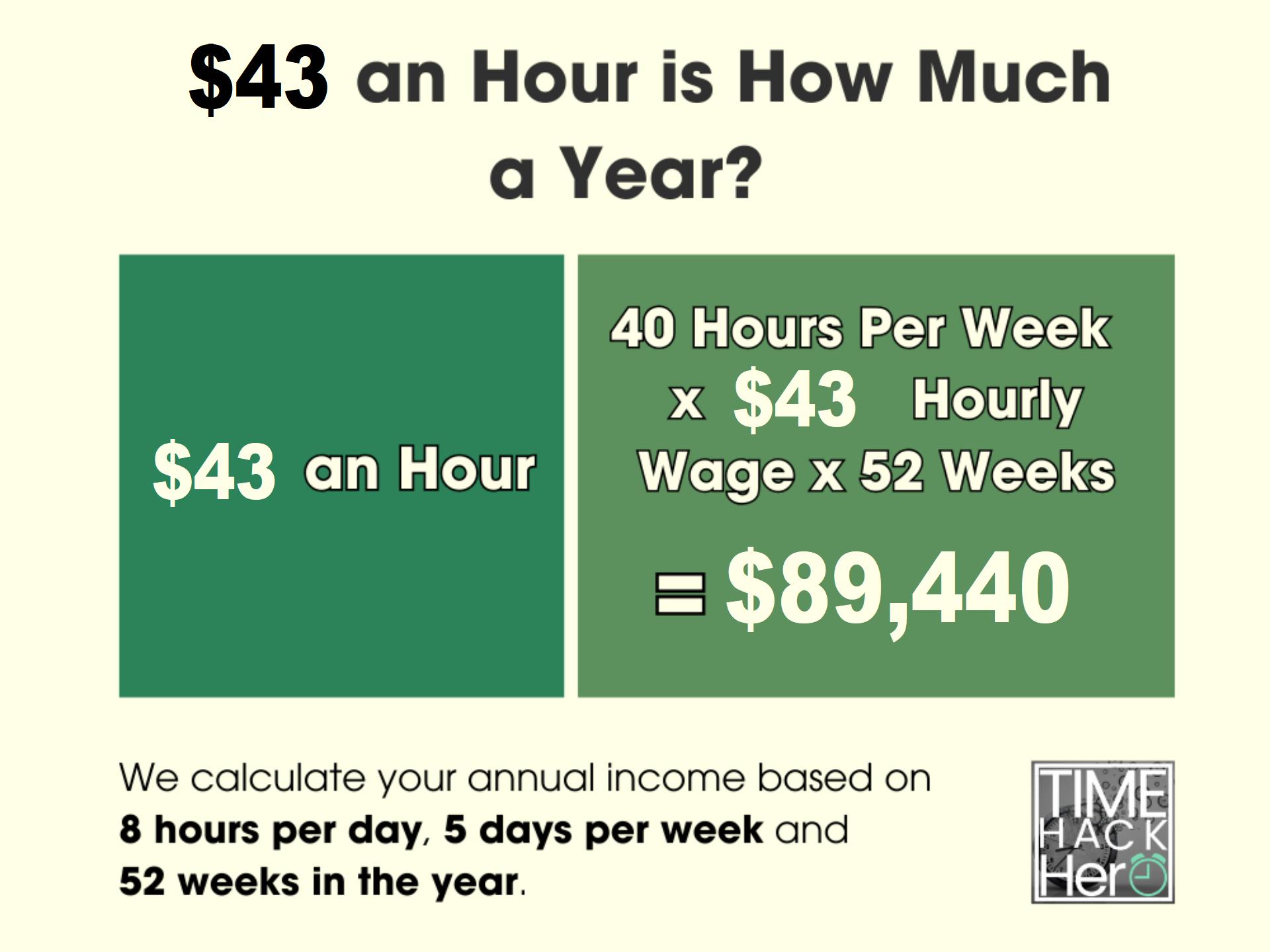
So, how do we get from $42,500 a year to an hourly figure? The magic lies in a little bit of math. We need to figure out how many hours you work in a year. The standard assumption for a full-time job is 40 hours a week. Given that there are 52 weeks in a year, we calculate: 40 hours/week * 52 weeks/year = 2080 hours/year.
Must Read
Now for the grand reveal! To calculate your hourly rate, we simply divide your annual salary by the total number of hours worked in a year:

$42,500 / 2080 hours = $20.43 per hour (approximately).
There you have it! If you earn $42,500 a year, you're making around $20.43 for every hour you work. Pretty cool, right?
Important Note: This calculation assumes a standard 40-hour workweek and doesn't account for factors like overtime, bonuses, or deductions for taxes and benefits. The real "take-home" hourly rate might be slightly lower after these considerations. However, this basic calculation provides a solid starting point for understanding the value of your time.
So, next time someone asks you what you earn, you can confidently reply with your annual salary and your hourly rate. Knowing both gives you a more complete picture of your financial standing and empowers you to make smarter decisions. Go forth and conquer, armed with your newfound knowledge of hourly earnings!