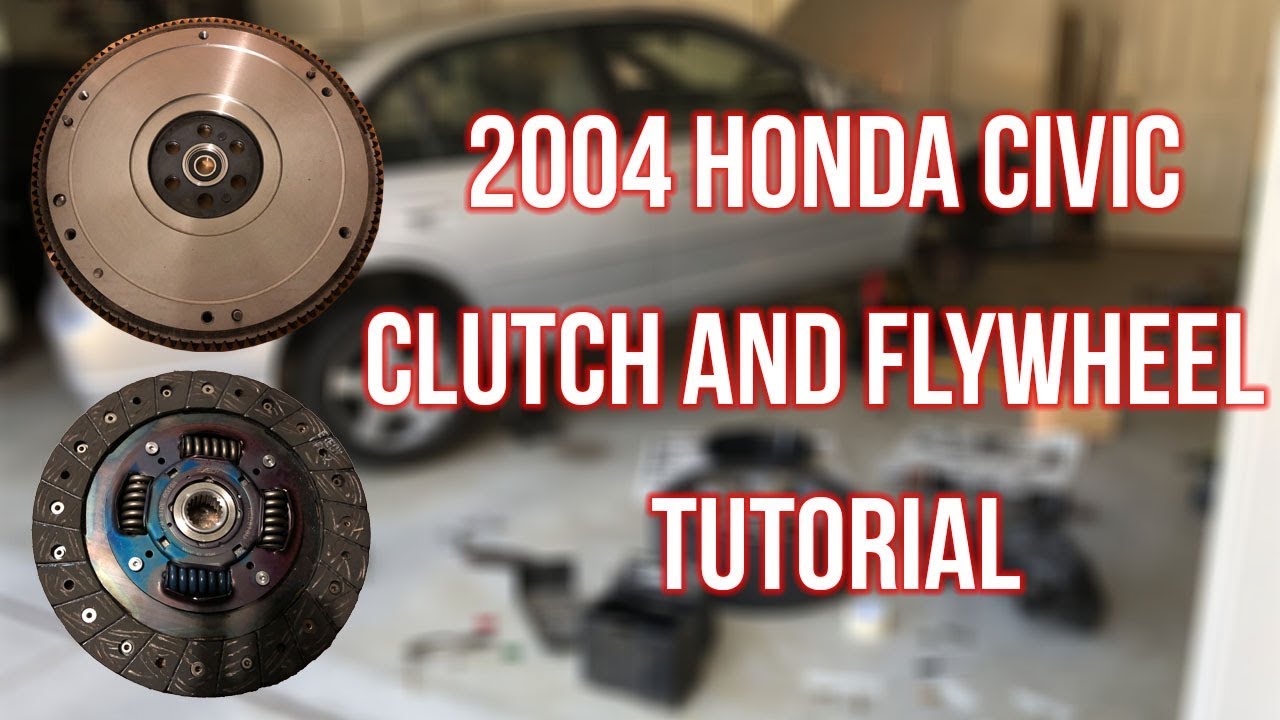
2003 Honda Civic Hybrid Clutch Replacement

Let's talk about something that might sound a bit intimidating at first: clutch replacement, specifically on a 2003 Honda Civic Hybrid. Now, before you click away thinking this is too technical, hear me out! Even if you're not a mechanic, understanding basic car maintenance – and this is pretty basic for older manual cars – is surprisingly empowering. It's like knowing a little bit of first aid; you might not perform surgery, but you could help in a pinch and appreciate the complexity beneath the surface. And besides, who knows? Maybe this will spark a new hobby!
So, what's a clutch anyway? Think of it as the gatekeeper between your engine and your wheels. Its purpose is to smoothly connect and disconnect the engine's power from the transmission. This allows you to shift gears without grinding everything to a halt. In a manual transmission car, you use the clutch pedal to control this connection. When you press the pedal, you're disengaging the engine, allowing you to change gears. Release the pedal, and the engine's power is reconnected, sending you on your way. The 2003 Honda Civic Hybrid, while hybrid, had a manual transmission option, meaning some models had a clutch that, just like in any other car, wears down over time.
The benefits of a functioning clutch are pretty straightforward: smooth gear changes, efficient power transfer, and ultimately, a working car! A worn clutch can lead to slipping (the engine revs but the car doesn't accelerate properly), difficulty shifting gears, or even a complete inability to move the car. Replacing a worn clutch restores the car's performance and prevents further damage to other parts of the drivetrain. For example, you might be driving up a steep hill. A slipping clutch will cause the engine to work much harder, wasting fuel and potentially overheating. A new clutch ensures a smooth, efficient climb.
Must Read
How does this knowledge apply to daily life? Well, understanding the clutch helps you appreciate the mechanics of driving a manual car. You become more attuned to the sounds and feel of the vehicle. You can diagnose potential problems earlier, saving you money on repairs down the line. In education, learning about the clutch is a great way to introduce concepts like friction, power transfer, and mechanical systems. It's a tangible example of physics in action! Think of it like this: it’s more exciting than just reading about force; you are understanding how force is controlled!
Want to explore this further? You don't need to tear apart a car right away! There are plenty of resources online. YouTube is a goldmine for "how-to" videos on clutch replacement. You can also find diagrams and explanations of the clutch system. If you know someone who owns a manual car, ask them to explain how the clutch works and maybe even let you try driving (in a safe and controlled environment, of course!). Even simply researching the different components of a clutch – the friction disc, pressure plate, and throw-out bearing – can be a fascinating deep dive into automotive engineering. Don’t be intimidated; start small and build your knowledge. The world of cars is surprisingly accessible, and understanding even a little bit can make you a more informed and confident driver.