
2 Dollar Bill With Red Seal
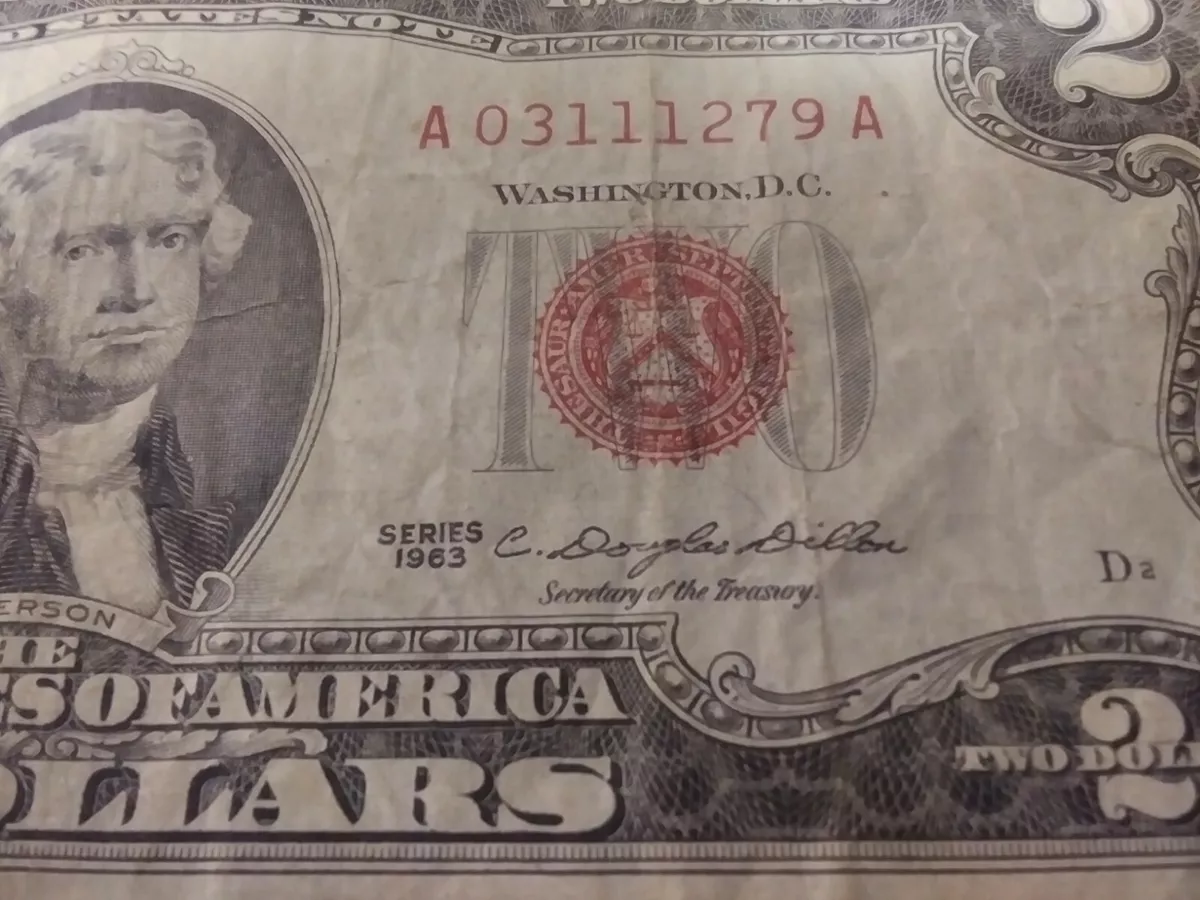
Hey there! Ever stumbled across a $2 bill and thought, "Whoa, is this thing even real?" I mean, let's be honest, they're kinda like the mythical creatures of currency, right? You hear about them, but rarely actually see one in the wild.
But have you ever seen one with a red seal? Now we're talking! That’s where things get even more interesting.
So, What's the Deal with the Red Seal?
Okay, so picture this: you've got your $2 bill, and instead of the usual green seal and serial numbers, BAM! It's red. What does it mean? Are you suddenly rich? Are you holding some super-rare, museum-worthy treasure? Well… maybe not that rich. But definitely a cool find! Seriously, holding one is like holding a little piece of history, isn’t it?
Must Read
Generally, a red seal on a $2 bill indicates that it's a United States Note. These were issued as legal tender directly by the Treasury. Think of them like old-school IOUs from Uncle Sam! They were a big deal back in the day, circulating primarily in the 19th century and the first half of the 20th.
Think about it: this little piece of paper might have been used to buy a horse, pay for a train ticket, or maybe even treat someone to a soda back when sodas cost, like, five cents. Wow!

Why Aren't There More of Them?
Good question! The truth is, the US stopped printing United States Notes (including those $2 bills with the red seal) back in 1969. Yep, that’s right! (Cue dramatic music). So, what you have is a piece of circulating history that's slowly but surely becoming less common. It's like finding a vintage record at a garage sale – a little slice of the past that's managed to survive. Kinda romantic, huh?
Think of them as the original limited edition. Less printing means fewer in circulation which means potentially more valuable… maybe.

Is It Worth a Fortune?
Alright, let's get down to the nitty-gritty: is it going to fund your early retirement? Probably not. (Sorry to burst your bubble!) The value of a $2 bill with a red seal depends on a few things: its age, its condition (is it crisp and new or crumpled and worn?), and of course, the series date on the bill. Like anything collectible, the rarer and better the condition, the more it's likely worth. Also remember the star notes which have stars. These are typically worth more.
A super-common, well-worn $2 bill from a common series might only be worth… well, two dollars. (Bummer, I know!). But if you've got a pristine example from a rare series? You might be looking at a few extra bucks. It's always worth checking with a reputable currency dealer or doing some research online to see what similar bills are selling for. Who knows? You might have a hidden gem!

Where Can I Find One?
Okay, let’s be real; you’re probably not going to find one just lying on the sidewalk. Although... wouldn't that be awesome?! However, you can check through your own bills. Or look through your grandparent’s belongings for these historical notes. It's worth looking!
Think about it: every time you get change, there's a tiny chance that a red seal $2 bill might be hiding in there. It's like a real-life treasure hunt, only instead of gold doubloons, you're looking for slightly more valuable paper money. Good luck!
Basically, stumbling across a $2 bill with a red seal is like getting a little wink from history. It might not make you rich, but it's a cool reminder that even everyday objects can have a story to tell. So, the next time you see one, take a moment to appreciate it. And who knows, maybe it will be your lucky day!
