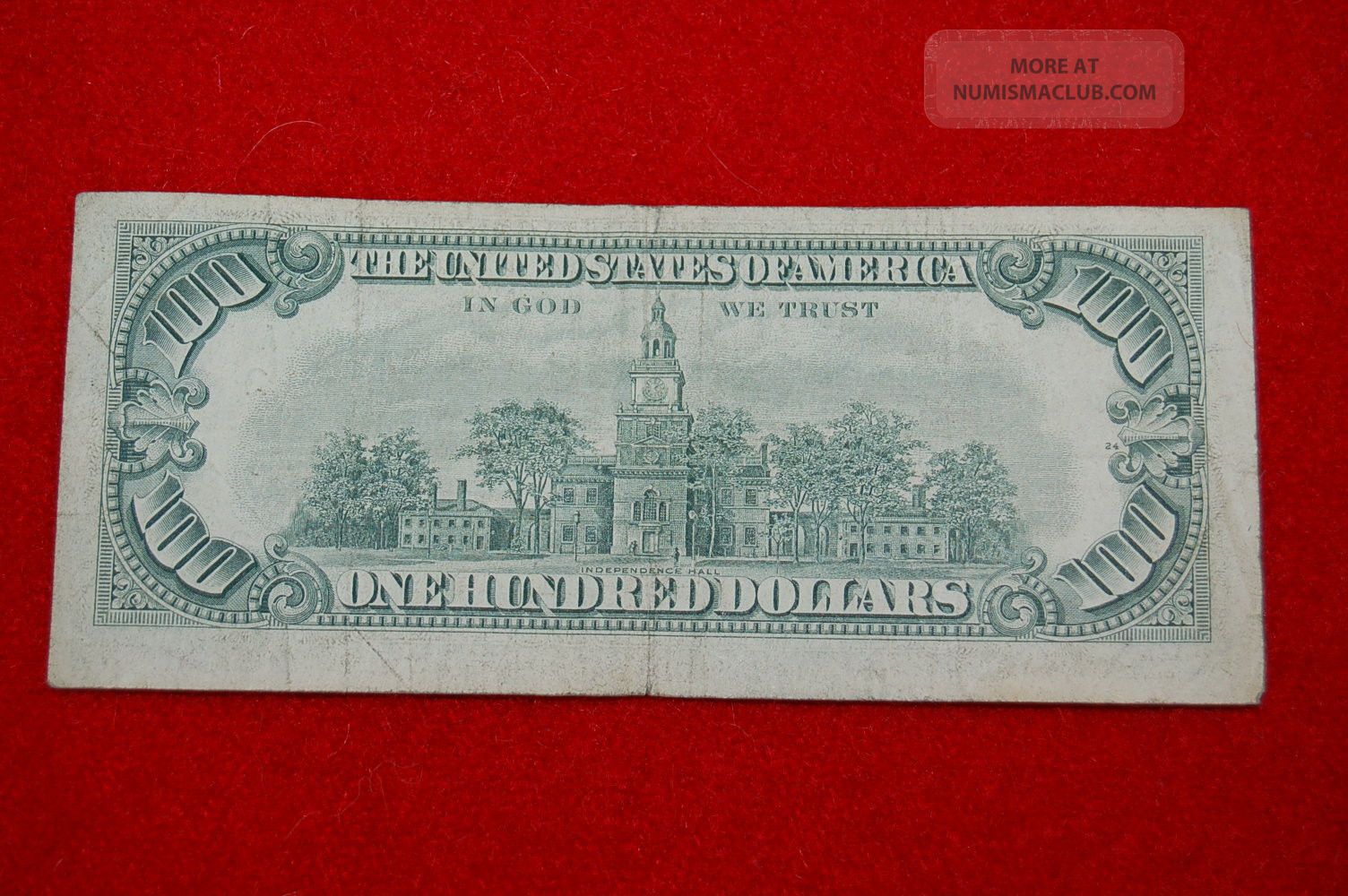
1974 Series 100 Dollar Bill
Hey there, fellow adventurer! Ever stopped to really look at the money in your wallet? I mean, beyond just counting it? Probably not, right? We're usually too busy thinking about what we're going to buy with it. But trust me, there's a whole world of fascinating history hiding in plain sight. Today, let's embark on a mini-expedition into the realm of the 1974 Series $100 bill. Prepare to be amazed!
Now, you might be thinking, "A $100 bill? What's so special about that?" Well, a few things, actually. Think of it as a time capsule, a little piece of the '70s that somehow managed to survive into the present day. And who doesn't love a good dose of retro vibes? I know I do!
Why 1974? What's the Big Deal?
Okay, so 1974... what was happening then? Bell bottoms were all the rage (whether you liked them or not!), gas prices were soaring (sound familiar?), and a little-known band called ABBA won Eurovision. (Okay, maybe they weren't that little known!) It was a time of change, of uncertainty, but also of some pretty awesome music and, yes, cool currency!
Must Read
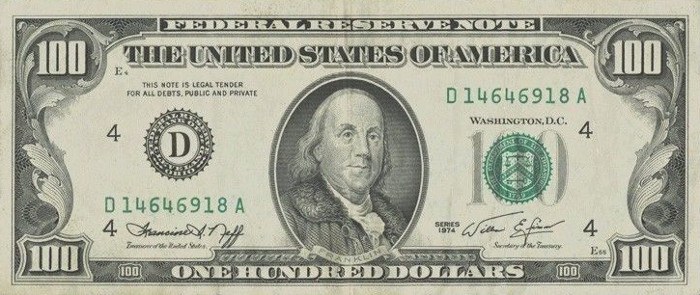
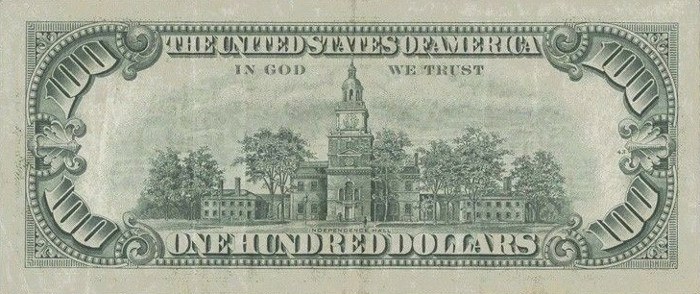
The 1974 Series $100 bill doesn't look dramatically different from more recent versions. It still features good ol' Benjamin Franklin on the front, looking all serious and wise. And Independence Hall is still proudly displayed on the back. But the details... ah, the details are where the magic lies! We'll get there, I promise!
The Nitty-Gritty: What to Look For
Let's get down to brass tacks. How can you tell if you've stumbled upon a genuine 1974 Series $100 bill? First, check the series date: it'll be printed right there on the front, near the bottom, and it will, unsurprisingly, say "Series 1974." Obvious, I know, but it's the first step! Don't go mistaking a 1984 bill for a '74 – that's a whole different decade of history!

Next, take a peek at the signatures. You're looking for the names of the Treasurer of the United States and the Secretary of the Treasury. These names will vary depending on who held those positions at the time the bill was printed. For the 1974 series, you'll likely see either Francine Irving Neff or Angeline Hamelin Bowman as Treasurer, and William E. Simon as Secretary of the Treasury. These names are tiny, so you might need a magnifying glass! (Hey, even historical currency sleuths need a little help sometimes!)
Pro Tip: There are variations within the 1974 series itself! Some have different Federal Reserve seal letters and numbers. This is where things get really interesting for collectors. But don't worry about getting bogged down in all the details just yet. We're just having fun here, remember?

Why Should You Care? (Besides the Sheer Coolness)
Okay, so maybe you're not planning on becoming a professional numismatist (that's a fancy word for coin and currency collector). That's totally fine! But even if you're not, understanding a little bit about the history of money can add a whole new dimension to your appreciation for the world around you. It connects you to the past, to the people who used these very bills to buy groceries, pay rent, and build their lives. Pretty profound, right?
Plus, knowing a thing or two about older currency can be a great conversation starter! Imagine pulling out a 1974 $100 bill and casually mentioning its historical significance. You'll be the most interesting person at the party! (Okay, maybe not the most, but definitely in the running!).
And who knows, maybe you'll even inspire someone else to start their own journey into the fascinating world of currency collecting! The possibilities are endless!
Beyond the Benjamins: Dive Deeper!
So, are you feeling inspired? I hope so! The 1974 Series $100 bill is just the tip of the iceberg. There's a whole universe of fascinating coins, banknotes, and other historical artifacts waiting to be discovered. Start by doing a little research online, visit your local library, or even talk to a coin dealer. You might be surprised at what you find!
Think of it as a treasure hunt, except the treasure is knowledge, history, and a deeper appreciation for the world around you. And who knows, maybe you'll even find a valuable collectible along the way! But even if you don't, the journey itself is the real reward. So go forth, explore, and discover the amazing stories hidden in your pocket change. You've got this!