
1.57 Mid Index Vs 1.61 High Index

So, you're diving into the wonderful world of eyeglasses and someone just threw the terms "1.57 mid index" and "1.61 high index" at you. Don't panic! It's way less intimidating than it sounds, promise.
The Great Lens Thickness Debate
Think of your eyeglass prescription like a recipe for a powerful potion. The stronger the potion (prescription), the more ingredients (lens material) you need to see clearly. And with more ingredients, sometimes things can get a little…bulky.
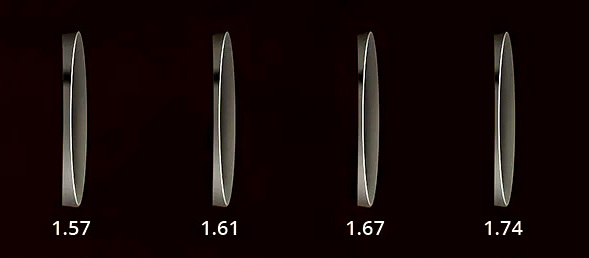
That's where lens indexes come in. They're basically a magic trick that lets us use less material to achieve the same visual power. Less material = thinner, lighter lenses! Think of it like this: regular lenses are like using a whole brick to build a wall, while high-index lenses are like using super-strong, thin bricks - you still get a sturdy wall, but it’s much sleeker.
Must Read
1.57 Mid Index: The Everyday Hero
1.57 mid index lenses are like your reliable, trusty friend. They're a solid choice for many prescriptions, especially if you don't have a super-strong correction. They offer a good balance of price, thickness, and optical clarity.
Imagine you’re only slightly nearsighted, like you need glasses just to see the movie screen. A 1.57 lens would likely be perfect for you – thin enough to look good, durable enough for everyday wear, and budget-friendly enough to keep your wallet happy.
They are great for full-rim frames because the frame hides the lens edge, so thickness isn't as noticeable. They are often made with polycarbonate or a similar plastic material.
1.61 High Index: The Sleek Supermodel
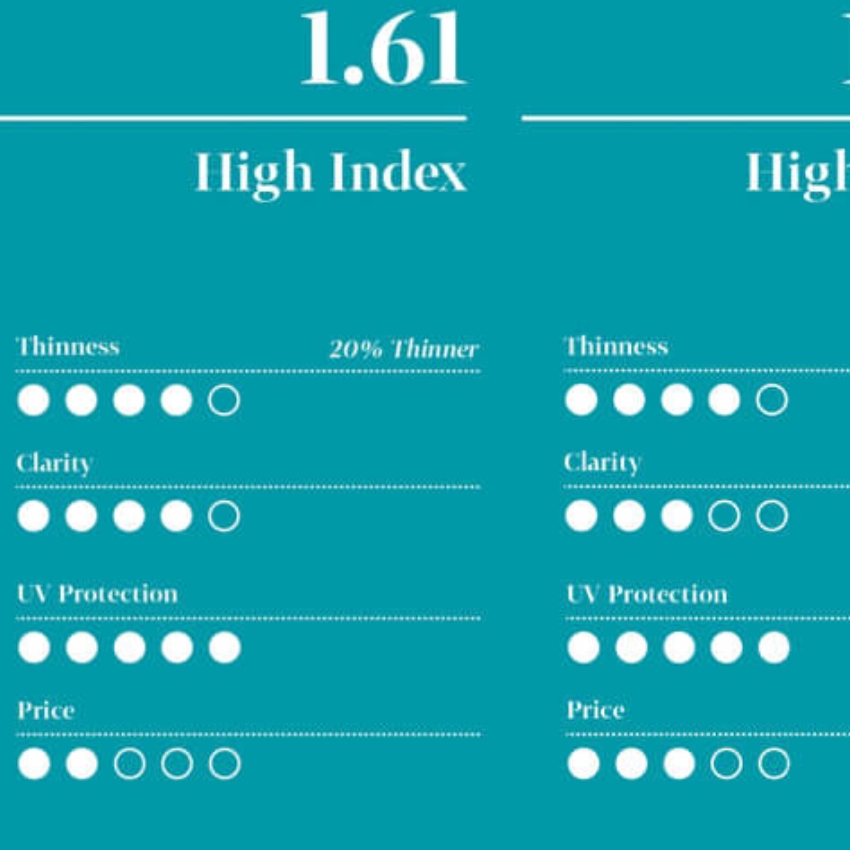
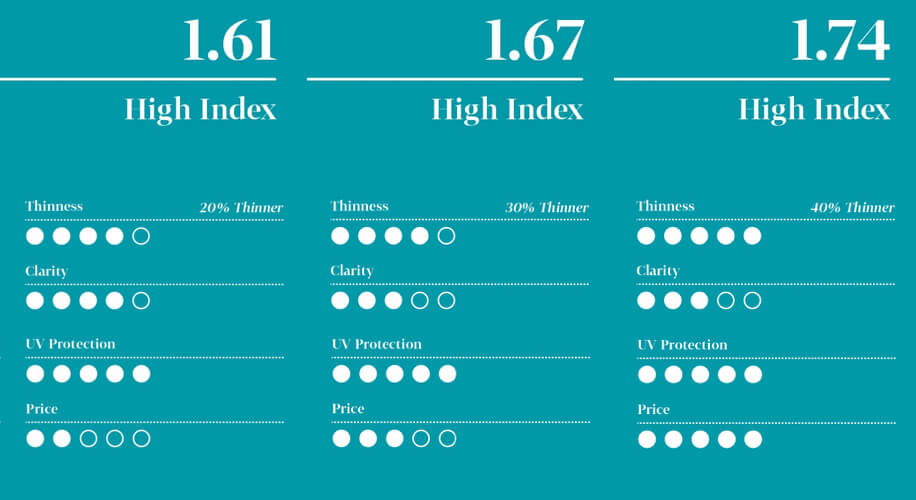
Now, 1.61 high index lenses are the sleek supermodels of the lens world. They're significantly thinner and lighter than standard lenses, especially if you have a stronger prescription.
Picture this: you have a prescription so strong you could spot a squirrel on the moon without your glasses. Standard lenses would be so thick they’d practically be telescopes strapped to your face! A 1.61 lens comes to the rescue, slimming down that lens to a more manageable and aesthetically pleasing size.

They are especially advantageous for rimless or semi-rimless frames because the thinner edge is much more visually appealing. Plus, the reduced weight makes them more comfortable to wear, especially for extended periods.
The Thickness Showdown: A Visual Analogy
Let's say you’re trying to pack for a weekend getaway. Your eyesight is your wardrobe, and your lenses are your suitcase. 1.57 lenses are like a regular suitcase – it gets the job done, but it can get a little bulky if you overpack (strong prescription).
1.61 lenses, on the other hand, are like those magical compression cubes. You can fit way more clothes (stronger prescription) into the same amount of space, and your suitcase (glasses) stays streamlined and manageable. You get to pack that extra pair of shoes (sunglasses) after all!
The Comfort Factor: Weight Matters
Think about wearing glasses all day. The heavier they are, the more pressure they put on your nose and ears. No one wants to feel like they're carrying miniature dumbbells on their face!
High index lenses, being thinner, also weigh less. This makes them much more comfortable to wear, especially for people with strong prescriptions who would otherwise be dealing with hefty lenses.
Imagine the relief of switching from heavy, clunky glasses to a pair that feels almost weightless. Your nose and ears will thank you!
Optical Clarity: Seeing is Believing
Both 1.57 and 1.61 lenses offer excellent optical clarity. However, the higher the index, sometimes there can be slightly more reflections. But don't let that scare you!
With modern anti-reflective coatings, this is barely noticeable. These coatings are like a superpower for your lenses, reducing glare and reflections, and allowing more light to pass through for crisper, clearer vision.
Think of it like cleaning a dusty window. Without cleaning (anti-reflective coating), you see smudges and reflections. With a clean window (coated lenses), everything is crystal clear.
Cost Considerations: Wallet-Friendly Options
Generally, 1.57 lenses are more budget-friendly than 1.61 lenses. The more advanced the technology and thinner the lens, the higher the price tag tends to be.
However, think of it as an investment in your comfort and appearance. If you have a stronger prescription and want thinner, lighter lenses, the extra cost of 1.61 lenses might be well worth it.
Consider it like buying a good pair of shoes. You can get a cheap pair that falls apart in a month, or you can invest in a quality pair that will last for years and keep your feet happy. Your glasses are the shoes for your eyes!
Frame Style: A Match Made in Heaven
The frame style you choose can also influence which lens index is best. As mentioned, 1.57 lenses work great in full-rim frames where the edge of the lens is hidden.
But, if you're opting for rimless or semi-rimless frames, 1.61 lenses are a better choice. The thinner edge will look much more streamlined and aesthetically pleasing.
It's like picking the right frame for a picture. A beautiful picture can be ruined by a cheap or inappropriate frame. Choosing the right lens index ensures your glasses look their best.
Ask Your Eye Doctor: The Expert Opinion
Ultimately, the best way to decide between 1.57 and 1.61 lenses is to talk to your eye doctor or optician. They can assess your prescription, lifestyle, and preferences and recommend the best option for you.
They can also explain the pros and cons of each lens index in more detail and answer any questions you may have. Think of them as your personal lens consultants!
They can tell you if a specific lens will be the most comfortable for your type of vision correction. They will also ask you about your lifestyle and occupation to suggest the most appropriate material for your lenses.
Beyond the Numbers: It's All About You
Choosing the right lens index is a personal decision. There's no one-size-fits-all answer. What works for your best friend might not be the best choice for you.
Consider your prescription, budget, frame style, and lifestyle when making your decision. And don't be afraid to ask questions and explore your options.
Remember, the goal is to find lenses that not only help you see clearly but also make you feel confident and comfortable in your own skin (or rather, in your own glasses!).
In Conclusion: Embrace the Lens Journey!
So, there you have it! 1.57 mid index and 1.61 high index lenses, demystified. Hopefully, this has helped you understand the difference between these two options and feel more confident in making a decision.
Choosing new glasses should be an exciting experience, not a stressful one. Embrace the journey and find the perfect lenses that will help you see the world clearly and look fantastic while doing it!
Now go forth and conquer the world, one crystal-clear glance at a time!