
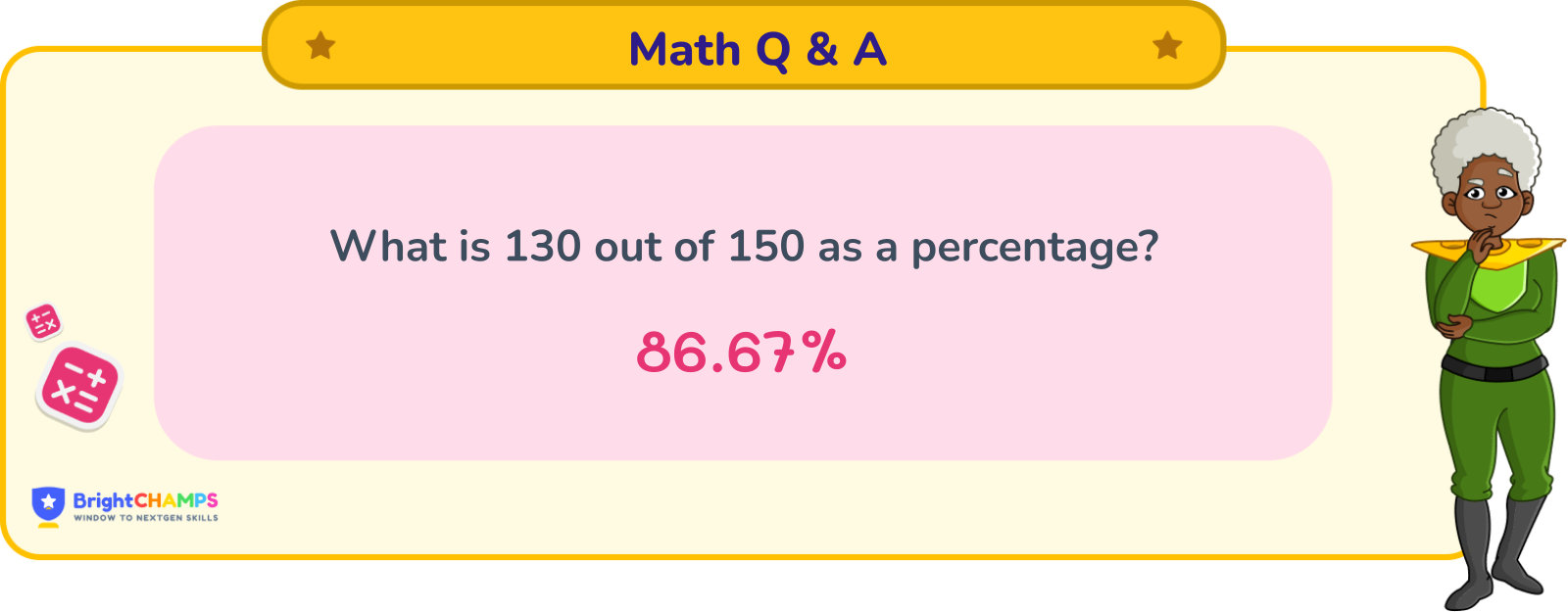
130 Out Of 150 As A Percentage
Numbers. We deal with them every day, whether we're calculating the tip at our favorite brunch spot, figuring out how many episodes of that new Netflix series we can binge-watch before Monday, or...gasp...doing our taxes. Sometimes, they seem daunting, but understanding basic numerical concepts, like percentages, can actually make life a whole lot easier and even, dare I say, more enjoyable.
So, let's dive into a super common scenario: scoring 130 out of 150. What percentage is that? Don't worry; we're not going back to high school math class (unless you want to – no judgment!). We're going to make this painless.
The Simple Calculation: Percentage Made Easy
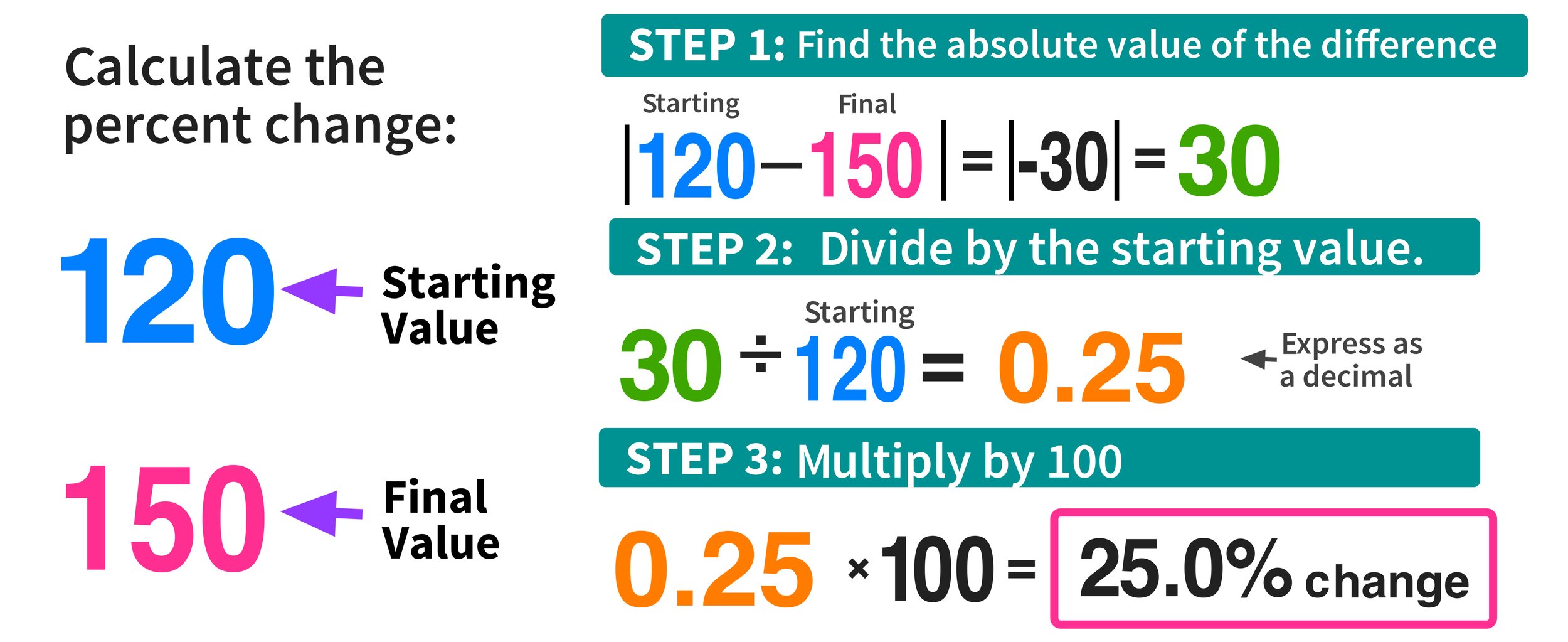
The formula is incredibly straightforward: (Part / Whole) * 100 = Percentage.
Must Read
In our case:
(130 / 150) * 100 = Percentage
If you plug that into your trusty calculator (or even your phone's calculator app), you'll find that 130 out of 150 is approximately 86.67%. Congratulations! You aced it (well, almost!).
Beyond the Classroom: Real-Life Applications
Okay, so you know how to calculate it. But where does this come in handy outside of a test score? Everywhere!
- Sales and Discounts: Imagine your favorite store is having a 15% off sale. You can quickly calculate how much you'll save on that must-have item.
- Tracking Progress: Whether it's your fitness goals (e.g., "I've completed 75% of my running program!") or your progress on a work project, percentages help you visualize your achievements.
- Understanding Statistics: News articles and reports are full of stats. Knowing how percentages work allows you to interpret them accurately and avoid being misled. Think of it as developing your own personal "BS detector."
- Cooking: Recipes sometimes call for adjusting ingredient amounts. Understanding proportions and percentages makes scaling recipes up or down a breeze. Ever tried to halve a recipe for a soufflé without knowing your percentages? Trust me, it's not pretty.
Tips and Tricks for Percentage Mastery
Want to become a percentage pro? Here are a few handy tips:
- Mental Math: Practice calculating simple percentages in your head. For example, 10% of any number is just dividing it by 10. So, 10% of 150 is 15.
- Benchmark Percentages: Memorize common percentages like 25% (one-quarter), 50% (one-half), and 75% (three-quarters). These can serve as benchmarks for estimating other percentages.
- Use Apps and Tools: There are plenty of free percentage calculators available online and as smartphone apps. Don't be afraid to use them! They're especially helpful for complex calculations.
Cultural Moment: Did you know that the percentage sign (%) is believed to have originated from an Italian abbreviation for "per cento," meaning "out of a hundred"? It's evolved quite a bit over the centuries, but its purpose remains the same: to express a ratio as a fraction of 100.

Fun Fact: Percentages and Pie Charts
Percentages are the backbone of pie charts! Those colorful slices that represent different categories? Each slice's size is determined by the percentage it represents of the whole. Next time you see a pie chart, remember that handy percentage calculation we just went over!
Practical Example: Let's say you're budgeting your monthly expenses. You allocate 30% to rent, 20% to food, 15% to transportation, 20% to entertainment, and 15% to savings. That adds up to 100%, giving you a clear picture of where your money is going. And hey, if you scored 130 out of 150 in your budgeting skills, that's a pretty darn good start! You're managing approximately 86.67% of your finances effectively, which is something to be proud of.
Final Thoughts
Understanding percentages isn't just about acing math tests; it's about empowering yourself to make informed decisions in all aspects of your life. It's about seeing the world a little more clearly, understanding the numbers behind the headlines, and taking control of your finances, your health, and your goals. So, embrace the power of percentages, and watch how they simplify your world, one calculation at a time. Because really, life's too short to be intimidated by a little math.
