
Words That Start With Fa And End With T
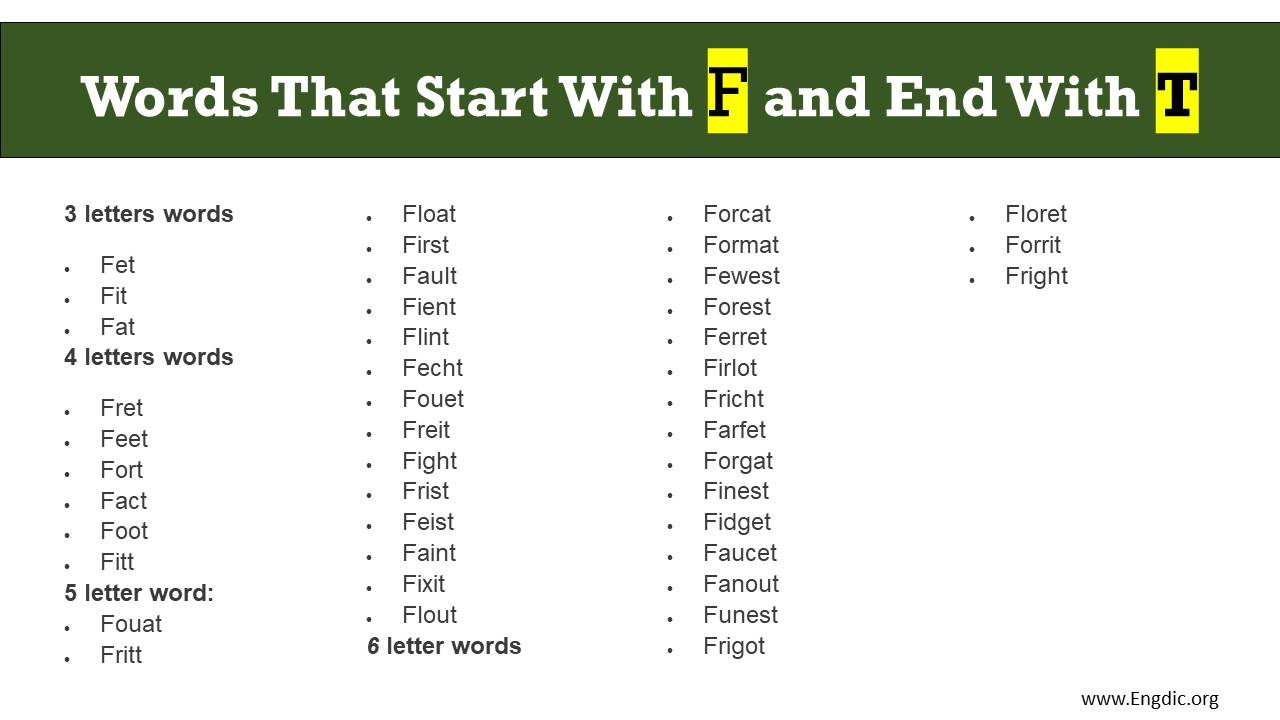
Ever get that feeling like there's a hidden code in the English language, just waiting to be cracked? Well, let's dip our toes into a tiny corner of that code today and explore the fascinating world of words that start with "Fa" and end with "T"! It might sound a bit niche, but trust me, playing around with words like this can be surprisingly fun and even boost your vocabulary without you even realizing it.
So, why bother with such a specific category of words? For beginners, it's a fantastic way to focus on spelling patterns and recognize how prefixes and suffixes work. Think of it as a mini word puzzle! For families, it's a great game to play on road trips or during dinner. See who can come up with the most words that fit the criteria! And for hobbyists like writers or word game enthusiasts, it’s a fun challenge to expand their lexicon and discover new ways to express themselves.
Let's dive into some examples, shall we? The most obvious one is probably "facet," which refers to one side of a multifaceted object, or a particular aspect of something. Another common one is "fagot," referring to a bundle of sticks (though be aware of its historical and potentially offensive usage in other contexts). Then you have words like "faintest", the superlative of faint, and "faldstool", a type of folding stool or desk used by clergy. See how varied they are? They cover a range of meanings and origins!
Must Read
But the fun doesn't stop there. Consider variations and related terms. Think about words that are derived from our 'Fa...t' words. Perhaps "faceted" relating to the word "facet" or "fagoting", the process of binding or tying bundles of sticks. You could even delve into the etymology (the origin and history of the word) to uncover more interesting connections.
Ready to get started on your own "Fa...t" word hunt? Here are a few simple, practical tips:

- Grab a dictionary or thesaurus: The old-fashioned way still works wonders!
- Use online resources: Websites like Merriam-Webster or dictionary.com are invaluable.
- Brainstorm freely: Just jot down any "Fa" words that come to mind, then see if you can add a "t" ending that makes sense.
- Think creatively: Don't be afraid to consider less common words or words you haven't heard before.
Don't get discouraged if you don't find many words at first. The point isn't to become a "Fa...t" word expert, but to engage your mind, expand your vocabulary, and have a little fun along the way. Exploring these tiny linguistic corners can spark curiosity and lead to a greater appreciation for the richness and complexity of the English language.
So, go forth and explore! You might be surprised at what wordy treasures you uncover. And remember, the most important thing is to enjoy the process of discovery.


