
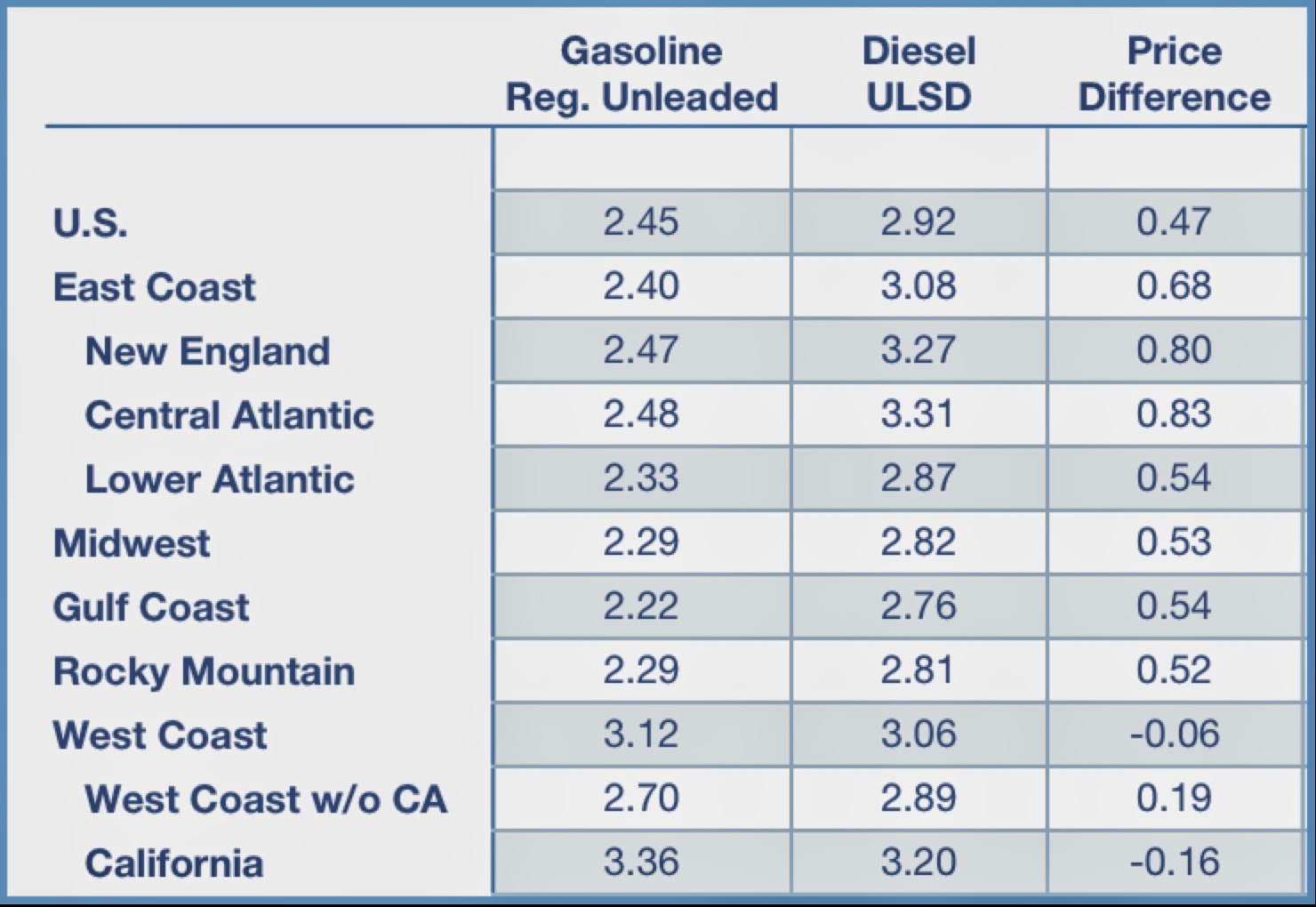
Why Is Diesel Fuel More Expensive Than Gas

Ever pull up to the pump, glance over at the diesel handle, and notice the price is often a good chunk higher than regular old gasoline? It’s a common sight that makes many folks scratch their heads. If you're not driving a diesel vehicle, you might think, "Who cares?" But trust me, friend, it’s a little secret that touches all of us in surprising ways. So, let’s unravel this mystery together, no complicated science required, just a few smiles and some everyday comparisons!
The Great Divide: Why Diesel Costs More Than Gas
Think of crude oil, the black goo pulled from the earth, like a giant, magical soup. When it gets heated up in a refinery, different "ingredients" separate at different temperatures. Gasoline is like the light, airy steam that comes off early, while diesel is a bit heavier, taking more energy and a different part of the process to get just right. It's not necessarily harder, just… different, like making a soufflé versus a hearty stew. Both delicious, but one requires a slightly different touch and timing.
But the refining process is just one piece of the puzzle. There are a few other big reasons why diesel often wears the more expensive crown:
Must Read
1. Diesel's Doppelgänger: Heating Oil
Here’s a fun fact: diesel fuel and home heating oil are practically twins! They're almost identical, chemically speaking. Imagine them as two siblings sharing the same wardrobe. When winter bites and everyone up north is cranking up their thermostats, the demand for heating oil absolutely skyrockets. And because diesel is its identical twin, the demand for heating oil pulls diesel prices up right along with it. It’s a classic supply-and-demand story, just with a cozy, winter twist.
So, even if you’re basking in sunshine, a cold snap thousands of miles away can nudge up the price at your local diesel pump. Talk about global connections!
2. The Engine of Our Economy Runs on Diesel
This is where it gets really interesting for all of us. While your car might run on gasoline, pretty much everything else that keeps our world spinning runs on diesel. Think about it:
- Those massive 18-wheelers hauling groceries, electronics, and practically every single thing you buy? Diesel.
- Trains chugging across continents with endless cargo? Diesel.
- Ships carrying goods from across the ocean? Diesel.
- The tractors planting and harvesting the food on your plate? Diesel.
- Buses getting people to work and school? Often diesel.
Diesel is the lifeblood of our commerce. The demand from these industries is constant and enormous. When demand is super high, and essential for moving goods, prices naturally creep up. It's like trying to get a hot ticket to a sold-out concert – everyone wants one, so the price goes up!
3. Cleaner Air Comes with a Price Tag
Remember the days when diesel engines would belch out a plume of black smoke? Thankfully, those days are mostly behind us! Modern diesel fuel and engines are incredibly sophisticated and much, much cleaner. But getting rid of all those nasty emissions, especially sulfur, requires extra processing at the refinery. It's like choosing organic, free-range chicken over conventional – it often costs a bit more because of the extra care and standards involved. This commitment to cleaner air, while fantastic for our lungs and planet, does add to the final price at the pump.
4. Taxes, Taxes, and More Taxes
Ah, taxes! They seem to follow us everywhere, don't they? In many places, diesel fuel is subjected to higher taxes than gasoline. Why? Well, those heavy diesel trucks and commercial vehicles put a lot more wear and tear on our roads and infrastructure. So, a portion of those higher taxes goes towards maintaining and repairing the roads they use. It’s a bit like paying a higher entrance fee for the heavy-duty vehicles at the amusement park – they need more robust rides!
Why Should YOU Care, Even if You Don’t Drive a Diesel?
This is the fun part! You might be thinking, "My little sedan sips gasoline, why should I care if diesel costs more?" Here’s the big secret: you're paying for it indirectly, every single day!

Think about it. Every avocado you slice, every gadget you order online, every new pair of shoes you buy – it all probably traveled a significant distance on a diesel-powered truck, train, or ship. When the cost of diesel goes up, so does the cost of transporting those goods. And guess who ultimately absorbs those higher transportation costs? That's right, us, the consumers!
So, a jump in diesel prices can subtly trickle down to the price of your groceries, your Amazon deliveries, and even the cost of construction for that new park in your town. It’s like a domino effect – one thing tips, and everything connected to it feels the ripple.
Understanding why diesel is often more expensive isn't just about fuel, it's about understanding the interconnected web of our economy. It helps us appreciate the journey our everyday items take to reach us and gives us a little more insight into why prices sometimes fluctuate. So, next time you see that diesel pump price, give a little nod. It's a small reminder of the incredible logistics that keep our world moving, fueled by that hard-working, sometimes pricey, diesel.
