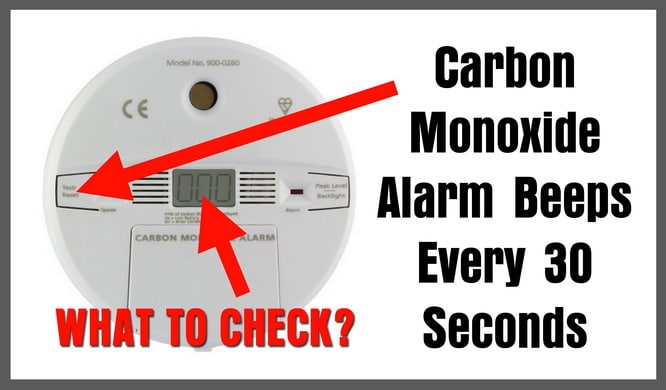
Why Does A Carbon Monoxide Alarm Go Off

Ever been startled by a sudden, shrill beeping, only to realize it's that mysterious gadget on your wall sounding the alarm? While smoke alarms are pretty straightforward, carbon monoxide (CO) alarms can sometimes feel a bit more enigmatic. But trust us, understanding why this particular alarm goes off is not just fascinating, it's a genuine superpower for keeping yourself and your loved ones safe. It’s like learning the secret language of a silent guardian! So, let's peel back the curtain and get curious about CO alarms.
At its heart, a carbon monoxide alarm has a singular, life-saving purpose: to detect the presence of an incredibly dangerous gas that you can't see, smell, or taste. We call CO the "silent killer" for a reason. It's produced whenever fuels like natural gas, propane, wood, or gasoline don't burn completely – think faulty furnaces, clogged chimneys, gas ranges, or even cars running in an enclosed space. When CO gets into your bloodstream, it effectively kicks out the oxygen your body needs, leading to severe illness or even death. That's where your trusty alarm steps in! Its benefit is simply immense: it provides an early warning system, giving you precious time to react before CO levels become critical. It’s a silent sentinel, always on duty.
You’ll find CO alarms practically everywhere these days, which is wonderful! In daily life, they're crucial in homes, especially near sleeping areas and where fuel-burning appliances like water heaters, stoves, or fireplaces are located. They're also vital companions in RVs, boats, and cabins where generators or portable heaters are often used. Think of them as non-negotiable safety partners for anyone with a combustion appliance. In an educational context, understanding CO alarms is a fantastic way to teach basic chemistry (incomplete combustion!), home safety, and emergency preparedness. It highlights how a little bit of scientific understanding can have profound real-world impact, turning an invisible threat into a manageable one.
Must Read
Want to get more familiar with your CO alarm? Here are a few practical tips and simple ways to explore this essential device. Firstly, test it regularly! Most alarms have a "test" button – push it and make sure you hear that loud beep. It’s a simple check that ensures the sensor and battery are working. Next, know your alarm’s placement. They should typically be on every level of your home, near sleeping areas, and close to any fuel-burning appliances. If your alarm ever does go off for real, remember the golden rule: evacuate immediately, get fresh air, and call your local emergency services or fire department. Don't try to find the source yourself! While you shouldn't try to create CO, you can satisfy your curiosity by looking up how electrochemical sensors work – the clever technology inside most alarms that reacts to CO molecules. Understanding these simple aspects makes you not just a homeowner, but a truly informed guardian of your space. Keep curious, stay safe!