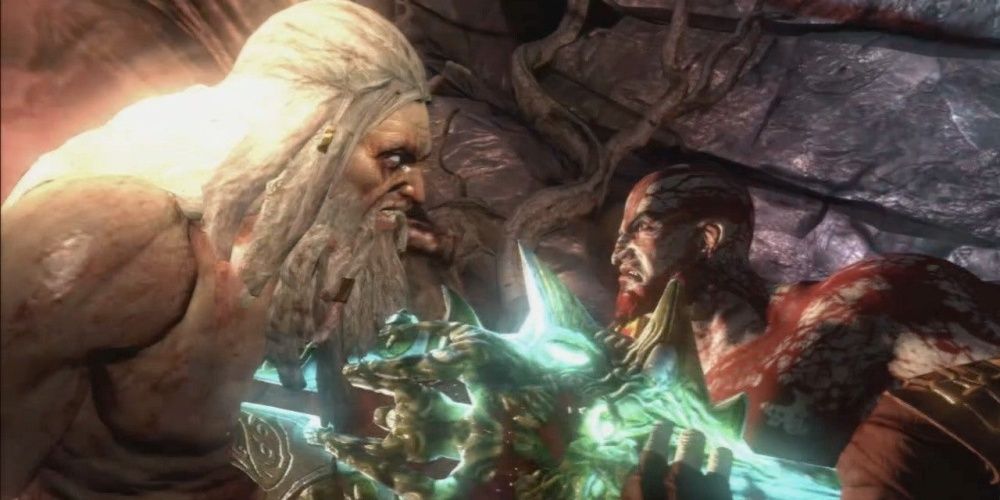
Why Did Kratos Kill His Family

Okay, let's dive into something a little… heavy. We're talking about Kratos, the God of War. Yeah, that Kratos. The guy who, well, let's just say he's not exactly known for his sensitivity. And we're tackling the big question: Why did Kratos kill his family? Sounds grim, right? But stick with me! There's a surprisingly inspiring (and maybe even fun!) lesson to be found in this video game tragedy. I promise!
First, let's get the gruesome details out of the way. In the original God of War, Kratos is tricked by Ares, the God of War (talk about a dysfunctional workplace!), into killing his wife, Lysandra, and his daughter, Calliope. He’s basically used as a pawn in Ares' power grab. Yikes. A real low blow, even for a god.
So, Ares, being the manipulative deity that he is, clouds Kratos' mind in a berserker rage. Kratos, completely unaware of his surroundings, slaughters a village full of innocent people, and tragically, those innocent people turn out to be his own family. Double yikes! I know, it's dark. But before you go running for the nearest fluffy kitten video, hear me out!
Must Read
The Power of Manipulation (And How to Spot It)
One of the biggest takeaways from this whole tragic tale is the power of manipulation. Ares completely controlled Kratos, twisting him into a weapon. Think about it: how often do we see manipulation happening in real life? Maybe not on the scale of godly deception, but definitely in relationships, workplaces, and even in advertising. Recognizing manipulation is the first step to protecting yourself from it. It’s like having a superpower! Okay, maybe not super power, but a pretty darn useful one!
The story of Kratos and his family is a stark reminder that even the strongest among us can be vulnerable. Ares exploited Kratos' inner rage and desire for power, turning him into a monster. This highlights the importance of understanding our own weaknesses and seeking help when we need it. Nobody's an island, right?

Taking Responsibility (Even When It's Not Totally Your Fault)
Now, here's where things get interesting. While Kratos was manipulated, he did swing the blades. He did make the choices that led him down that path. And that's a tough pill to swallow. It's easy to blame external forces, but Kratos eventually takes responsibility for his actions, even though he was tricked. This is a crucial part of his character arc. He doesn't just wallow in self-pity (although, believe me, there's plenty to pity!). He decides to do something about it. He owns his mistakes.
This is a lesson we can all apply to our own lives. We've all made mistakes. We've all messed up. The key is to acknowledge those mistakes, learn from them, and strive to do better. It’s not about dwelling on the past, but about using it as a stepping stone to a brighter future. Think of it as leveling up your life! Every mistake is experience points!

From Rage to Redemption (And Why You Should Never Give Up)
Kratos' journey isn't just about tragedy; it's about redemption. He spends the rest of his life (or at least, a good chunk of it) trying to atone for his sins. He fights monsters, faces gods, and eventually, tries to become a better person. He's not perfect, far from it, but he’s trying. And that's what matters. That’s what’s inspiring!
The later God of War games show Kratos as a father figure, trying to protect his son, Atreus, from making the same mistakes he did. It's a powerful message about breaking cycles of violence and creating a better future for the next generation. It's about learning from the past and choosing a different path. We all have the power to change, to grow, and to become better versions of ourselves. Isn't that awesome?

So, why should you care about all this video game drama? Because it’s a powerful allegory for real-life challenges. It's a reminder that we all face tough times, that we're all vulnerable to manipulation, and that we all have the capacity for both good and evil. But more importantly, it's a story about hope, resilience, and the power of redemption. And that, my friend, is something worth getting excited about.
Want to learn more about Kratos' incredible journey? Dive into the God of War games! They're not just button-mashing action; they're emotionally resonant stories that will make you think, feel, and maybe even shed a tear (or two... or ten!). Go on, unleash your inner God (or, you know, your inner empathy)! You might just surprise yourself with what you discover.