
Which Way Should Your Fan Turn In The Summer

Summer's here! The sun is blazing, the ice cream truck is playing its siren song, and you're probably thinking the same thing I am: "How can I avoid melting into a puddle of human goo?"
The Great Fan Debate: Summer Edition
Well, my friend, you've come to the right place. Today, we're diving headfirst (but carefully!) into the age-old question that plagues homeowners and renters alike: which way should your ceiling fan turn in the summer?
The Right Way to Chill Out
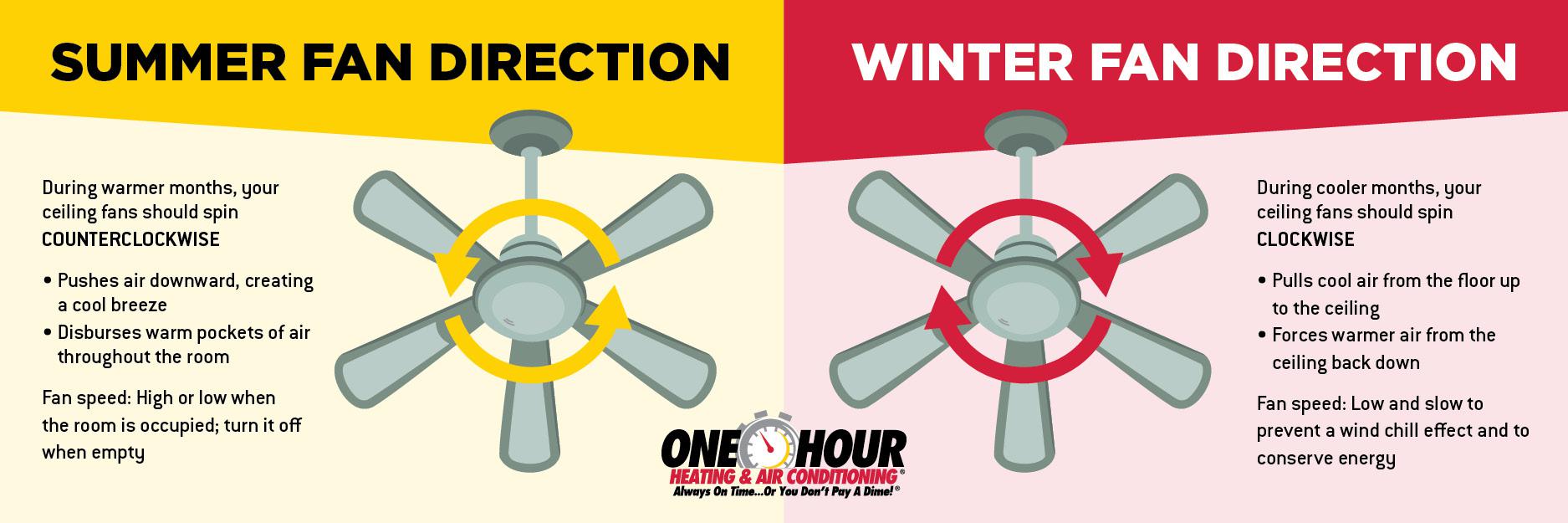
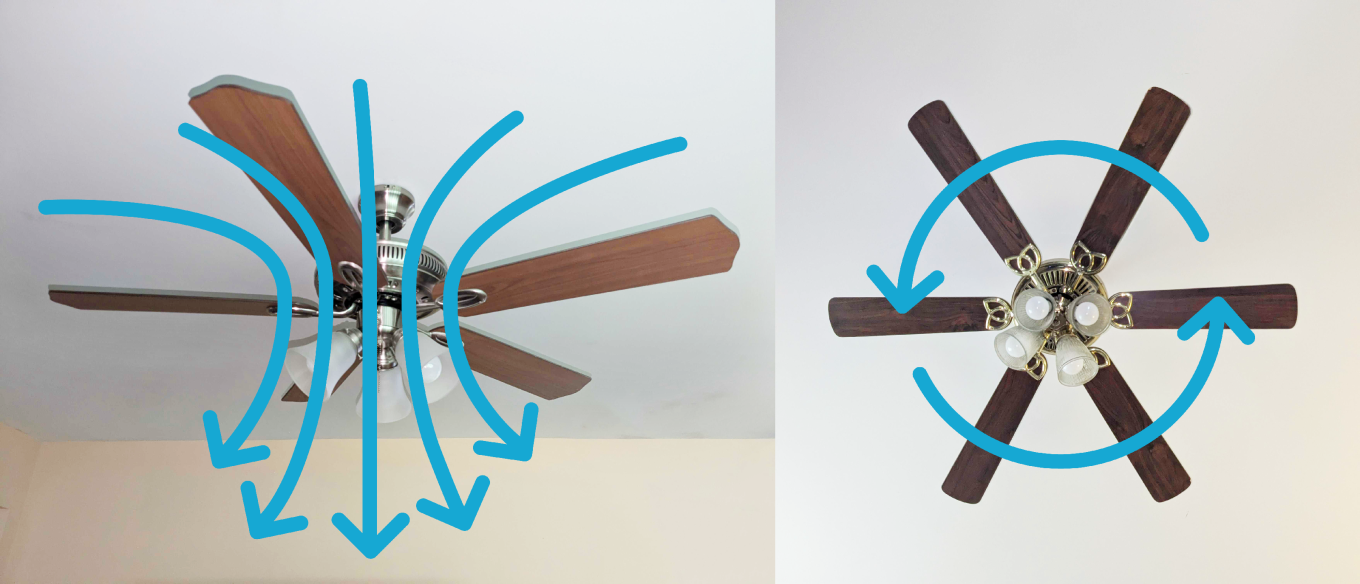
Let's cut to the chase: in the summer, your ceiling fan should be rotating counter-clockwise. Yes, you heard me right! Counter-clockwise is your new best friend.
Must Read
Think of it this way: the fan blades are like tiny, high-powered ninjas, slicing through the air and creating a cool downdraft.
This downdraft is what you feel when you're standing beneath the fan, and it's what helps to evaporate sweat and make you feel cooler. It's like a gentle, personal breeze just for you!
Imagine yourself on a scorching hot day, finally collapsing onto your couch. You flick on the fan, and instead of a refreshing breeze, you feel... nothing. Or worse, you feel like the air is just being stirred around in a lukewarm soup. Tragedy!
That's the horror of a clockwise fan in the summer. It's an insult to your sweat glands, a betrayal of your trust, and a general affront to summertime comfort.
How to Tell if Your Fan is Being a Team Player
Okay, so now you know counter-clockwise is the way to go. But how do you actually make your fan do it?
Fear not, it's usually pretty simple. Most ceiling fans have a small switch located on the motor housing, usually near the light fixture.
This switch is your fan's gear shift, its secret weapon for battling the heat. Flip the switch one way, and the fan spins clockwise. Flip it the other way, and voila! Counter-clockwise coolness awaits.
Now, before you go all crazy flipping the switch, make sure the fan is turned off. We don't want any whirling blade accidents!
Also, if you're vertically challenged (like me!), you might need a step stool or a helpful friend to reach the switch.
Once you've located the switch and determined which direction is which, give it a try! Stand beneath the fan and feel the magic happen.
If you feel a refreshing downdraft, you've done it right! Give yourself a pat on the back and a celebratory ice pop.
If you don't feel a breeze, flip the switch again. Sometimes, the switch can be a little finicky.
Still not sure which way is which? Look closely at the fan blades while it's running. If the leading edge of the blade (the edge that's moving forward) is lower than the trailing edge, it's turning counter-clockwise.
Think of it like a tiny airplane wing, catching the air and pushing it downwards.
Why Does It Even Matter? (A Touch of Science, I Promise!)
Okay, okay, I know what you're thinking. "Does this really make a difference?" The answer is a resounding YES!
When your fan is turning counter-clockwise in the summer, it's creating a downward airflow that helps to cool you down by evaporating sweat.
It's not actually lowering the temperature of the room, but it feels like it is. And let's be honest, that's all that really matters when you're melting in the summer heat!
Plus, using your ceiling fan can help you save money on your energy bill. By circulating the air, you can often turn up your thermostat a few degrees and still feel comfortable.
It's a win-win situation! You stay cool, and your wallet stays a little bit fatter.
Winter is Coming (Eventually): A Sneak Peek
Now, I know we're talking about summer, but I feel obligated to give you a little preview of what's to come when the seasons change.
When winter rolls around, you'll want to switch your fan back to clockwise.
In the winter, a clockwise fan helps to circulate warm air that rises to the ceiling, pushing it back down towards the floor.
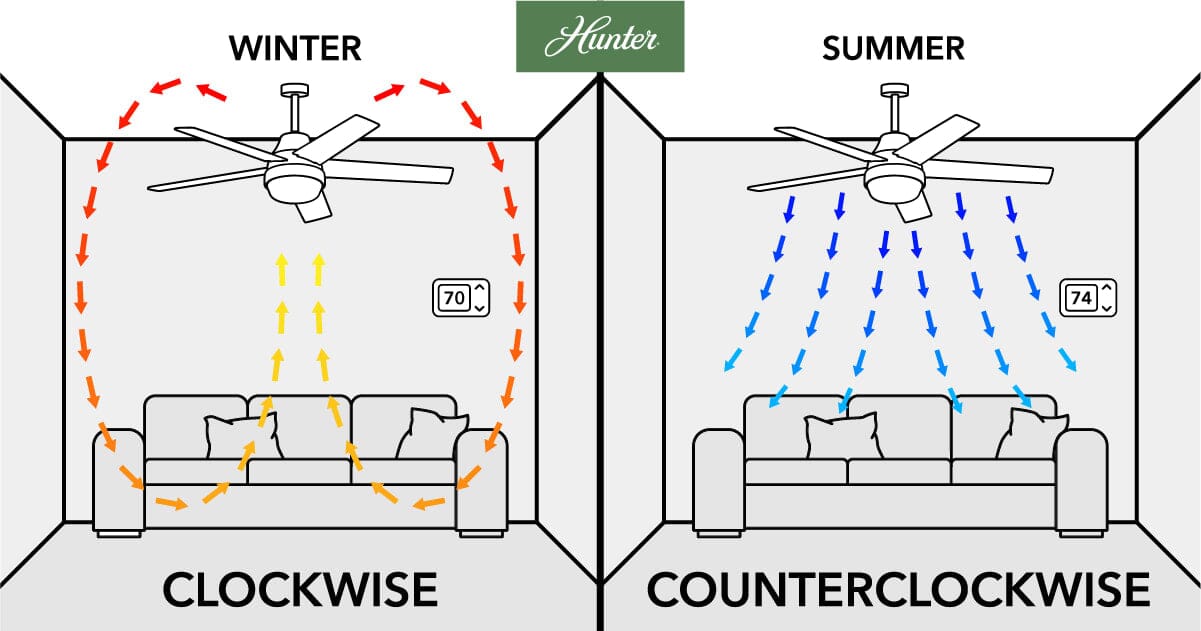
This can help to even out the temperature in your room and prevent your feet from freezing while your head is sweating.
But for now, let's focus on the summer. Remember: counter-clockwise is your mantra, your battle cry, your secret weapon against the heat!
Common Fan Faux Pas (Don't Be This Person!)
Now that you're armed with the knowledge of proper fan direction, let's talk about some common mistakes people make.
Mistake #1: Ignoring the switch altogether. This is like having a superpower and never using it. Don't let your fan sit there, uselessly spinning in the wrong direction!
Mistake #2: Assuming all fans are the same. Some fans have different switch locations or even remote controls that control the direction. Read the instructions, people!
Mistake #3: Blaming the fan for everything. If your fan isn't making a noticeable difference, it could be that your room is poorly insulated or that your AC is struggling to keep up. Don't take it out on the fan!
Mistake #4: Running the fan when you're not in the room. Ceiling fans cool people, not rooms. If you're not there to enjoy the breeze, turn it off and save energy.

Mistake #5: Not cleaning your fan. Dusty fan blades are not only unsightly, but they can also reduce the fan's efficiency. Give those blades a good wipe-down every now and then!
The Fan-tastic Conclusion
So, there you have it! Everything you need to know about ceiling fan direction in the summer.
Remember, counter-clockwise is the key to staying cool and comfortable. So go forth, flip that switch, and enjoy the sweet, sweet relief of a properly spinning fan.
And if you ever find yourself in a heated debate about fan direction (pun intended!), just remember this article and share the knowledge. You'll be a hero to your friends and family!
Now, if you'll excuse me, I'm going to go crank up my fan and enjoy an ice-cold lemonade. Stay cool, my friends!
One final, bonus tip: Consider the size of your fan in relation to the room. A tiny fan in a huge room won't do much, and a giant fan in a small room might feel like you're in a wind tunnel.
Choose a fan that's appropriately sized for the space to maximize its cooling power.
And remember to stay hydrated! All this talk about fans and breezes is making me thirsty.