
Which Two Forces Drive The Rock Cycle

Let's talk rocks! Not the kind you collect on vacation (though those are cool too). I mean the whole, big, dramatic Rock Cycle. You know, the one they tried to teach us in school?
It's all about how rocks are constantly being made, destroyed, and transformed. Like a geological version of "Extreme Home Makeover," only way, way slower. And instead of Ty Pennington, we've got, well, forces.
Everyone always tells you about tons of forces. Uplift! Weathering! Erosion! Pressure! Heat! Subduction! Melting! Crystallization! It's enough to make your head spin faster than a geologist in a rock tumbler.
Must Read
But here's my (possibly) controversial opinion: it all boils down to just two main players. Two rock-star forces that hog the limelight. Ready for it?
Force Number One: Mr. Hot Stuff - Heat!
Yep, the fiery force of heat. Think of the Earth's core – a molten metal furnace churning away. That's the engine driving a whole lot of rock action.
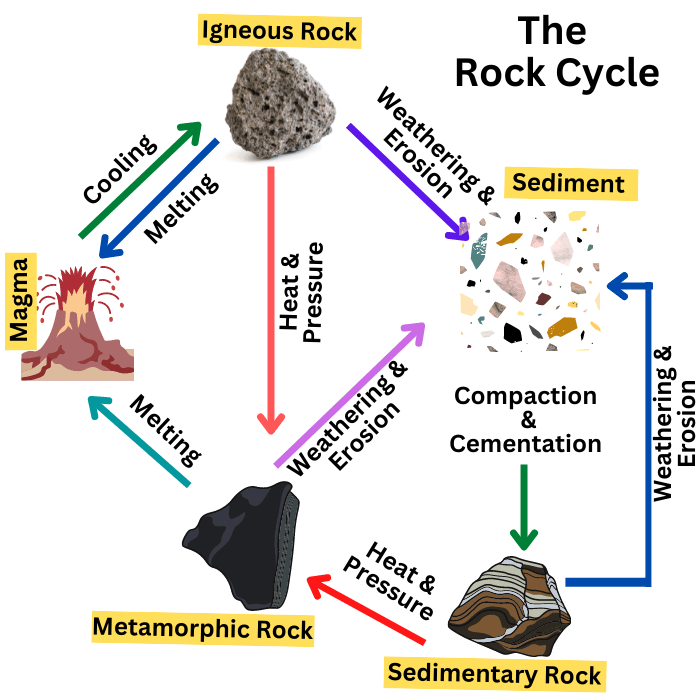
Heat is the master of melting. It takes solid rock and turns it into gooey, flowing magma. Imagine turning a chocolate bar into chocolate sauce – same principle, but with, you know, rocks instead of chocolate. (Chocolate-flavored rocks? Now there's an idea!).
And that magma? It's the raw material for brand new igneous rocks! Whether it erupts dramatically from a volcano, like a geological diva on stage, or cools slowly deep underground, heat is the ultimate rock creator.
Even metamorphic rocks owe a debt to heat. Intense temperatures, combined with pressure, can transform existing rocks into something completely different. Shale becomes slate. Limestone morphs into marble. It's like a rock spa day, complete with a super intense hot stone massage.
Force Number Two: The Great Leveler - Gravity!
Now, some folks might argue about this one, but hear me out. Without gravity, everything would just float off into space. And that includes rocks. No mountains to erode. No sediments to deposit. Just a bunch of lonely rocks drifting aimlessly.
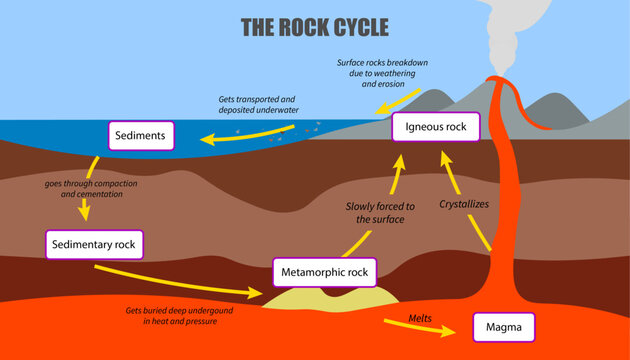
Gravity is the king of erosion. It pulls mountains down, bit by bit, grain by grain. Water and wind are its accomplices, but gravity is the mastermind behind the operation. Think of it as the ultimate rock sculptor, constantly reshaping the landscape.

All those broken-down bits and pieces? Gravity hauls them downhill. They get deposited in layers, compacting and cementing together over time to form sedimentary rocks. Think sandstone, shale, and limestone – all made possible by the relentless pull of gravity.
Gravity also plays a role in plate tectonics. Denser oceanic plates get pulled down into the mantle at subduction zones. What force is doing the pulling? You guessed it: gravity!
It's like gravity is constantly trying to flatten everything out, while heat is constantly trying to build things up. A never-ending tug-of-war between creation and destruction.
So, There You Have It...
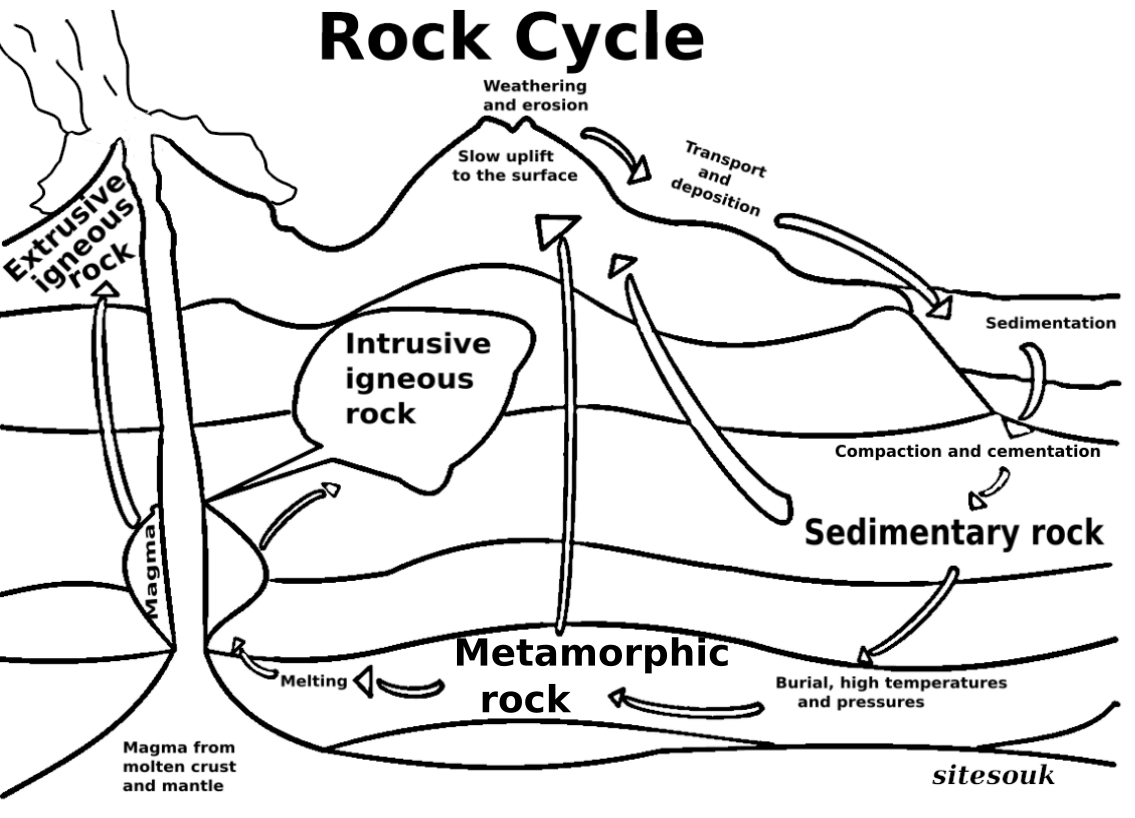
Sure, other forces play a part. But I stand by my claim: heat and gravity are the dynamic duo driving the Rock Cycle. They're the Batman and Robin of geology (or maybe the Thelma and Louise, depending on how you feel about erosion).
Next time you see a mountain, a volcano, or even just a humble pebble, remember the epic battle between heat and gravity that shaped it. And maybe give a little nod of appreciation to these two unsung heroes of the Rock Cycle. They deserve it!
Disclaimer: This is a simplified and (hopefully) entertaining explanation. The Rock Cycle is complex and fascinating, and involves many interacting processes. Please consult a qualified geologist for a more detailed (and probably less opinionated) explanation.