
Which Innovation Is Attributed To Geoffrey Chaucer

Okay, let's talk Chaucer. You know, the guy from English class. The one who wrote about pilgrims and told tales. The one you maybe sort of skimmed? Yeah, that Chaucer.
Everyone credits him with being the "Father of English Literature." Big deal, right? Lots of fathers out there. So, what did Chaucer really invent? Did he conjure up the sonnet out of thin air? Did he discover rhyme? Nope and nope.
Let's be honest. Chaucer's literary achievements are impressive. He used English when everyone else was busy with Latin or French. That's cool. But I have a slightly different (and maybe slightly controversial) take on his greatest invention.
Must Read
I believe Geoffrey Chaucer's biggest innovation was... the art of the humblebrag.
Now, hear me out! Before you grab your pitchforks and dusty copies of The Canterbury Tales, consider this:

Evidence A: The Man Himself
Think about Chaucer. He was a courtier. He hung out with royalty. He was basically medieval Hollywood. And what do celebrities and courtiers love to do? Talk about themselves, of course! But back then, you couldn't just tweet "OMG, just had lunch with the Queen! #blessed." You had to be more subtle.
So, how did Chaucer subtly brag? Through his characters! He created this whole cast of colorful pilgrims. And then, through the narrator (often a thinly veiled version of himself, let's be real), he "modestly" pointed out their flaws and virtues. Especially his own!
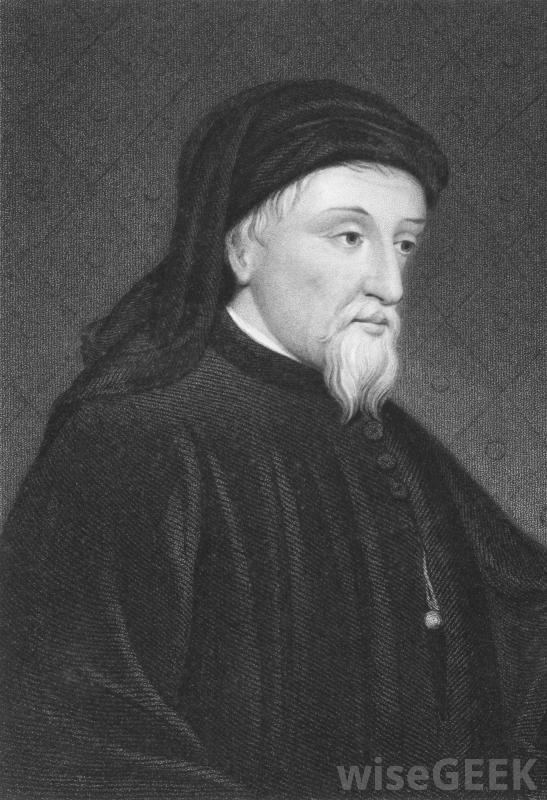
He pretends to be a naive observer, right? "Oh, I'm just a simple narrator, reporting what I see." But then he slips in these little comments. "The Knight was so noble, but you know, I did alright in battle too." Or, "The Wife of Bath is quite the storyteller, but my verses are pretty catchy, if I do say so myself."
Evidence B: That Self-Deprecating Humor
Think about his use of self-deprecating humor. It's classic humblebrag technique! He presents himself as slightly clueless. A bit awkward. Maybe not the sharpest quill in the box. "Oh, I'm just a simple poet, trying my best."
But what he's really doing is disarming you. He's lowering your expectations so that when he drops a brilliant line or a witty observation, you're even more impressed. It's like saying, "I'm not very good at baking," and then presenting a perfectly layered cake.
"And though that I be rude and plein, I wol yow telle a litel thyng in prose"
See? He's calling himself "rude and plein" (rough and simple). But then, he delivers some incredibly sophisticated and insightful prose! It's genius!
Evidence C: The Enduring Appeal
Let's face it: The Canterbury Tales are still popular because they're relatable. We all know people who are subtly (or not-so-subtly) trying to impress us. We all recognize those little moments of one-upmanship. And Chaucer captured that perfectly.

Maybe I'm completely wrong. Maybe Chaucer was just a genuinely humble guy who happened to be a literary genius. But I think there's a good chance he was also a master of the humblebrag. He just did it with better vocabulary and more elaborate metaphors.
So, the next time you read Chaucer, don't just focus on the knights and the pilgrims. Look for the subtle moments of self-promotion. The little hints of "Hey, I'm pretty good at this writing thing." You might just discover Chaucer's greatest (and most underappreciated) invention.
This, my friends, is my (slightly tongue-in-cheek) opinion. What's yours?