
Where To Place Smoke Detectors In House
:max_bytes(150000):strip_icc()/where-to-place-smoke-detectors-1152485_V2-3c5086adfaa646d69d312b45d342c621.png)
The Great Alarm Debate: A Quest for Peace and Quiet
Ah, the sweet serenade of a smoke detector. It usually chimes in right when you least expect it.
Often, it’s during a perfectly calm Sunday morning, or perhaps just as you've finally tucked the kids into bed.
That shrill, piercing beep isn't always for a raging inferno, is it? More often, it’s for burnt toast, an ambitious stir-fry, or even just a particularly steamy shower.
Must Read
The Mysterious Case of the Misplaced Beep
We all know the drill. That high-pitched wail sends everyone scrambling.
Suddenly, your peaceful home transforms into a frantic search for the "off" button.
And then, the big question emerges: "Why is it always going off there?"
"The true test of a homeowner is not how well they cook, but how quickly they silence a false alarm."
This article isn't about ignoring safety. Oh no, we're all about that.
It's about finding that mythical sweet spot where safety meets sanity.
It's about a playful rebellion against the tyranny of the overzealous smoke detector.
Official Wisdom vs. Everyday Woes
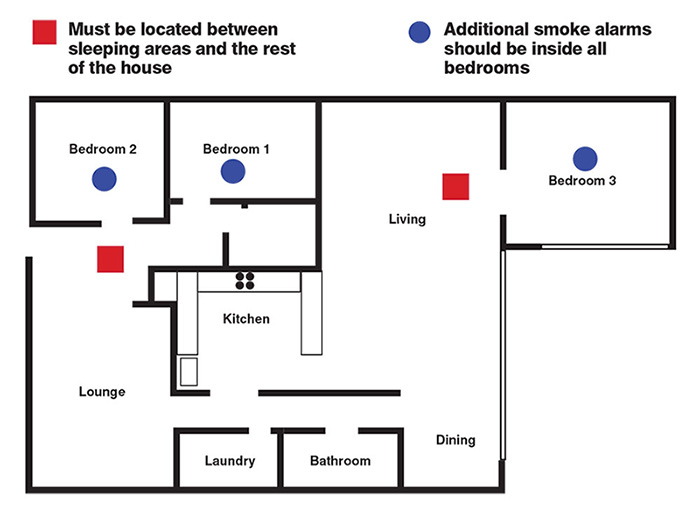
The rulebooks are very clear, aren't they? "One on every floor!" "Inside every sleeping area!" "Near the kitchen!"
These are sensible directives, of course. They come from smart people who know a lot about fires.
But those smart people probably don't cook weeknight dinners with toddlers underfoot, do they?
They haven't experienced the sheer panic of an alarm joining in on a particularly important Zoom call.
So, let's chat about a more human approach. A practical, perhaps even slightly rebellious, guide to smoke detector placement.
We're looking for the happy medium, a place where it can do its job without constantly judging your culinary skills.
Kitchen Confidential: A Culinary Conundrum
The kitchen. Ah, the heart of the home. Also, quite often, the heart of the false alarm.
You’re just trying to make a perfectly golden-brown slice of toast.
Next thing you know, the house thinks it's on fire. It's a drama we all know too well.
The official word often suggests having one near the kitchen.
But what does "near" really mean in the heat of a cooking moment?
"A kitchen smoke detector is like a very opinionated cooking critic, always ready to scream its disapproval."
Now, here's my slightly unpopular opinion. Do not, I repeat, do not place your smoke detector directly above your stove.
Unless you enjoy spontaneous screaming fits and the scent of burnt popcorn mixed with adrenaline, that is.
It's a recipe for disaster, not just for dinner, but for your nerves.
Instead, consider a strategic retreat. Think about placing it just outside the immediate cooking zone.
Perhaps across the room, near the pantry door? Or maybe closer to the dining area entrance?
It will still catch any actual smoke trying to escape the kitchen's confines.
But it might just let you brown your butter without a full-blown emergency simulation.
Some even advocate for a specific photoelectric detector for kitchens, less prone to nuisance alarms from cooking fumes.
This allows for culinary adventures without the constant fear of the loud, judgmental beep.
It's about giving your kitchen a little breathing room, a space for creative cooking.
A place where your pasta sauce can simmer in peace, away from the piercing judgment.
.png?impolicy=inforgraphic)
We want detection, not domestic distress every time someone fries an egg.
Bathroom Blunders: The Steamy Sensor Saga
Another classic false alarm culprit: the bathroom.
You've just enjoyed a wonderfully hot, steamy shower. You feel refreshed, rejuvenated.
Then, suddenly, "BEEP! BEEP! BEEP!" Your peaceful zen is shattered.
The smoke detector, probably perched right outside the bathroom door, has mistaken your invigorating steam for a house fire.
It's a common, infuriating occurrence that makes you question physics and common sense.
My unpopular opinion here is simple: never put a smoke detector inside a bathroom.
Nor directly above the bathroom door, if you can help it. Steam rises, you see.
It loves to play tricks on those sensitive little sensors.
Instead, try to place it a little further down the hallway, away from the immediate steam cloud.
It should still be close enough to detect any smoke from, say, an electrical fault in a hair dryer, or a forgotten curling iron.
But far enough to let you enjoy a hot soak without triggering a full evacuation drill.
Give your steam the space it deserves. Let it dissipate before it gets to the detector.
This is about respecting the sanctity of the self-care ritual.
And preserving the lifespan of your smoke detector's battery, which probably gets a workout from all that steam.

Bedroom Blues and Hallway Harmony: The Sleepy Sentinels
The Bedroom: A Personal Protector
Bedrooms are important, no arguments there. We need to be woken up if something goes wrong during the night.
But even here, placement matters. Directly over the bed? Probably not ideal for sensitive sleepers.
Near the door is usually a good bet. It catches smoke trying to enter or exit.
Avoid placing it too close to an air vent, where drafts might mess with its sensing ability.
We want a protector that wakes us up, not one that gives us nightmares about false alarms.
Hallways: The Unsung Heroes
Hallways are the classic, safe choice. They connect everything, after all.
A detector in a central hallway can cover multiple bedrooms and living areas.
It's the sensible, middle-of-the-road option that usually avoids major fuss.
But even in hallways, consider the flow of air. Is there a big draft from a door nearby?
Ideally, it should be in the middle of the ceiling, away from obstacles and direct airflow.
This ensures it catches smoke as it billows through the main arteries of your home.
Think of it as the ultimate traffic cop for smoke particles.
Directing them where they need to go: to the sensor, to trigger the alarm, to keep you safe.
The Basement Baffles and Attic Anomalies
Don't forget the forgotten frontiers: your basement and attic.
These areas, often out of sight, shouldn't be out of mind when it comes to detectors.
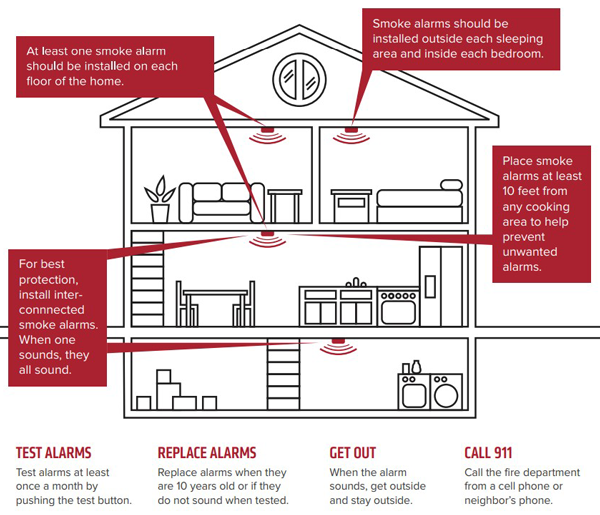
The basement often houses furnaces, water heaters, and electrical panels. All potential sources of trouble.
Place a detector down there, preferably near the furnace but not so close that dust or exhaust sets it off.
Attics might seem less critical, but faulty wiring or stored combustibles are always a risk.
Here, a detector can truly be a quiet, silent guardian, alerting you to problems before they spread.
These aren't areas typically prone to nuisance alarms from cooking or steam, so placement is less about avoiding false positives.
It's more about ensuring comprehensive coverage where hidden dangers might lurk unnoticed.
They are the true heroes of smoke detection, working tirelessly in the shadows.
Keeping watch over the nooks and crannies that we rarely visit ourselves.
A small investment in peace of mind for those rarely seen spaces.
The Zen of Detector Placement: Finding Your Inner Calm
So, there you have it. A slightly unconventional, but deeply practical, guide to smoke detector placement.
It’s all about balancing that crucial safety measure with your everyday sanity.
Don't let the little sentinel become your home's most annoying resident.
Instead, treat it as a wise ally, placed thoughtfully to protect without persistent protest.
Go forth, examine your detectors, and make those subtle, strategic shifts.
May your home be safe, and your toast perfectly browned, in glorious silence.