
Where To Place Carbon Monoxide Alarm
Okay, confession time. The other night, my smoke alarm decided to have a dramatic episode, blaring like a banshee because, apparently, I looked at a piece of toast too long. Cue the mad flailing of a kitchen towel, the frantic waving, and the eventual, blissful silence. As I stood there, heart pounding, thinking about how easily that thing gets triggered, a thought popped into my head: What about the other silent guardian? The carbon monoxide (CO) alarm. Unlike my drama queen smoke detector, CO is sneaky. It doesn't smell like burnt toast, it doesn't leave a visible trail, and it certainly doesn't give you a second chance. So, if even a little smoke can set off an alarm, where on earth do we put the one that's supposed to detect something we can't see, smell, or taste? It's a question that’s probably crossed your mind, too, hasn't it?
You’d think it would be straightforward, right? Plug it in, stick it to the wall, call it a day. But it's a bit like choosing the perfect spot for your favorite houseplant; too much sun, not enough sun, drafty corner... you get the picture. For something that literally saves lives, getting its placement wrong is, well, not ideal. Let's dive into the nitty-gritty, shall we?
Why Location Really Matters (And It's Not Just a Suggestion!)
Carbon monoxide is often called the "silent killer" for a reason. It's a byproduct of incomplete combustion from things like furnaces, gas stoves, water heaters, fireplaces, and even your car running in an attached garage. Since it’s colorless, odorless, and tasteless, your only line of defense is a properly functioning alarm. And "properly functioning" starts with "properly placed." Think of it like this: your alarm is sniffing the air for danger. If it's in a bad spot, it might miss the scent until it’s too late. We definitely don't want that.
Must Read
The Golden Rules of CO Alarm Placement (Your Cheat Sheet!)
Alright, let’s get specific. Here’s where your CO alarm will be its most heroic self:
1. Every Level Is a Must!
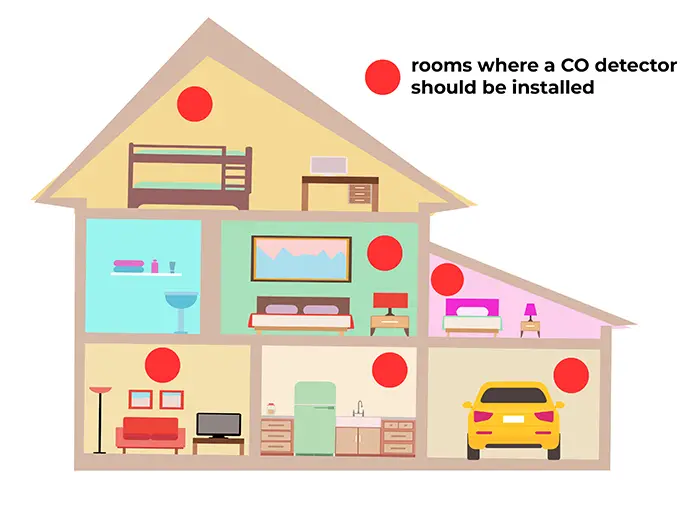
Yes, you heard that right. You need at least one CO alarm on every single level of your home. This includes the basement, the main floor, and any upper floors. CO can travel, and you want detection coverage throughout your entire living space. Don't skimp on this one!

2. Near Sleeping Areas
This is crucial. The biggest danger with CO poisoning is that it can happen while you're asleep, rendering you unable to wake up or react. Place an alarm within 10 to 15 feet of each sleeping area, or even inside each bedroom if you want extra peace of mind. The idea is that if it goes off, you'll hear it loud and clear while you're vulnerable. Some people even put a small, battery-operated one on their nightstand. Can you ever be too safe when it comes to your Zzz's?
3. Near Potential Sources (But Not Too Near!)
This sounds contradictory, I know! You should place an alarm near appliances that produce CO, such as your furnace, water heater, or gas dryer. However, there's a delicate balance. Don't place it directly on top of or right next to these appliances. Why? Because a small, harmless puff of CO upon ignition could trigger a false alarm, or worse, the exhaust might prevent proper air circulation around the sensor. Give them some space – usually 5 to 20 feet away is a good range, allowing it to detect CO in the general room air, not just directly from the vent. Also, if you have an attached garage, a CO alarm near the door leading into your house is a smart move.

4. Avoid the "No-Go" Zones
Just like a grumpy cat, CO alarms have places they just don't want to be. Avoid putting them:
- In direct sunlight or near heat sources (like ovens or fireplaces).
- In drafty areas, like near windows, doors, or vents. Strong air currents can mess with the sensor's accuracy.
- In dead air spaces, such as tucked away in corners or at the very peak of a vaulted ceiling (unless it's a specific ceiling-mounted model). CO mixes with air, so you want it where air circulates.
- Behind curtains, furniture, or anything that could block the alarm's vents.
- In excessively humid or dusty areas like bathrooms (the steam can damage the sensor) or very dusty workshops.
Basically, you want it somewhere where it can get a good, unobstructed sniff of the air around it.

5. Height: Eye Level, or Higher? (It's Not as Tricky as You Think)
Unlike smoke, which rises, carbon monoxide is roughly the same density as air, so it mixes evenly throughout the room. This means it can be detected at various heights. Many experts recommend placing alarms at chest height or eye level for optimal detection and easy access to test buttons. If you have a plug-in unit, well, you're pretty much stuck with outlet height, which is perfectly fine. For wall or ceiling mounted units, aim for an area that isn't too high that you can't reach it, and not so low it's prone to being knocked by pets or kids. The most important thing is that it's actually installed, and not still in its box!
A Quick Check-Up and Your Best Friend: The Manual
Once your alarms are perfectly placed, remember to test them regularly (usually once a month) and replace the batteries (if applicable) when you change your clocks for daylight saving time. And here’s a pro tip that 99% of us ignore: read the manufacturer's instructions! Seriously. Different models can have slightly different recommendations, and that little pamphlet holds all the secrets to your specific device. They really do know best!
Placing a CO alarm isn't rocket science, but it does require a little thought and intention. By following these guidelines, you're giving yourself and your loved ones the best possible protection against a truly insidious danger. It's a tiny investment for a huge peace of mind, right? Now, if you'll excuse me, I think my toast is calling for its next dramatic performance.
