Where To Place A Carbon Monoxide Detector
Alright, gather 'round, folks, grab another latte! Today we're tackling a topic that's less 'hilarious anecdote from my dating life' and more 'potentially life-saving, but still pretty funny if you think about it.' We're talking about carbon monoxide, the invisible, odorless, tasteless gas that's basically the ultimate party pooper. It's like that uninvited guest who slips in, eats all your snacks, and you don't even know they're there until you suddenly start feeling woozy and wondering if you've developed a sudden allergy to reality.
So, we need a hero, a tiny plastic sentinel to stand guard. Enter the carbon monoxide detector! But where do you put this little beacon of safety? It's not as simple as just slapping it on the wall and calling it a day. Oh no, my friends, there's an art to it. A very crucial, not-at-all-optional art.
The Great CO Myth-Busting Extravaganza!
First up, let's clear up some common misconceptions. You might have heard that CO either floats to the ceiling like a helium balloon after a kid's birthday party, or it sinks to the floor like my hopes on a Monday morning. Spoiler alert: it does neither! Carbon monoxide actually mixes pretty evenly with air. It's not a snob; it'll hang out wherever the air does. So, the whole "put it high because CO rises" or "put it low because CO sinks" debate is mostly hot air (pun intended!). The key is where it is in relation to you, not its elevation in the room.
Must Read
CO's Favorite Sneaky Move: While You're Napping!
Now, where do we put its arch-nemesis, the CO detector? Rule number one, whispered from the mountaintops (or at least, from sensible safety guidelines): near sleeping areas. Think of it this way: CO loves to sneak in when you're most vulnerable. It's got a real 'bad guy in a horror movie' vibe going on, preferring to strike when you're tucked in, dreaming of tacos or winning the lottery. You want its alarm to be the first thing that jars you awake, not the sudden realization that you're discussing philosophy with your houseplants.
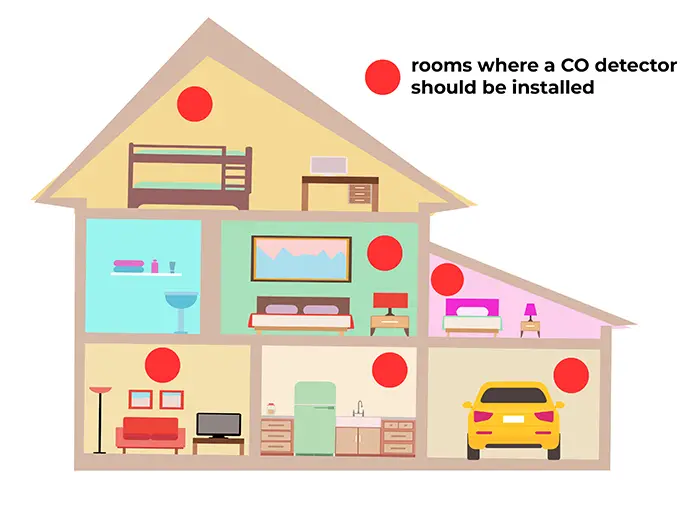
So, place one inside or just outside every bedroom. If you're a heavy sleeper, maybe even consider one inside the bedroom. You want that piercing shriek to cut through your dreams of becoming a professional napper like a hot knife through butter. Imagine waking up to that alarm instead of... well, instead of not waking up. Makes the beeping sound quite charming, doesn't it?
One is the Loneliest Number (for Detectors)
Got a multi-story house? A mansion with a secret dungeon? (No judgment, we all have hobbies.) Then you need a detector on every single level. Yes, even the basement where you keep your vintage collection of Beanie Babies. CO doesn't respect architectural boundaries or your carefully curated storage system. It's an equal-opportunity invader. So, one upstairs, one downstairs, one in the attic if you've got a secret lair up there. The more coverage, the merrier (and safer!).
The Goldilocks Zone: Not Too Close, Not Too Far
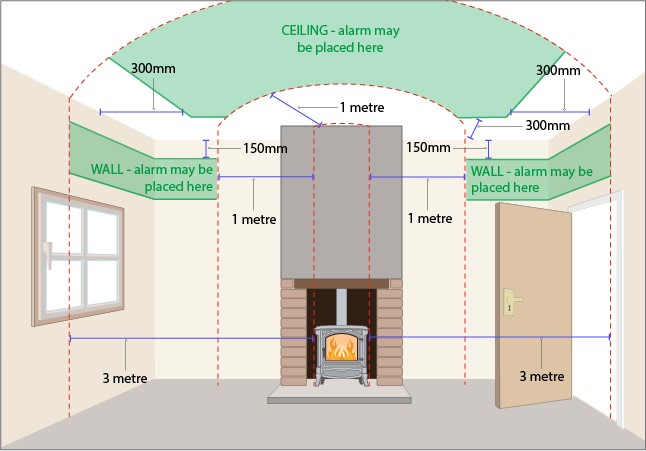
Okay, so what about near your furnace or water heater? It makes sense, right? Like putting a security camera right next to the vault. Well, yes, but also no. You want it close enough to catch a leak from a fuel-burning appliance, but not so close that it's getting false alarms every time your furnace sighs a little or your stove sputters. We're talking 10-15 feet away. Give it some personal space, people. It's doing important work, and it doesn't need to be spooked by every little puff of air.

A fun fact to chew on: Did you know that early symptoms of CO poisoning can mimic the flu? So that "winter bug" you had might have been something far more sinister... or just a really aggressive flu. Either way, a detector helps clear things up, potentially saving you from a visit to the emergency room (and a hefty co-pay!).
The "Where NOT to Put It" List (Because We All Need Boundaries)
Just as important as where to put it is where not to put it. This little hero has its quirks:

- Near windows or doors: That's like putting a smoke detector directly under your toaster. You're just asking for trouble, and frankly, a very annoyed CO detector that'll chirp every time a breeze blows through.
- In direct sunlight: These gadgets aren't sunbathers. Extreme temperatures can mess with their sensors.
- In extremely humid areas: Unless you're trying to invent a new form of shower karaoke that doubles as a CO warning system, avoid placing it inside the shower or right next to a super steamy bathroom.
- Underneath cabinets or behind furniture: Don't smother your tiny hero! It needs clear air access to do its job.
- Next to air vents: Again, those pesky drafts can confuse its delicate sensors.
Basically, give it some breathing room, a relatively stable environment, and a clear line of sight to the air in the room. It doesn't care about your feng shui, only your safety.
Test It, Love It, Keep It Alive!
And finally, folks, a detector is only useful if it's actually working. Press that test button regularly! The manufacturer recommends monthly, but let's be real, at least a few times a year. It's not just a fancy beeping device; it's your home's personal bodyguard against the invisible menace. Think of it as giving your tiny, plastic hero a high-five and making sure its superpowers are still active.
So, there you have it. Placing a carbon monoxide detector isn't rocket science, but it does require a little thought and a dash of common sense. Do it right, and you'll sleep soundly, knowing your home is safe from the silent ninja gas. And who knows, maybe you'll even have fun doing it! Or at least, enough fun to make it worth another coffee.