Where To Install Carbon Monoxide Alarm

Hey there, safety superstar! Let's chat about something super important but often gets pushed to the bottom of the to-do list: your carbon monoxide (CO) alarm. Now, I know what you're thinking, "Ugh, safety stuff? Can't it be fun?" And my answer is, "Yes! We can make it fun-ish!" Think of it less like a chore and more like giving your home a tiny, invisible superhero. Because let's be real, CO is the ultimate stealth villain – colorless, odorless, and a total party pooper.
So, you've got your CO alarm (or you're about to get one, high five!). But where exactly do you stick this little life-saver so it can do its best work? Don't worry, we're not talking about advanced calculus here. It's actually pretty straightforward. Think of it like strategically placing snacks at a party – you want them where people will find them easily, right?
The Golden Rules of CO Alarm Placement:
Let's break it down into a few easy-peasy zones. Your main goal is to catch CO before it becomes a problem, especially when you're dreaming of fluffy clouds and unicorn rides.
Must Read
1. Near Sleeping Areas (The "Sweet Dreams" Zone)
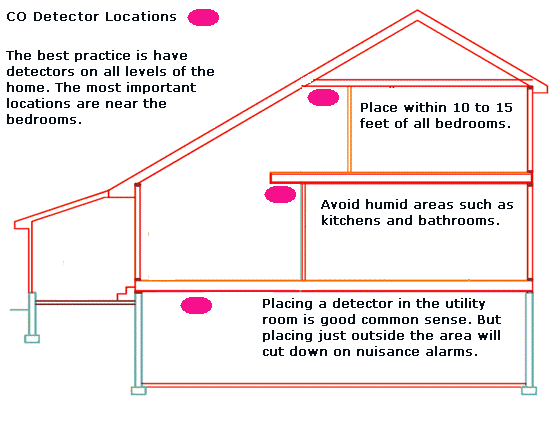
This is probably the most critical spot. You definitely want an alarm outside of and in the general vicinity of every separate sleeping area. So, if you have three bedrooms grouped together, one alarm in the hallway serving those rooms is a good start. But for ultimate peace of mind (and extra brownie points!), a CO alarm inside each bedroom is even better. Why? Because you're most vulnerable when you're asleep and can't detect a problem. Imagine a tiny CO detective standing guard while you snooze! Pure genius.
2. On Every Level (The "No Floor Left Behind" Zone)
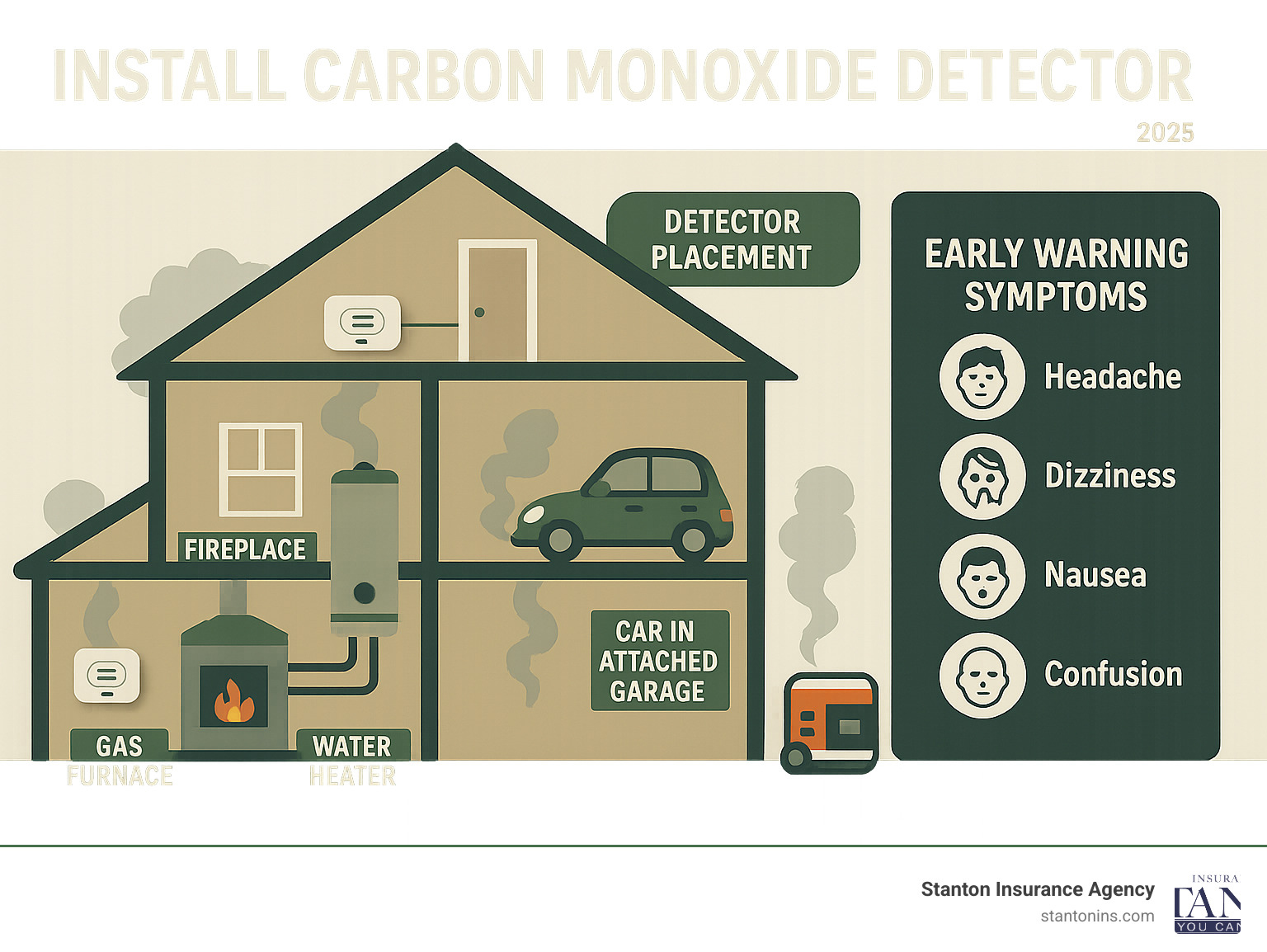
CO isn't picky about which floor it hangs out on. So, if your home has multiple levels (hello, basement! Bonjour, second floor!), you need an alarm on each and every one. Even if your basement is just for laundry and spider conventions, a CO alarm there is a smart move. CO disperses throughout your home, so covering all bases ensures you're protected no matter where you are (or where the CO decides to take a scenic tour).

3. Near Attached Garages (The "Car Fumes Are a No-No" Zone)
Got an attached garage? Awesome for keeping your car dry, but sometimes a little less awesome for CO if fumes decide to wander in. Install an alarm on the wall inside your home, right next to the door that leads into the garage. This way, if your car's exhaust decides to be a little too friendly, your alarm will be the first to know. Think of it as a bouncer for your house, keeping unwanted guests (like CO) out!
4. Near Fuel-Burning Appliances (The "Watchful Eye" Zone)
Your furnace, water heater, fireplace, gas stove, or even that cozy gas log set are all potential CO sources. It's a good idea to have an alarm nearby, but with a slight caveat: don't put it directly on top of or right next to them. You want it close enough to detect a leak, but not so close that it's getting false alarms from normal operation or extreme heat. Check your alarm's instruction manual for the specific distance, but generally, give it a little breathing room – maybe 10-15 feet away. It's like giving your appliances their own personal security detail, but from a respectful distance.
5. In Common Living Areas (The "Chill Zone" Zone)
Where do you spend most of your waking hours? The living room? The den? The kitchen (other than right next to the stove, of course)? These are great spots for an alarm too. It adds an extra layer of protection and ensures you're covered even when you're not sleeping. More alarms = more watchful eyes = more peace of mind!
A Few "No-Go" Zones (Where Not to Install)
Just as important as knowing where to put them is knowing where not to put them. These are little spots that might make your alarm less effective or prone to grumpy false alarms:

- Right next to windows or vents: Drafts can mess with readings.
- In direct sunlight or extreme temperatures: Alarms are like Goldilocks; they like it just right.
- Behind furniture or curtains: It needs a clear path to sniff out CO.
- In extremely dusty, dirty, or greasy areas: Keep its sensors clean!
- Within 5 feet of fuel-burning appliances: Too close can cause nuisance alarms.
Wall or Ceiling? And How High?
This is where your specific alarm's instruction manual is your absolute best friend. Some are designed for walls, some for ceilings. Some prefer being higher up on the wall, others lower. Always, always, always follow the manufacturer's instructions! They know their little gadget best. Generally, CO mixes with air, so placing it roughly at eye level or a bit higher on a wall is a common recommendation, but again, check the manual!
So there you have it! A quick, friendly guide to making sure your home is equipped to detect that sneaky CO. Installing carbon monoxide alarms might not be as exciting as binge-watching your favorite show, but it's easily one of the smartest and kindest things you can do for your family and yourself. It's a small effort that brings a huge wave of safety and comfort.
Now go forth, place those alarms strategically, and enjoy your home knowing you've got those invisible superheroes on the job! You're not just a homeowner; you're a home protector. Give yourself a pat on the back – you're doing great!