
Where Should Carbon Monoxide Detectors Be Placed In A Home
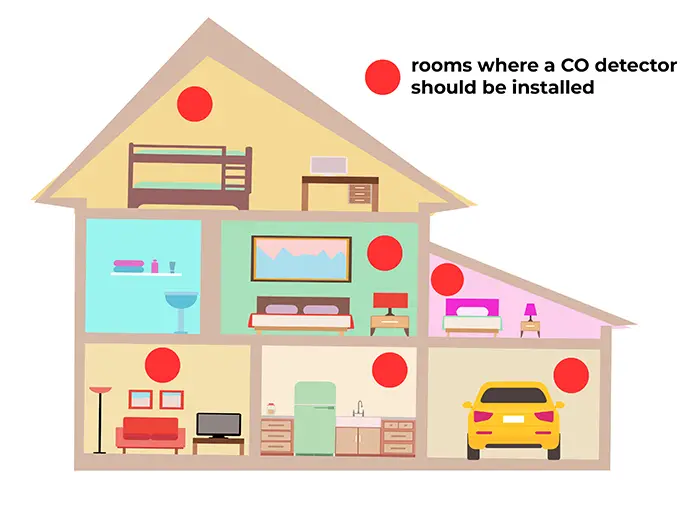
Ah, the humble carbon monoxide detector. It’s that little device that nobody really thinks about until it beeps. Or, worse, until you wish it had beeped.
We all know we need them. They’re like that sensible friend who always reminds you to wear a coat. A bit nagging, but ultimately, they mean well.
But here’s where things get interesting, friends. Most advice tells you to put them near bedrooms. That's good, certainly.
Must Read
They also say one on every level. Again, solid, safety-first thinking.
However, I'm here to gently nudge you towards a slightly more… shall we say, unconventional approach. It's about common sense.
It’s about where life actually happens in your home. And where that sneaky, silent killer, carbon monoxide, might actually lurk.
Think of your home as a bustling city. Where would you put the traffic cameras? Not just on the quiet streets, right?
You’d put them where the action is. Where the potential for trouble brews.
The Kitchen Conundrum: More Than Just Meals
Let’s start with the heart of many homes: the kitchen. Gas stove? Gas oven?
These appliances are generally well-behaved. But sometimes, they can have an off day.
A pilot light might flicker out. A burner might not ignite fully.
Are you really going to wait for that CO to waft all the way to the hallway outside your bedroom? That seems like a rather long journey for something so critical.
.jpg?format=2500w)
"Your oven isn't always on its best behavior, is it? Sometimes it needs a gentle reminder."
My "unpopular" opinion? Place a CO detector in or very near your kitchen. Not right next to the stove, mind you, that might trigger nuisance alarms from cooking fumes.
But perhaps across the room. Or in the immediate dining area. Somewhere it can sniff out trouble long before it's too late.
Think of it as the ultimate sous chef, quietly monitoring the air. A guardian against gas-related culinary catastrophes, if you will.
It’s like having an extra pair of eyes where you often have flames. Makes sense, doesn't it?
The Garage Gambit: Where Cars Come to Rest
Next up, the garage. Especially an attached garage. This one feels like a no-brainer, yet it’s often overlooked.
Do you ever start your car and let it warm up? Maybe you back in and then fiddle with something in the trunk?
That engine is producing carbon monoxide. Even if the garage door is open, some of that gas can seep into your home.
Think about it. That door from the garage into your house isn't hermetically sealed, is it?
It has gaps. Air moves. And with that air, potentially, moves poisonous gas.
"That old lawnmower, bless its heart, sometimes has a bit of a cough. And that cough can be more serious than you think."
So, consider a detector right inside the door leading from the garage into your living space. This is prime real estate for early detection.

It's like having a bouncer at the door, making sure no unwanted guests (like CO) sneak into your party. It's simply smart protection.
This placement is less about official rules and more about practical, everyday risks. Your car engine is a known producer of CO. Why wouldn't you want an early warning system right there?
The Utility Room Underdog: Furnaces and Hot Water Tanks
Many homes have a dedicated utility closet or room. This is often where your furnace and hot water heater live.
If they’re gas-powered, they are constant combustion machines. They work tirelessly, day and night.
And like any machine, they can falter. A flue might become blocked. A burner might malfunction.
These are often hidden away, out of sight, out of mind. Until they're not.
Placing a CO detector near these faithful servants is just good manners. It's a "thank you for your service, but please behave" kind of gesture.
Especially if these units are in a basement. Basements can be tricky places for air circulation.
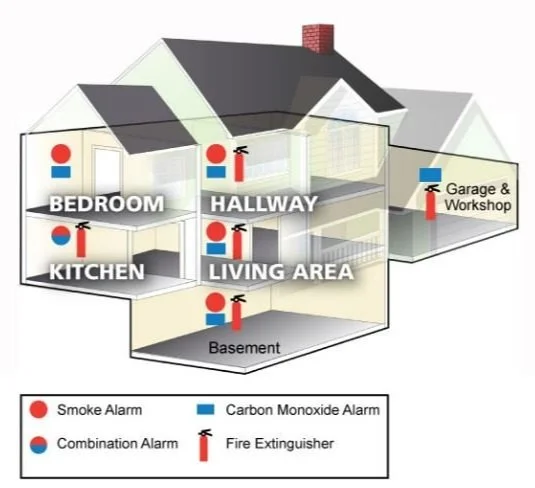
A CO detector in the basement, especially near the furnace, is a smart move. It watches over the big, gas-guzzling appliances.
/where-to-place-smoke-detectors-1152485_V2-3c5086adfaa646d69d312b45d342c621.png)
It's like having a watchful eye on the heavy machinery, ensuring everything runs smoothly and safely. Don't leave your hard-working appliances unwatched.
Bedrooms: Still Important, But Think Smart
Of course, you absolutely need detectors near bedrooms. This is where you sleep, where you're most vulnerable.
But instead of just "outside the bedroom door," think about your specific layout.
If you have a long hallway with multiple bedrooms, one detector at each end might be more effective than just one in the middle.
Or, if you have a sprawling master suite, maybe inside the room itself, particularly if it's far from the main hallway.
It’s about proximity to where you spend the most uninterrupted time. Sleeping makes you particularly susceptible.
You want that alarm to be loud and clear, right where you can hear it and react. Don’t cut corners on bedroom safety.
The "Height" Hoax: CO Mixes, It Doesn't Float or Sink
Here’s another little tidbit: carbon monoxide is often thought to be lighter or heavier than air. It’s neither.
It actually mixes pretty evenly with the air in your home. Think of it like stirring sugar into water.
So, don't fuss too much about whether it should be high on the wall or low. Anywhere between knee-height and eye-level is generally fine.
Just make sure it's not directly in a draft or behind heavy furniture. It needs clear access to the air.
No need to overthink the exact height, just ensure it's uninhibited. The goal is simple detection.
The Playful Takeaway: Be a Smart Sniffer
So, while the official advice is a great baseline, don't be afraid to use your common sense. Be a little bit of a detective.
Walk through your home. Where are the potential sources of carbon monoxide?
Where do you and your family spend the most time? Especially sleeping, but also cooking and relaxing.
Then, place your CO detectors strategically. More is often better, especially in areas of higher risk.
Test them regularly. Change those batteries, even if they whine about it.
Your carbon monoxide detector is a silent hero. Give it the best vantage point to do its job.
It's about peace of mind, knowing your home's "air traffic control" is well-positioned. It’s a small effort for a huge return on safety.
Be smart, be safe, and let your little electronic friends watch over you. They're not just gadgets; they're guardians.