
Where Should Carbon Monoxide Detectors Be Installed In A Home
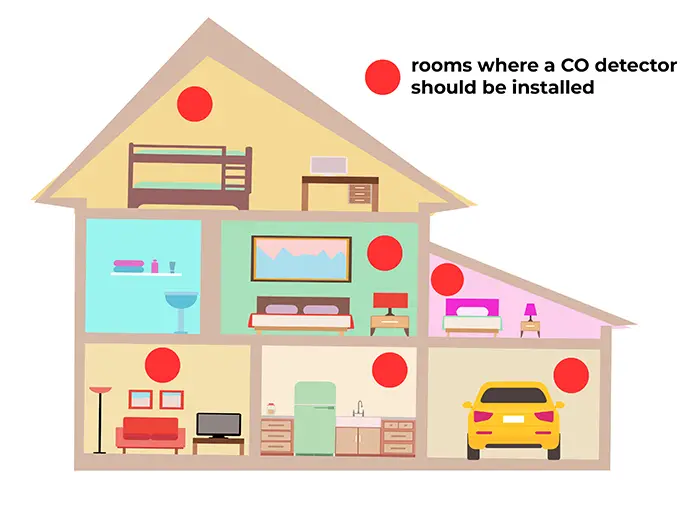
Alright, let’s talk about carbon monoxide (CO) detectors. We all know they’re important, like flossing or remembering your reusable bags – things we should do, but sometimes life just... happens. But unlike forgetting your tote at the grocery store, forgetting to place your CO detector properly isn't just a minor inconvenience; it's a real silent ninja of a problem. CO is the ultimate uninvited guest: invisible, odorless, and utterly rude. So, let’s make sure your home is prepared to give it the boot, or at least sound the alarm, with a little common sense and a dash of humor.
Think of your CO detector as your home’s personal bodyguard, but instead of wearing a fancy suit, it’s a little plastic disc that sniffs out trouble. The big question isn't if you need one, but where do these little heroes do their best work?
The Golden Rule: Sleepy Zones First
This is probably the most important rule. If you take nothing else from this chat, remember this: put a detector near every sleeping area. Why? Because when you’re sound asleep, dreaming of tacos or winning the lottery, you’re not exactly going to notice the early signs of CO poisoning. You won't feel woozy or have a headache. You’ll just… stay asleep. Which, in this scenario, is not good. It's like your brain has hit the snooze button indefinitely.
Must Read
So, we’re talking about outside each bedroom, or if you have an open-plan sleeping area (lucky you!), strategically placed where it can wake up everyone. Imagine it as a grumpy alarm clock that only goes off when things are really wrong. You want that alarm clock close enough to actually wake you from your slumber.
Every Floor, Every Level: CO Doesn't Discriminate
CO gas mixes pretty evenly with air, so it's not like smoke that rises or some heavy gas that sinks to the floor. It's more of a free spirit, chilling wherever it pleases. That means you need a detector on every single level of your home. Yes, even the basement where your furnace probably lives, and definitely the top floor where Aunt Mildred's dusty old collection of porcelain cats resides.
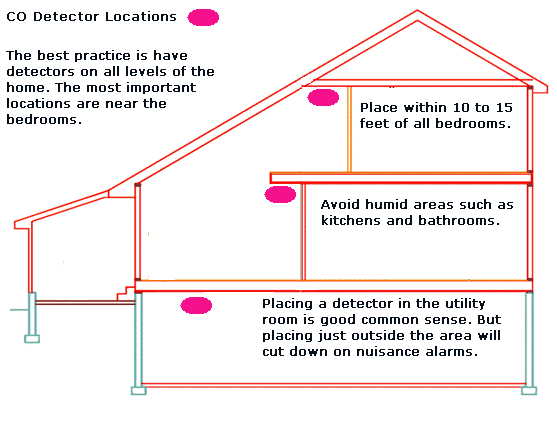
Think of it this way: your home is a multi-story fortress, and CO is trying to infiltrate every single floor. You wouldn't just put guards on the ground floor, right? You need one in the basement where the big, fuel-burning beasts (furnace, water heater) often live, one on the main living floor where you have fireplaces or gas stoves, and one on the upper floors where all the serious sleeping happens. No floor left behind!
Where the Party Starts (and Where it Shouldn't): Near Appliances
This sounds like a no-brainer, right? Put the detector near the things that make CO! And yes, that’s largely true. If you have a furnace, a water heater, a gas stove, or a fireplace that runs on gas, it's a good idea to have a detector in the general vicinity. These are the usual suspects, the prime locations for CO to make its grand entrance.
However, there's a little nuance here. You don't want to place your CO detector right next to the appliance, like a stage-five clinger. Why? Because drafts, high heat, or even the initial puff of combustion can sometimes trigger a false alarm. It’s like having a smoke detector scream bloody murder every time you make toast. Annoying. Aim for about 5-20 feet away from the appliance. Close enough to catch the drift, far enough to avoid the drama.

The "Goldilocks" Height: Not Too High, Not Too Low
As mentioned, CO mixes with air, so it's not like you need to bust out a tape measure and get super precise. Unlike smoke detectors, which love hanging out on the ceiling, CO detectors are a bit more flexible. Generally, placing them at knee to chest height is a good bet. Some experts say eye level is fine too. The main thing is to avoid putting them directly on the ceiling (unless it's a combined smoke/CO unit, then the smoke detector rules apply) or tucked away behind furniture where air can't circulate.
Don't stick it in a cupboard, okay? It needs to be out in the open, breathing in your home's air, doing its job like a pro. Think of it like trying to listen to a conversation; you wouldn’t stand behind a closed door, right?
.jpg?format=2500w)
Don't Forget the Garage!
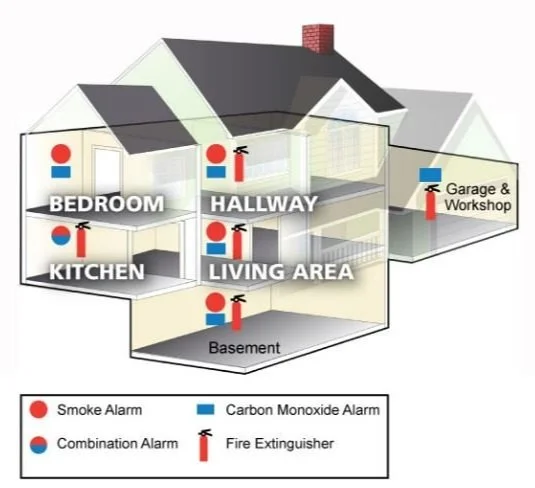
If you have an attached garage, this is a prime suspect for CO. Running your car, even for a "quick minute" with the garage door closed, can fill that space with CO faster than you can say "oops." And that CO can easily seep into your living space. So, if your garage is cozying up to your home, slap a detector in there too. Maybe not right next to the exhaust pipe, but certainly in the garage itself, near the door leading into your house.
A Little Housekeeping: Test 'Em!
Last but not least, remember to test your detectors monthly. They usually have a little "test" button. Push it! Hear the chirp? Good. Replace the batteries annually (or follow manufacturer instructions, some have 10-year sealed batteries). And just like that friend who overstays their welcome, these detectors have a lifespan, usually 5-7 years. Check the expiration date on the back and replace them when it’s time.
So there you have it! Installing CO detectors isn't rocket science, but it does require a little strategic thinking. By placing them correctly, you're not just buying a gadget; you're investing in peace of mind, ensuring that the silent ninja stays outside, and your household continues to dream sweet, CO-free dreams. Now go forth and detector-ize your home!
