Where Do You Put A Carbon Monoxide Alarm
Okay, so picture this: I recently decided, in a moment of pure domestic ambition, to finally get one of those fancy smart plugs. You know the ones that let you turn your lamp on and off with your voice? Revolutionary, right? I excitedly unboxed it, read precisely zero instructions (because who has time for that?), and then stood there, utterly bewildered. Where do I plug this thing in? My brain, usually a whirlwind of profound thoughts like "Is it too early for a snack?" or "Did I remember to feed the sourdough starter?", completely short-circuited. It was a simple question with a seemingly obvious answer, yet I felt like I was solving a Rubik's Cube blindfolded.
And that, my friends, got me thinking. We spend an embarrassing amount of time agonizing over the most trivial placements in our homes. Where does the new rug go? Is this picture frame aesthetically balanced with that vase? Should the coffee table coasters be stacked or scattered? (Definitely stacked, let's be real.) But then there are those super important things, the ones that actually keep us safe, where we might just slap them anywhere and hope for the best. And top of that list, perhaps even more crucial than your carefully curated coaster arrangement, is the humble but mighty carbon monoxide alarm.
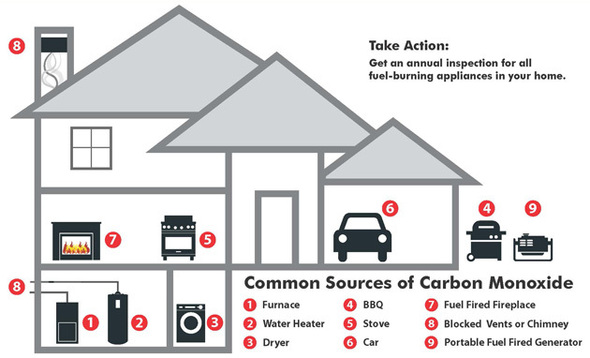
You’ve heard about carbon monoxide (CO), right? It’s the invisible, odorless, tasteless villain of the home. The silent assassin, if you will. Produced by everyday stuff like furnaces, gas stoves, water heaters, and even your car running in an attached garage, it can build up to dangerous levels without you ever knowing until it’s too late. Pretty chilling thought, isn't it? Which means knowing where to put your CO alarm isn't just a suggestion; it's a non-negotiable, gotta-do-it, safety-first kind of deal.
Must Read
The Golden Rules of CO Alarm Placement: Not Just Anywhere!
1. Near Sleeping Areas. Seriously, This Is Key.
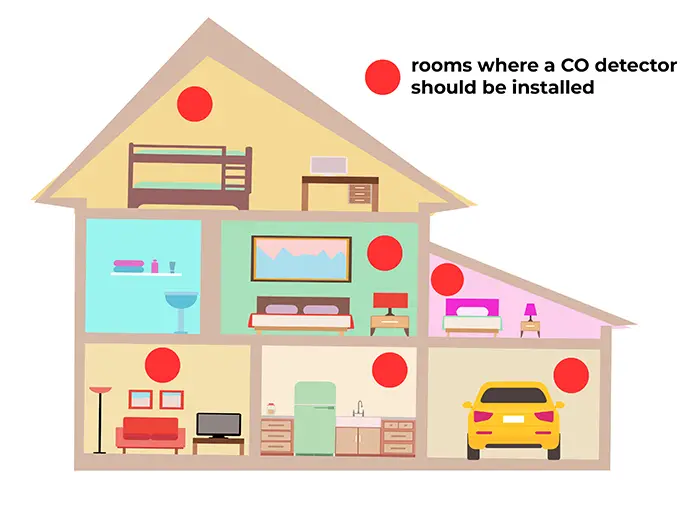
Imagine you're tucked in bed, dreaming of puppies and endless pizza. CO levels start to rise. You won't wake up sniffing the air; you'll just... not wake up properly. That's why the absolute, undeniable, first-place-you-should-think-of spot is outside each separate sleeping area. If you have multiple bedrooms in a hallway, one alarm in that hallway is usually good. If your kids' rooms are on one side of the house and yours on the other, you might need two. Think of it as an invisible bodyguard for your slumber.
2. On Every Level of Your Home. Yes, Even the Basement.
CO, despite popular myths, doesn't magically float to the ceiling like a helium balloon or sink to the floor like a lead weight. It actually mixes pretty evenly with the air. So, having an alarm only upstairs or only downstairs is like having a single smoke detector in a multi-story mansion – not super effective. You need at least one CO alarm on every single level of your home, including finished basements and attics. If you have an attached garage, definitely put one there too, or just outside the door connecting to your living space.

3. A Safe Distance from Fuel-Burning Appliances.
This one might seem counterintuitive at first, but hear me out. While CO comes from things like your furnace or water heater, you don't want to place the alarm right next to them. Why? Because sometimes, these appliances might emit a tiny, harmless puff of CO during startup. Your alarm, bless its diligent heart, could trigger a false alarm, sending you into a panic when there's no real danger. The general rule is to keep it at least 15-20 feet away from potential CO sources. Think "nearby," not "on top of."
4. Wall or Ceiling? It Depends...
Many alarms come with instructions for wall or ceiling mounting, and often, it's about mid-height on a wall (about 5 feet from the floor) or on the ceiling. Crucially, always follow the manufacturer's specific guidelines, because different models can have different optimal sensor locations. But the main takeaway here is that CO doesn't behave like smoke (which rises) or propane (which sinks). It mixes. So, don't get too hung up on "high vs. low" if you're following general guidelines and the manufacturer's instructions.
Where Not to Put Your CO Alarm (Equally Important!)
- Right in the kitchen: Cooking fumes can trigger false alarms.
- In dusty, dirty, or greasy areas: These can clog the sensor.
- In direct sunlight or near heat sources: Temperature fluctuations can mess with it.
- Near windows or doors, or air vents: Drafts can dilute CO readings or prevent them from reaching the sensor accurately.
- Behind curtains or furniture: Obstructions block the sensor from doing its job.
- In extremely humid or damp areas: Like bathrooms.
Alright, so now you're armed with the knowledge. No more guessing games, no more "I'll just put it wherever it looks least ugly." This isn't about interior design, folks; it's about life and breath.
Take a moment, actually, scratch that – make it a priority today or this weekend to check your CO alarms. Do you have enough? Are they in the right spots? Are the batteries fresh (if applicable)? Most modern CO alarms have a lifespan of about 5-7 years, so check the expiration date on the back too! It's a small task that yields an immeasurable return: peace of mind and, well, the ability to keep breathing freely. Trust me, it's far less complicated than figuring out where to put a smart plug. (Though I did eventually figure that out, too, just FYI. Victory!)