
Where Do You Hang Carbon Monoxide Detector
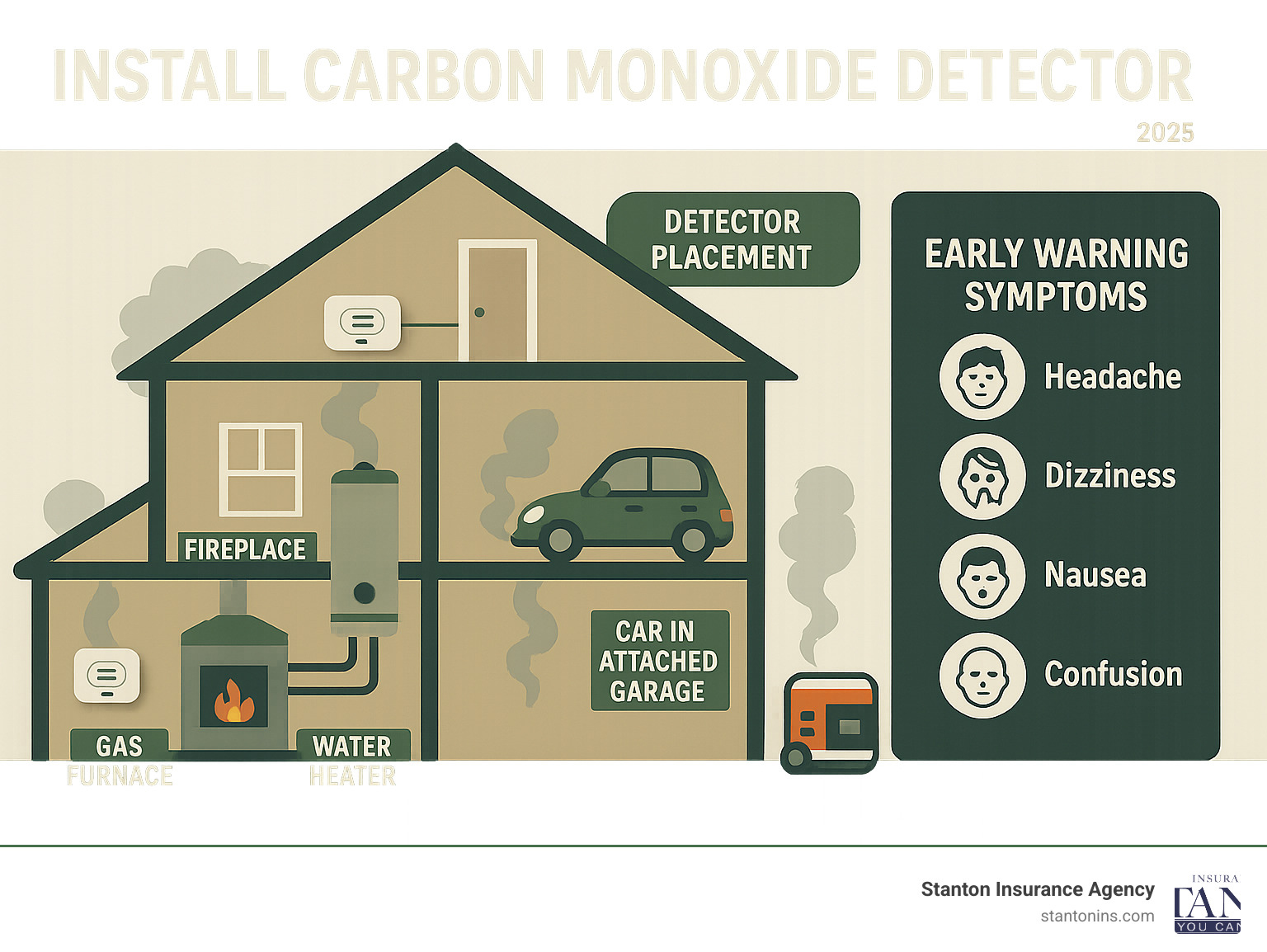
Alright, let's talk about something that's probably been lurking in the back of your mind – that little gadget that keeps you safe from an invisible foe. We're not talking about your Wi-Fi router's signal strength, but something far more vital: your carbon monoxide (CO) detector. It’s like the unsung hero of home safety, and knowing where to hang it is a game-changer for your peace of mind.
Think of carbon monoxide as the ultimate stealth ninja of dangerous gases. It's colorless, odorless, and tasteless. No superhero senses can detect it, which is why having the right tech in the right place is paramount. It’s emitted by fuel-burning appliances – think furnaces, water heaters, gas stoves, fireplaces, and even your car running in an attached garage. Incomplete combustion is the culprit, and it can happen anytime.
Why Location is Key (and Not Just for Real Estate)
You wouldn't put your fire alarm in the pantry, right? Similarly, there's a method to the CO detector madness. Its job is to sniff out trouble before it becomes, well, trouble. So, let's get down to brass tacks on placement.
Must Read
General Rule of Thumb: Everywhere!
Seriously, aim for at least one detector on every level of your home. This includes the basement, the main floor, and the upstairs sleeping areas. More is definitely merrier when it comes to CO safety. Think of them as your home's personal team of silent guardians, each assigned a floor to patrol.

The Bedroom Lowdown: Your Sleepy Safety Zone
This is probably the most crucial spot. Why? Because you're most vulnerable when you're asleep. Symptoms of CO poisoning (headache, dizziness, nausea) can often be mistaken for the flu or simply ignored while you're dreaming of tacos. So, place a detector near or in every separate sleeping area. This means if you have three bedrooms, aim for a detector near each one. It's not about being directly in the room, but close enough to wake you up if danger is lurking in your slumber zone.
The Appliance Alley: Near the Source (but Not Too Near!)
Got a furnace in the basement? A gas water heater in the utility closet? A fireplace in the living room? These are prime suspects for CO emissions. So, place a detector within proximity of fuel-burning appliances. However, there's a nuance: avoid placing it too close to the appliance itself, or you might get nuisance alarms from normal operation (like a brief puff of exhaust when a furnace kicks on). Give it a little breathing room – a good 15-20 feet away is often ideal.
The Garage Gambit: A Must-Have if Attached
If your garage is attached to your home, a CO detector here isn't just a good idea; it's practically mandatory. Even briefly starting your car to warm it up before pulling out can release CO. A detector placed in the room adjacent to the garage, or even inside the garage itself (if it's a model rated for garage conditions), acts as an early warning system against exhaust fumes creeping into your living space. Just imagine the peace of mind knowing that quick trip to the grocery store isn't inadvertently turning your home into a hazard zone.

Height Matters (Sort Of, But Not as Much as You Think)
Unlike smoke, which rises, carbon monoxide mixes fairly evenly with air. So, you might hear conflicting advice about placing them high on a wall or low. The general consensus from most fire safety experts and manufacturers is that placement on a wall at least 5 feet from the floor (around eye level) or on the ceiling is effective. Just follow the specific instructions that come with your detector, as different models might have slightly different recommendations. The main thing is to ensure it's not obstructed by furniture or curtains.
Fun Fact: Did you know some sources claim CO is slightly lighter than air at room temperature, while others say it's heavier? The truth is, it's very close to air density, so it diffuses pretty well. That's why general location is more important than precise height.

The Maintenance Memo: Test, Replace, Repeat!
Installing it is just step one. Don't be that person who sets it and forgets it for a decade! Most detectors have a test button – give it a press monthly to ensure it's chirping correctly. If your detector uses batteries, follow the old adage: change them twice a year when you adjust for Daylight Saving Time. And here's a biggie: CO detectors, just like smoke alarms, have a lifespan. Typically, they need to be replaced every 5-7 years. Check the manufacture date on the back – there’s usually an "end-of-life" indicator. Think of it as a small, scheduled investment in your family's future.
Consider combo units too! A smoke and carbon monoxide detector in one can be a smart, space-saving solution, offering dual protection without cluttering your walls. They’re like the Swiss Army knife of home safety!
Bringing it Home: A Little Effort, a Lot of Love
So, where do you hang your carbon monoxide detector? The answer is: strategically and thoughtfully. It's not just about ticking a box; it's about creating a truly safe haven for yourself and your loved ones. This isn't just some boring home maintenance chore; it’s a proactive act of care, a silent promise that you're looking out for what matters most. A few minutes of installation and a little routine maintenance are all it takes to turn an invisible threat into a perfectly manageable concern. Go forth, hang those detectors, and breathe easy!
