
Where Are America's Nuclear Power Plants
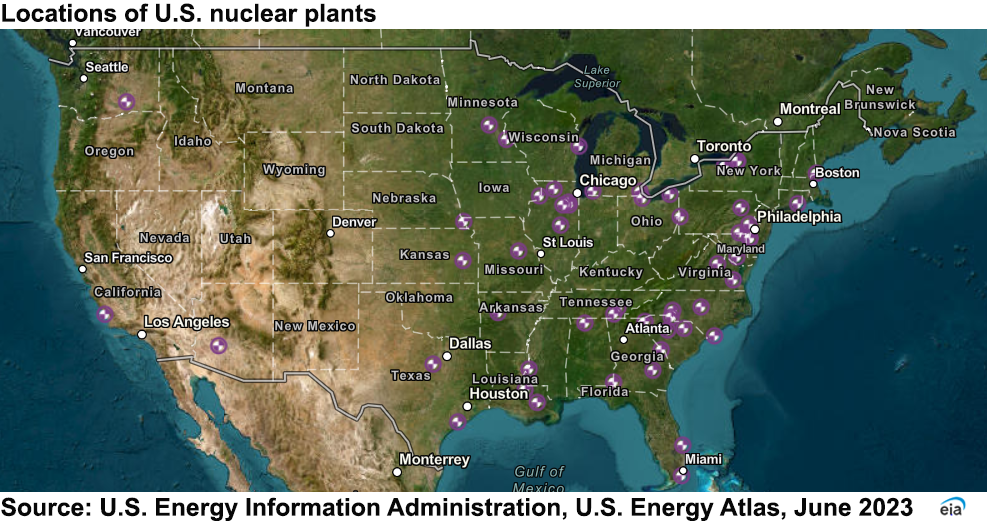
Alright, settle in, grab your metaphorical coffee (or actual coffee, I'm not judging), because we're about to embark on a quest. Not for the Holy Grail, mind you, but for something arguably just as mysterious to the average American: Where are America's nuclear power plants?
It's a question that probably hasn't kept you up at night, mostly because nuclear power plants aren't exactly screaming for attention. They don't have celebrity endorsements, they don't host reality TV shows (though "Real Housewives of Reactor Operators" has a certain ring to it), and they certainly don't glow green in your backyard like a Homer Simpson fever dream. (Spoiler alert: they don't glow green at all.)
The Great Disappearing Act: Why Don't We See Them?
Think about it. You've seen wind turbines, solar panels, maybe even a hydroelectric dam on a scenic road trip. But a nuclear power plant? Unless you live near one, or actively seek out their coordinates like some kind of energy-themed treasure hunter, they often feel like the Bigfoot of the energy world – rumored, talked about, but rarely spotted in the wild.
Must Read
Part of the reason is their sheer reliability. When things work smoothly, they don't make headlines. No dramatic sunsets or quirky Instagram moments. They just... power things. Quietly. Efficiently. Like that one friend who always pays their share of the bill without making a fuss.
So, Spill the Uranium: Where ARE They?
Okay, enough suspense. Are they hiding in plain sight, disguised as giant, futuristic bird feeders? Are they underground, guarded by laser-wielding squirrels? Nope. The answer is both delightfully simple and surprisingly widespread.

America has about 54 commercially operating nuclear power plants, housing 93 nuclear reactors. These behemoths are spread across 28 states. That's right, almost 30 states are quietly humming along, thanks in part to nuclear energy. Bet you thought it was just like, Nevada and a few secret bunkers, didn't you?
And here's a mind-bender: these plants generate roughly half of the nation's carbon-free electricity. Yep, while everyone's buzzing about renewables (rightfully so!), nuclear has been the unsung hero, doing its part to keep the air cleaner since your grandparents were probably listening to disco.
Coastal Coziness and Riverfront Real Estate
So, where specifically? If you're playing "Where's Waldo: Nuclear Edition," start looking near large bodies of water. Rivers, lakes, coastlines – these are prime locations. Why? Because nuclear power plants are essentially massive, sophisticated kettles. They heat water to create steam, which then spins turbines to make electricity.
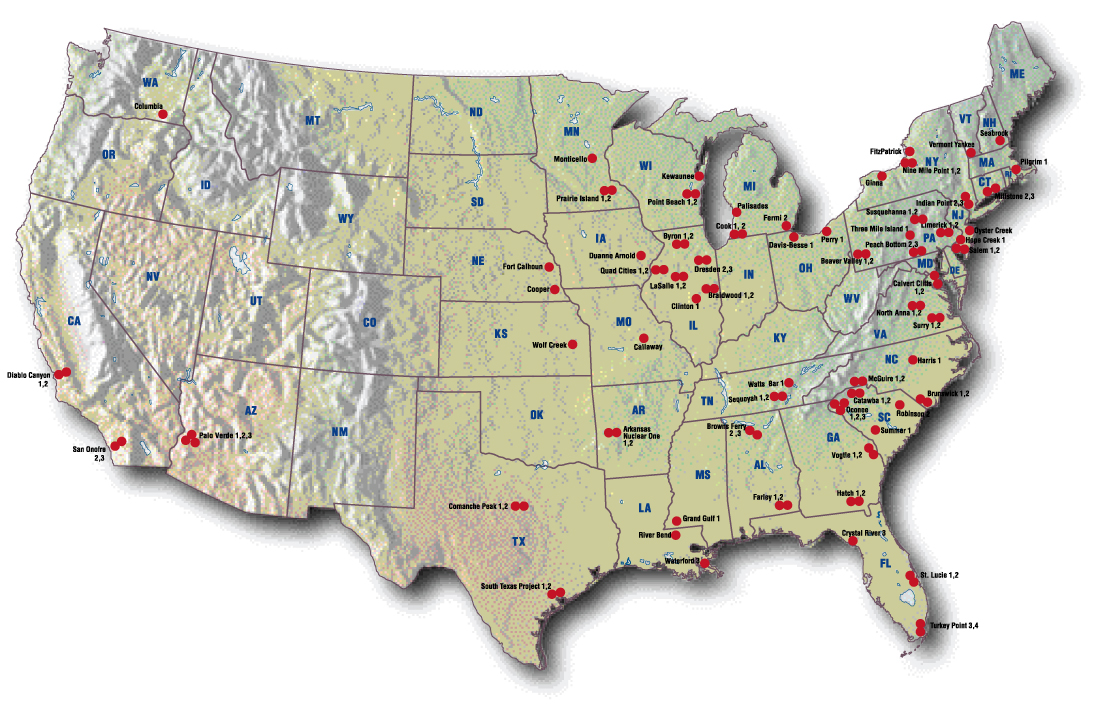
And after all that steaming, they need a lot of water for cooling. Imagine trying to cool a giant pot of pasta water with a tiny ice cube. You'd need a bigger ice cube, or, in this case, a whole ocean or mighty river!
You'll find a concentration of them along the East Coast, especially in the Mid-Atlantic and Southeast (think Georgia, North Carolina, South Carolina, Virginia, Pennsylvania). But don't count out the Midwest either, with states like Illinois (which has the most reactors of any state!), Michigan, and Ohio hosting their fair share.
In fact, Illinois is practically the nuclear capital, often leading the pack in total nuclear generation. So next time you're having a deep-dish pizza, remember it might just be powered by an atom or two.
![U.S. Nuclear Power Plants and Production by State [1650x1275] : MapPorn](https://external-preview.redd.it/IabWt3J8zmHtcCP04mPXZQaKuufPN2t7tvlvUtSatUU.png?width=960&crop=smart&auto=webp&s=35c6857a877c048ddb83a9b7b0f8b2ef93024b3b)
What Do They Look Like? (Hint: Not a Cartoon)
Forget the iconic, smoking cooling towers you see in cartoons that are actually cooling towers, not the reactor itself. The reactor building is typically a big, stout, dome-shaped structure – often called a containment dome. It's built like a fortress, designed to withstand pretty much anything short of an asteroid directly aimed at it. And even then, it would probably just sigh and ask for more coffee.
The giant, often hyperbolic-shaped towers you do see nearby are indeed cooling towers. They release water vapor, which looks like smoke but is actually just a big, steamy hug for the atmosphere. So if you spot a massive structure with what looks like clouds pouring out, you've likely found your target!
Safety First (and Second, and Third...)
Before you start picturing glow-in-the-dark mutant squirrels, let's talk safety. Modern nuclear plants have layers upon layers of redundant safety systems. We're talking more security than a Kardashian's beauty regime and more backup plans than a procrastinating student's essay. They are heavily regulated by the Nuclear Regulatory Commission (NRC), so it's not exactly a free-for-all.
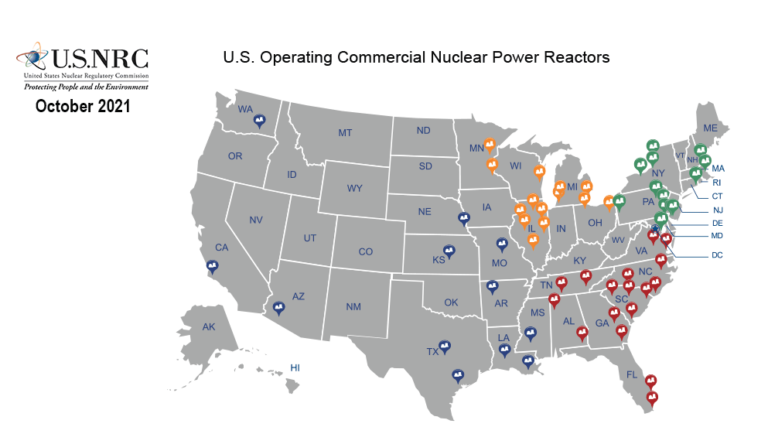
They're engineered to be incredibly resilient. Think multiple redundant systems, emergency shutdowns that kick in automatically, and security protocols that would make James Bond nod approvingly. The goal is to make sure nothing, absolutely nothing, goes wrong. And mostly, they succeed spectacularly.
The Quiet Giants Among Us
So, there you have it. America's nuclear power plants aren't lurking in shadowed alleys or under the bed. They're out there, often on the outskirts of towns, near big bodies of water, quietly contributing a massive chunk of our clean energy. They're the unassuming workhorses of our power grid, blending into the landscape like a well-dressed spy at a suburban BBQ.
Next time you flip a light switch, take a moment. That electricity might have traveled hundreds of miles from a powerful, yet discreet, nuclear friend. And now you know (mostly) where to send them a thank you card. Just, you know, don't ask for a glow-in-the-dark tour.