
When Was The Electric Generator Invented

Ever wonder about the invisible magic that powers your entire world? We're talking about electricity, of course! But how did we get from flickering candles to bright lights and speedy internet?
It all comes down to a super clever invention: the electric generator. This fantastic contraption is like the secret heart of modern life, silently making sure everything buzzes along.
So, when did this electrical superhero first make its grand entrance? Well, it wasn't a single "zap!" moment, but a thrilling journey of discovery.
Must Read
The Big "Aha!" Moment: Early 1830s
Imagine a time when electricity was mostly just a parlor trick or a spooky experiment. Scientists knew how to make static electricity or get a small battery to work, but generating a continuous flow of power was a different beast entirely.
Then, around 1831, two brilliant minds, working independently, stumbled upon something huge. Their discoveries changed everything, kicking off the age of electricity.
One of these incredible thinkers was a British scientist named Michael Faraday. He was an absolute genius at experimenting and tinkering with wires, magnets, and coils.
Faraday made a groundbreaking discovery: if you move a magnet near a wire, or a wire near a magnet, you can create an electric current! This magical process is called electromagnetic induction.
Think of it like a cosmic dance between magnetism and electricity. One moves, and the other springs to life!
Across the pond, in America, another brilliant scientist named Joseph Henry was making very similar discoveries. It was truly an idea whose time had come.
These discoveries were the theoretical sparks, the ultimate "aha!" moment. They showed that you could turn motion into electricity, which was a mind-blowing concept at the time.
From Spark to Spinning Machine: The First Generators
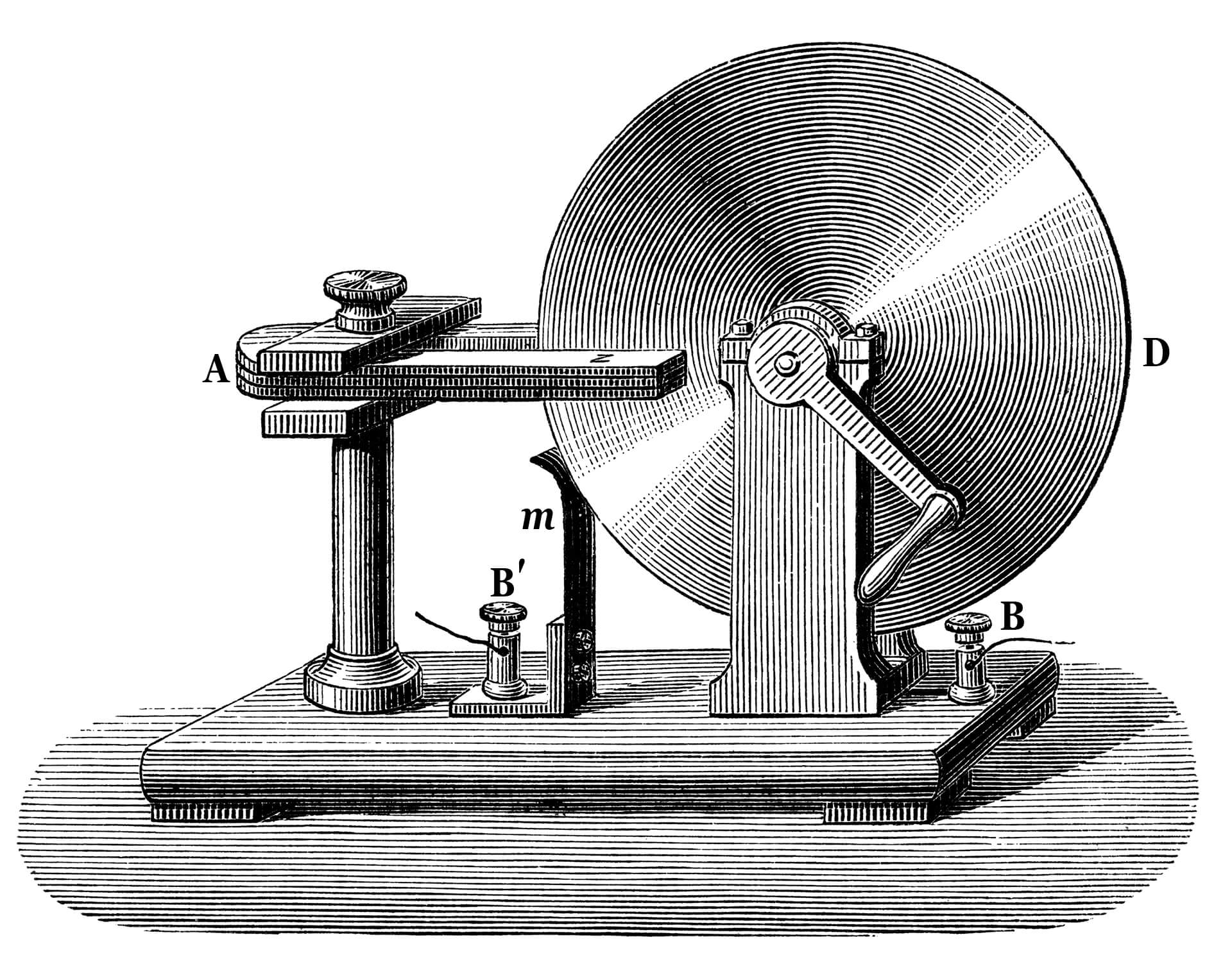
Faraday didn't just stop at the discovery; he quickly built a device to show it off. This was the very first electric generator, often called the Faraday disk dynamo.
It was a simple copper disk spinning between the poles of a magnet. As the disk spun, it generated a continuous electric current.
It might not look like much compared to today's massive power plant generators, but it was revolutionary! It proved that you could make electricity continuously, on demand.
Imagine the excitement! This wasn't just a fleeting spark; it was a steady flow, a controllable power source. It felt like unlocking a secret level in nature's game.

However, Faraday's initial disk was more of a proof-of-concept. It produced a direct current (DC), but it wasn't super efficient for powering a whole city.
The Road to Practical Power
For decades after Faraday's initial breakthrough, scientists and inventors kept refining the idea. They wanted to make these generators more powerful and more practical.
Fast forward to the 1860s and 1870s, and we see significant leaps. Inventors like Zénobe Gramme, a Belgian electrical engineer, made crucial improvements.
Gramme developed the Gramme dynamo, which was much more efficient and could produce a stronger, more stable current. This was a huge step toward making electricity useful outside the lab.
Suddenly, electricity wasn't just for demonstrations; it could light arc lamps in public squares or power early industrial machines. The generator was starting to flex its muscles!
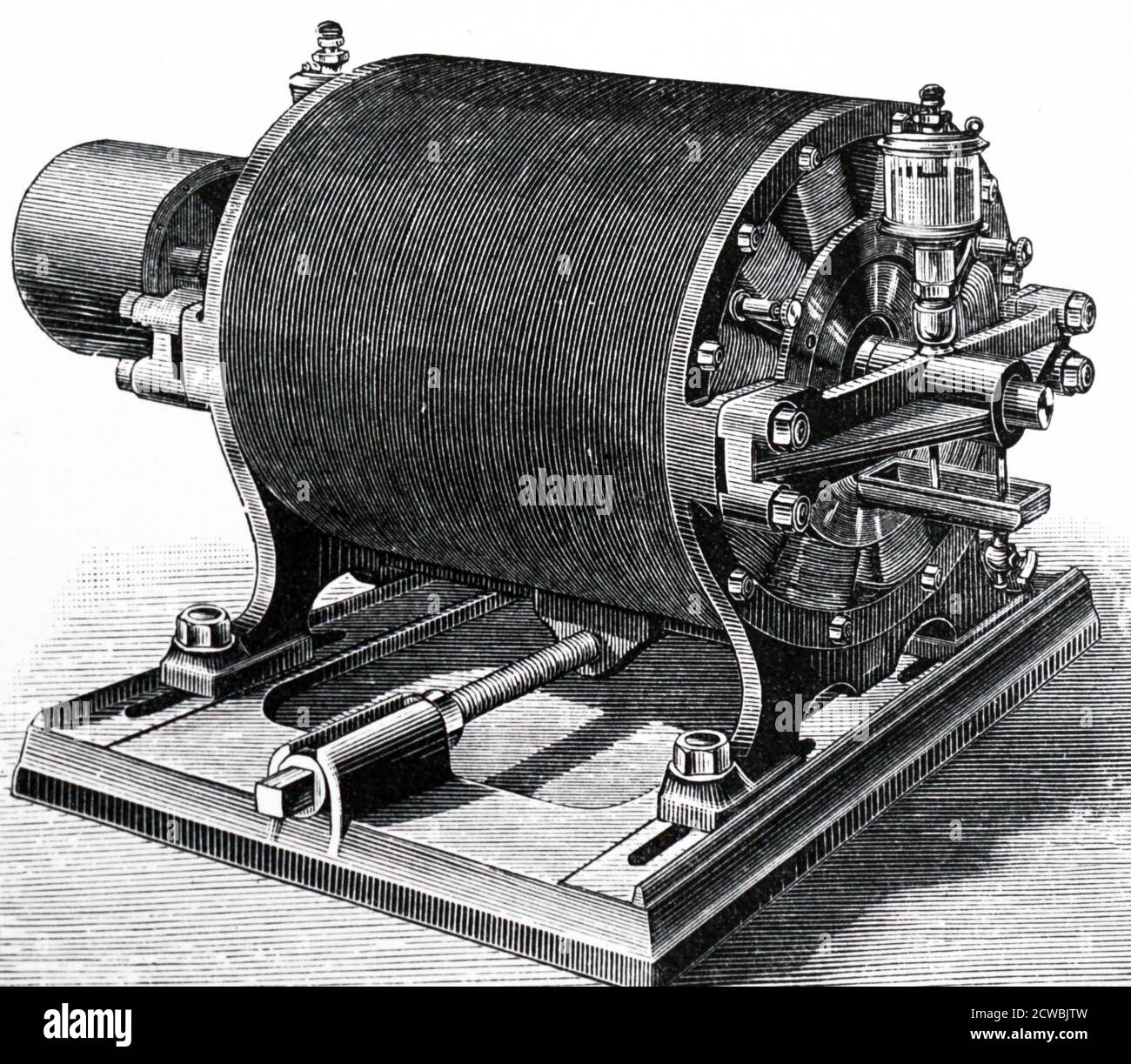
This period also saw the rise of different types of generators, including those that produced alternating current (AC). This was important for sending electricity over long distances.
People like Nikola Tesla and George Westinghouse were champions of AC power. Their work in developing AC generators and systems was pivotal for creating the vast power grids we rely on today.
The "War of the Currents" between DC (championed by Thomas Edison) and AC was a dramatic chapter. But ultimately, AC won for long-distance transmission, thanks to its flexibility.
Why the Electric Generator is So Special (and Entertaining!)
So, why should you care about a machine invented nearly two centuries ago? Because it's the ultimate unsung hero, the backstage pass to modern fun!
Think about it: Every time you flip a light switch, binge-watch your favorite show, charge your phone, or play a video game, you're experiencing the direct legacy of that original generator.
It's truly entertaining to think about how a simple scientific principle — moving a magnet to create electricity — could ignite such a profound transformation of human civilization.
This invention didn't just give us light; it gave us factories, hospitals, communication, and eventually, the entire digital world. It's the engine behind all our modern conveniences and entertainment.

Imagine a world without it. No glowing screens, no fridges, no air conditioning, no internet! It would be like living in a perpetual power outage, which isn't much fun at all.
The generator is a testament to human ingenuity and curiosity. It shows how asking "what if?" and tinkering with simple materials can lead to world-changing breakthroughs.
It's like the ultimate Rube Goldberg machine, but instead of dropping a marble, it's spinning turbines to bring power to millions. There's a certain beautiful simplicity to its fundamental operation.
Even today, there's a wonder in understanding that enormous power plants are just incredibly scaled-up versions of Faraday's humble disk. They all rely on that same elegant dance between magnets and wires.
So next time your device is charged or your room is brightly lit, give a little nod to the electric generator. It's the silent, spinning marvel that keeps the lights on and the fun going!
It truly is one of the most impactful inventions in history, proving that sometimes, the biggest magic comes from the cleverest machines.