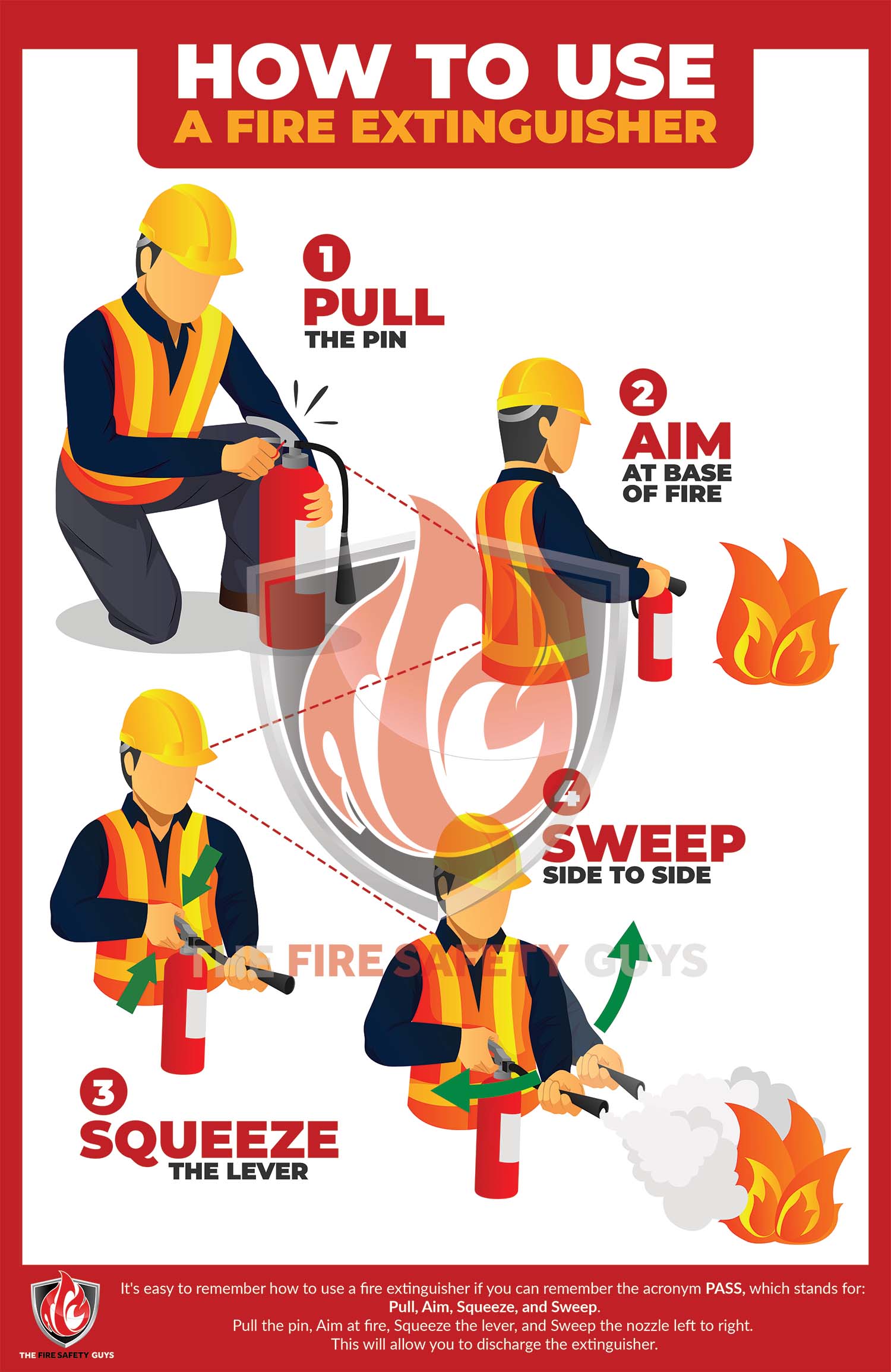
When Using A Fire Extinguisher You Should
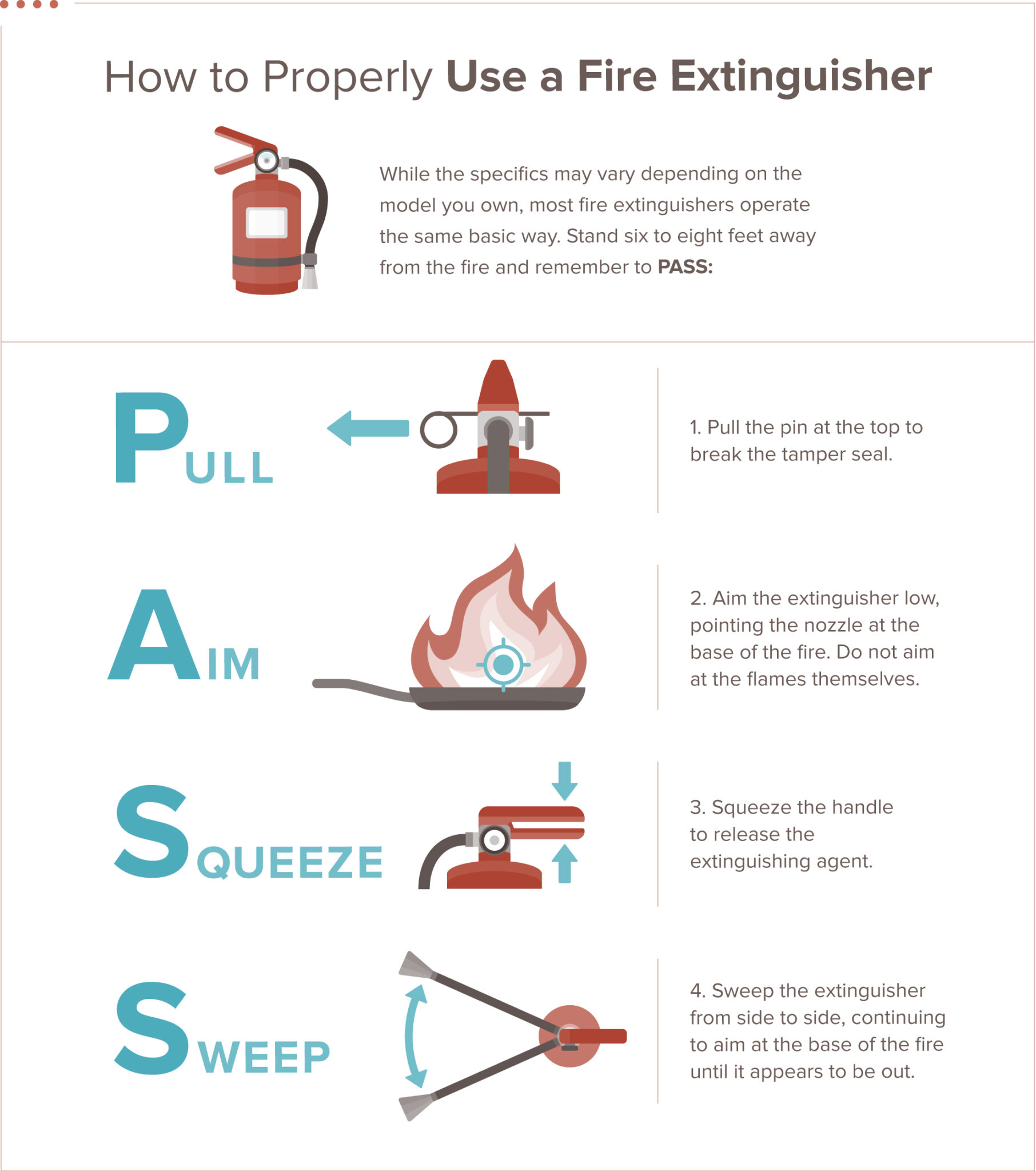
Hey there! Ever looked at a fire extinguisher hanging quietly on a wall and thought, "What is that mysterious red cylinder?" Or maybe, "Could I actually use it without looking completely clueless or making things worse?" Good news, my friend! It’s not some mystical ancient artifact. And actually, knowing how to wield one is pretty darn empowering. Seriously! It’s like unlocking a secret level in real life, a frothy, chemical-blasting superpower just waiting to be unleashed.
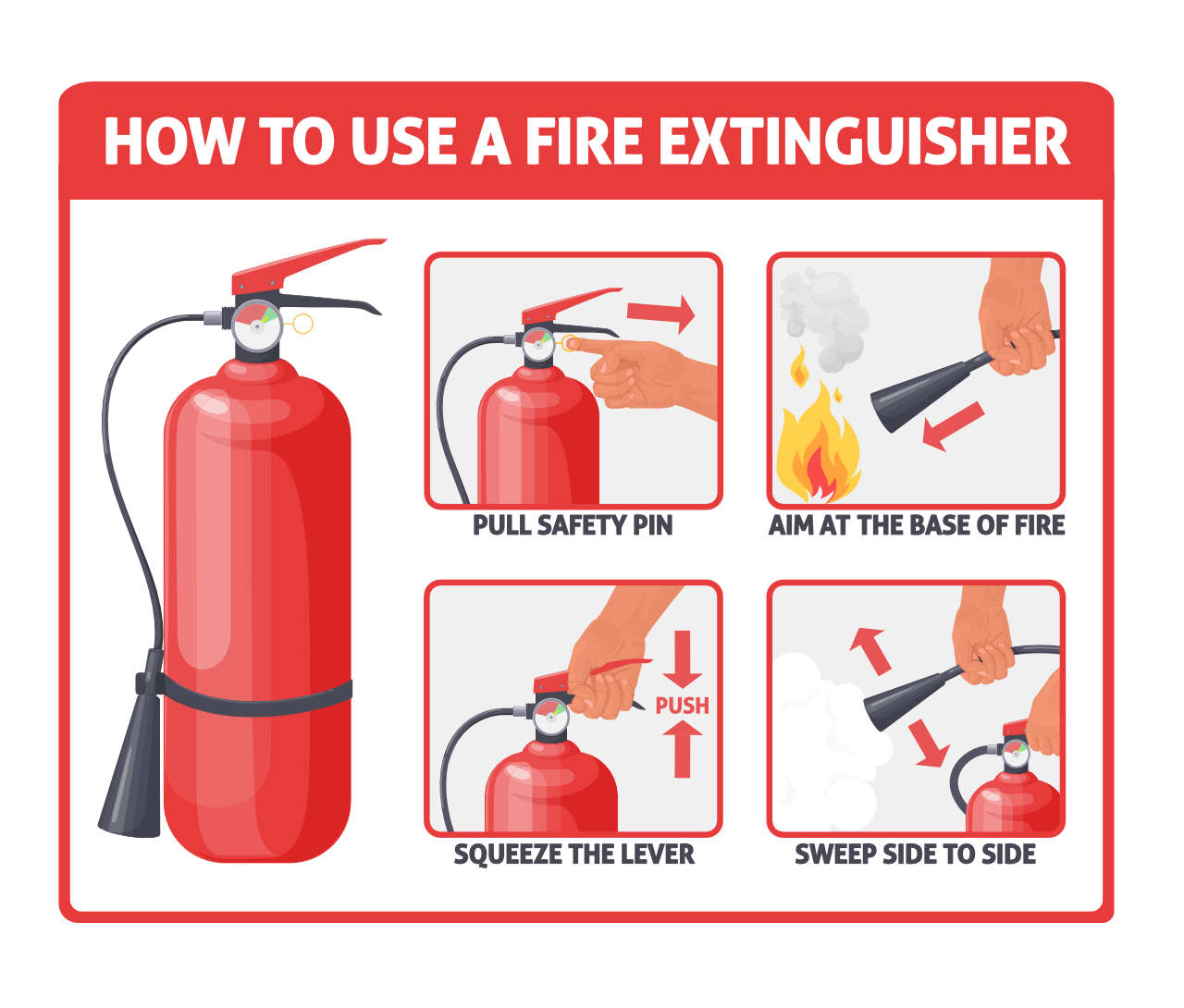
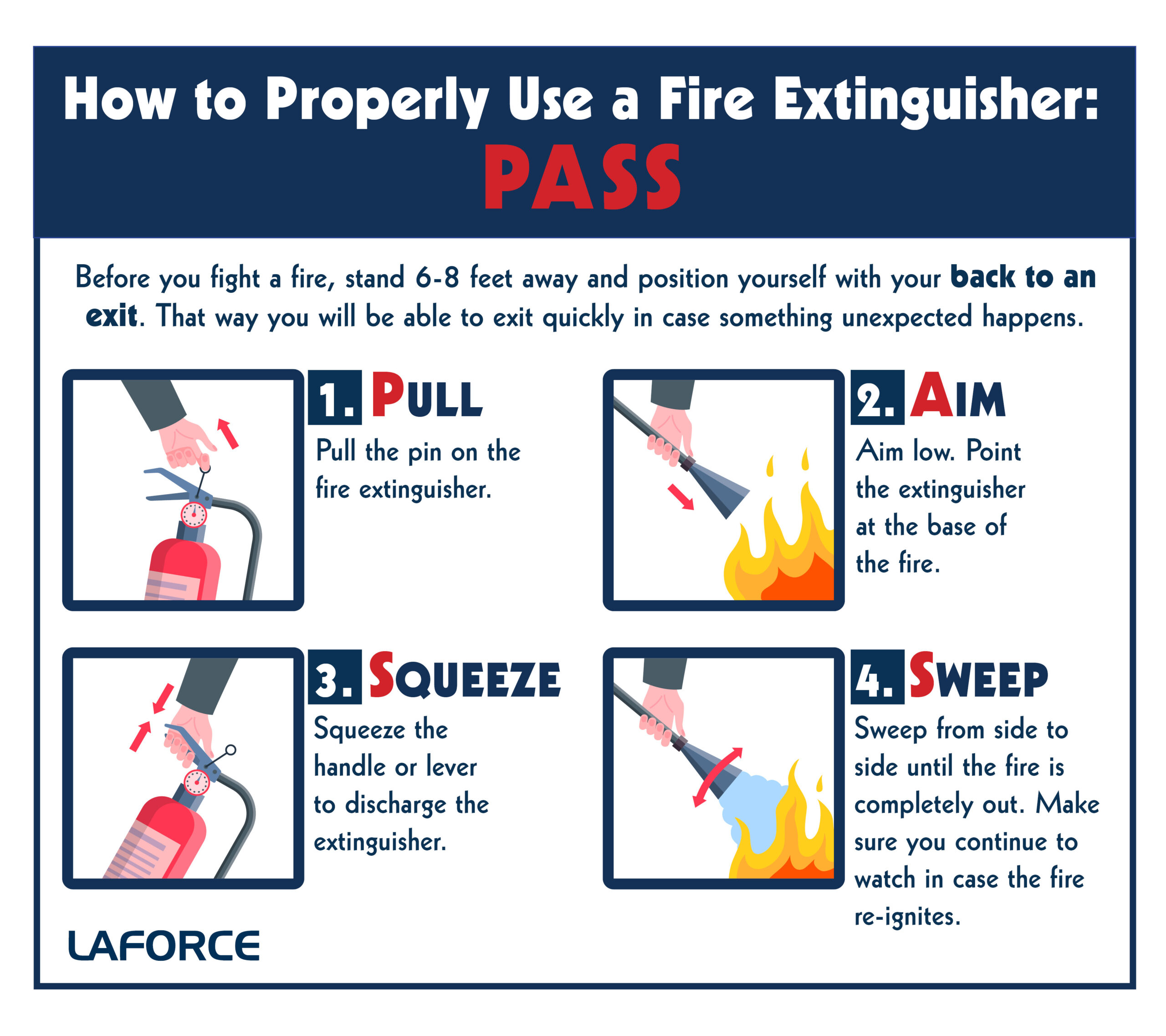
Let’s bust some myths right off the bat. You don't just point it vaguely in the general direction of smoke and pray. Oh no. There's a cool little secret code, a universal handshake among fire-fighters (and savvy citizens like us!). It’s called P.A.S.S. Yeah, like "pass the popcorn," but with way more flair and a much bigger impact on your day. Once you know this, you're basically a certified fire-foiling champion!
P is for Pull the Pin
First up, the grand reveal: P is for Pull the Pin. See that small, often yellow or black ring with a pin attached? That's your safety lock. It's there to prevent accidental discharges – imagine a surprise blast of chemicals in your living room! Not ideal for movie night. You gotta yank that sucker out. Don’t be gentle! It might feel a bit stiff, like a stubborn jar lid. But once it’s out, poof! Your extinguisher is officially armed and ready for action. Think of it as opening the gate for the fire-fighting magic to escape its cylindrical prison.
Must Read
A is for Aim Low
Next up, A is for Aim Low. This isn't a high-five or a water balloon fight where you aim for the face. Nope! We're talking precision here. You want to aim for the base of the fire. The very bottom. That's where the fire is actually getting its grub on, consuming fuel. Imagine it like knocking food out of a particularly nasty bully's hand. You hit the source, not just the pretty, dramatic flames dancing up top. Those flashy bits? They'll totally give up once their food source is cut off. It’s all about targeting the root cause, not just the fiery symptoms.
S is for Squeeze the Handle
Then, the moment of truth! S is for Squeeze the Handle. This is where the real drama unfolds! Squeeze it like you mean it. Don't be timid. You’ll feel a powerful burst of pressure. It’s a bit like a super-charged hose, but instead of just water, it's often a dry chemical powder that looks like a cloud of white fairy dust (but way more effective against flames). Or sometimes it's super-cold CO2, which is like giving the fire a really chilly, suffocating hug. The sound! The force! It's incredibly satisfying, trust me. You’ll unleash a torrent of fire-stopping goodness. It’s loud! It’s forceful! It’s totally awesome! You're literally stopping a potential catastrophe in its tracks.
S is for Sweep Side to Side
And finally, the second S is for Sweep Side to Side. Don't just hold it in one spot, like you're trying to create a tiny, super-extinguished pinpoint. You need to sweep across the entire base of the fire. Move it back and forth, covering the whole flaming area. Think of it like painting a wall, but with a fire-killing spray. You want to make sure you get every last fiery bit, every flicker, every ember. Keep sweeping until the flames are completely, utterly, undeniably out. And then some! Better safe than sorry, right? Just to make sure that sneaky fire doesn't try a comeback tour.
Now, for a quick, quirky detour into the secret lives of fires. Did you know not all fires are created equal? Nope! They actually have different personalities, like characters in a sitcom. Class A fires are your everyday heroes: paper, wood, cloth, your grandma's cozy blanket. Class B? Those are the mischievous ones: flammable liquids like grease, gasoline, or that leftover paint thinner. Class C? These are the electrifying personalities: electrical fires – think wires, circuits, anything with a plug. Then you get the slightly more exotic ones like Class D (combustible metals, super rare for home use) and Class K (cooking oils and fats in commercial kitchens). Most home extinguishers are ABC rated, like a versatile superhero ready for almost anything your kitchen, garage, or living room can throw at it. It's like having a multi-tool specifically designed for various fire emergencies!

But here’s the absolute, non-negotiable, super important rule, etched in fiery letters of wisdom: If the fire is bigger than a small trash can, or if it's spreading faster than gossip at a family reunion, or if you feel even a tiny, teensy bit unsafe? Get out! Call 911! Your life is, without a doubt, way more valuable than whatever is on fire. Fire extinguishers are designed for small, contained fires. Think of them as the ultimate first responder for a tiny oopsie, not a full-blown inferno worthy of a Hollywood blockbuster. Don't be a movie hero; be a smart, safe, alive human being. Evacuate and let the pros handle the big stuff.
What happens after the fire is out, and you've successfully channeled your inner fire-fighter? Well, there's usually a mess. That dry chemical powder? Oh boy, it gets everywhere. Think flour explosion in a bakery, but grittier and definitely less delicious. It coats surfaces, hangs in the air, and demands a good clean-up. But hey, a dusty room is infinitely better than a burnt-down house, right? And you'll have that incredible, chest-puffed-out feeling of "I just did that!" A true moment of personal triumph. You stared down a tiny blaze and, thanks to your newfound P.A.S.S. skills, you totally won. High five!
Also, a quick pro-tip: always get that extinguisher recharged or replaced after you use it. Even if you just give it a tiny squirt. It's generally a one-and-done deal for a full discharge. And make it a habit to peek at the pressure gauge sometimes! Make sure that little needle is comfortably sitting in the green zone. It's like checking the fuel in your car, but for emergencies. A well-maintained fire extinguisher is like a trusty sidekick, always ready to spring into action when you need it most. And knowing it's ready? Pure peace of mind.
So next time you see one of those trusty red cylinders hanging on a wall – at work, in a restaurant, or even in your own kitchen – give it a little nod of recognition. You now know its secrets. You’re practically a fire-fighting ninja, armed with knowledge and ready for anything (small and contained, remember!). Not a real ninja, obviously. Don't go practicing roundhouse kicks on actual flames; that's just silly. But you're definitely clued in, educated, and prepared. And that, my friend, is pretty darn cool. Stay safe, stay smart, and keep being awesome!