
When Taking Off A Car Battery Which Terminal First

Alright folks, let's talk car batteries! Not exactly the most glamorous topic, I know. But trust me, understanding this little trick is like knowing the secret handshake to keeping your car happy (and you, stranded less often!). We're talking about a tiny detail that can save you a whole lot of headache: which terminal to disconnect first when taking off your car battery.
Think of it like this: you wouldn't start painting a room by slapping the roller on the ceiling, would you? There's a logical order to things, and disconnecting your car battery is no different. It all comes down to safety, my friends, pure and simple.
The Curious Case of the Grounded Wrench
Okay, here's the deal. Your car’s chassis (that's the metal frame) is usually connected to the negative (-) terminal of the battery. We call this being "grounded." It's like having a giant electrical return path running all through your car.
Must Read
Now, imagine you're using a wrench to loosen the positive (+) terminal first. If that wrench accidentally touches any metal part of your car (like, say, the engine block, or the fender), you’ve just created a direct circuit from the positive terminal to ground. Zap! You'll likely see sparks, hear a little sizzle, and potentially damage your car’s electrical system. Not to mention giving yourself a good scare!
It’s kinda like accidentally touching the metal part of a lightbulb while changing it, even though the light switch is off. It's still wired to the source, and the power will still flow looking for a way out.
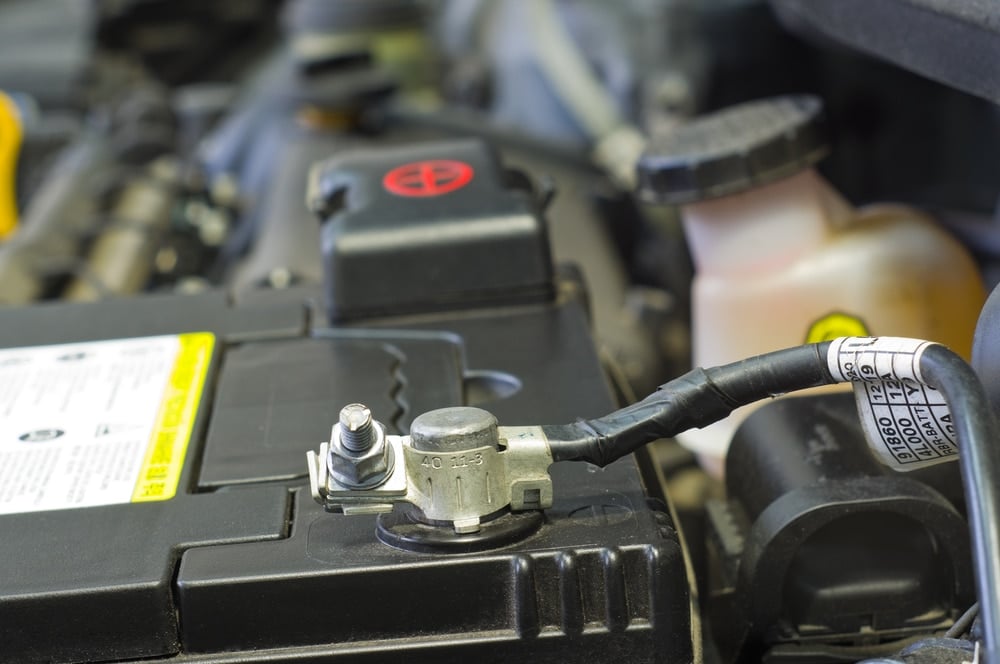
Think of your car's electrical system as a water balloon filled with electricity. If you poke a hole in the positive side while it's grounded, BOOM! Water (or in this case, electricity) goes everywhere.
Negative First, Always
So, what’s the solution? Disconnect the negative (-) terminal first. Here's why this works wonders:

- If your wrench slips and touches the car's body while you’re disconnecting the negative terminal, nothing happens. Why? Because the wrench is already connected to ground! It's like trying to electrocute yourself by touching a metal fence while standing barefoot on the ground – you're already grounded!
- By removing the negative terminal first, you've effectively broken the circuit. The car is no longer grounded to the battery.
It's all about eliminating the possibility of creating that accidental short circuit. It’s a simple step, but it could save you a lot of hassle, a potentially expensive repair bill, and maybe even a trip to the emergency room.
The Order of Operations: Battery Removal Edition
Let's break it down into a super-easy sequence:
- Safety First! Wear eye protection and gloves. Seriously, a little precaution goes a long way.
- Locate the Terminals: The positive (+) terminal is usually red and often has a "+" symbol. The negative (-) terminal is usually black and has a "-" symbol.
- Loosen the Negative: Use a wrench to loosen the nut on the negative terminal.
- Disconnect the Negative: Gently wiggle and remove the negative cable from the terminal. Tuck it away so it can't accidentally touch the terminal again.
- Loosen the Positive: Now, and only now, loosen the nut on the positive terminal.
- Disconnect the Positive: Remove the positive cable.
Reverse the process when installing the new battery. Positive first, then negative. Remember, positive first on installation, negative first on removal. Think of it as a little mnemonic device.

Why Bother? It's Just a Car Battery!
You might be thinking, "Come on, is this really that important?" Well, consider this: modern cars are packed with sensitive electronics. A sudden surge of electricity from a short circuit can fry those delicate components. We're talking computers, sensors, and all sorts of fancy gadgets that make your car run smoothly (or not, if they're broken!).
Replacing a blown fuse is one thing. Replacing a damaged ECU (Engine Control Unit)? That’s a whole different ballgame. You'll be looking at a potentially hefty bill, and nobody wants that.

Beyond the potential damage to your car, there's also the risk to you. A short circuit can create sparks and heat, potentially leading to burns or even starting a fire. It's just not worth the risk when a simple "negative first" approach can eliminate the problem.
Think of it like putting on sunscreen. You might not see the immediate benefit, but you'll be thanking yourself later when you're not sporting a lobster-red sunburn. Disconnecting the negative terminal first is your automotive sunscreen – a small effort that provides a whole lot of protection.
So, there you have it! The simple secret to safely removing your car battery. Remember: negative first, always. It’s a small detail that can make a big difference. Now go forth and conquer those car battery swaps with confidence (and a little bit of newfound electrical wisdom!).