
When Did Lockdown Drills Start In Schools
Ever wonder about the story behind those drills at school? We're not talking about pop quizzes here. We mean the kind that help everyone stay safe.
Today, we hear a lot about lockdown drills. They are a familiar part of school life for many students.
But when did these particular safety practices actually begin? It's a fascinating look into how schools adapt to keep kids secure.
Must Read
The Roots of School Safety: Beyond Fire Alarms
For a long time, school safety drills mostly meant one thing: fire drills. Everyone knew the routine.
You’d line up quickly and calmly walk out to a designated spot. It was a simple, yet very important, practice.
Other drills also existed, especially in certain regions. Schools in earthquake zones practiced drop, cover, and hold on drills, for instance.
These early drills focused on natural disasters or building emergencies. They were about getting everyone out safely.
The idea of a drill for an intruder, however, was a very different concept. It wasn't something commonly imagined or practiced decades ago.
A Shift in Focus: New Challenges Emerge
The landscape of school safety began to change in the late 20th century. Tragic events started to highlight new threats.
School communities grappled with understanding how to protect students from intentional harm. This was a challenging new frontier.
Before the late 1990s, the term "lockdown drill" wasn't really a part of everyday school vocabulary. It simply wasn't a recognized practice.

Safety plans often focused on evacuating a building. The idea of sheltering in place for a different kind of threat was not yet widespread.
This period marked a quiet but significant shift in thinking. People started asking harder questions about security.
The Turning Point: The Late 1990s and Beyond
Many experts point to the tragic events of 1999 as a major catalyst. The shooting at Columbine High School forever changed the conversation.
This devastating incident shocked the nation. It made everyone realize that schools needed new kinds of protection.
Suddenly, the concept of a "safe zone" inside the school became crucial. How do you protect students when danger is inside the building?
Following Columbine, schools across the country began to re-evaluate their emergency plans. They sought new strategies.
This is when the idea of a specific "lockdown" protocol truly started to take shape. It was a direct response to a terrifying new reality.
The Columbine tragedy served as a stark reminder that preparation for all types of emergencies, including active threats, was vital.
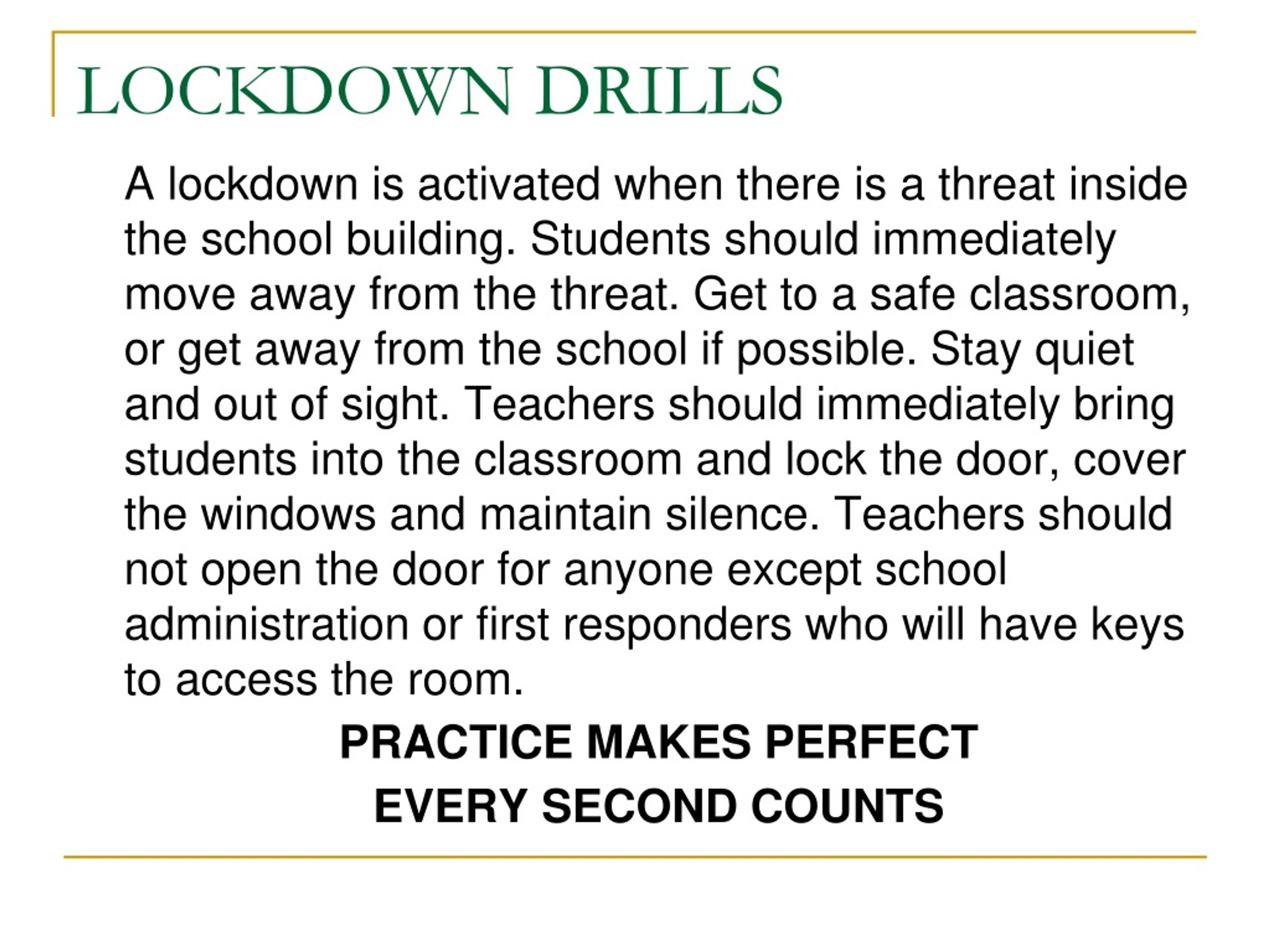
PPT - School Safety PowerPoint Presentation, free download - ID:8824710

Developing New Protocols: The Early 2000s
In the early 2000s, schools and law enforcement agencies worked together. They tried to create effective new safety measures.
The focus shifted to securing classrooms and limiting access. This meant keeping danger out, or at least contained.
Initially, there wasn't one single, unified approach. Different schools and districts tried various methods.
Some protocols involved barricading doors. Others focused on teaching students how to be quiet and out of sight.
The goal was always the same: to protect students and staff during an active threat situation.
Training began for teachers and administrators. They needed to know how to respond to an unprecedented type of emergency.
"Lockdown" Becomes a Standard Practice
By the mid-2000s, the term "lockdown" started to become more common. It described a specific procedure for school safety.
It meant securing all entry points and having everyone remain in a safe, locked room. This was a big change from evacuation drills.

States and school districts began to mandate these drills. They became a regular part of the school calendar.
Just like fire drills, students started learning what to do during a lockdown drill. It became part of their routine.
This widespread adoption didn't happen overnight. It was a gradual process of learning and adapting.
The idea was to make the response automatic. If an emergency happened, everyone would know their role.
The Evolution Continues: Beyond Basic Lockdowns
As the years passed, lockdown drills continued to evolve. Experts learned more about how to respond to threats.
Concepts like "Run, Hide, Fight" emerged as an option for individuals. This gave people more choices in a critical situation.
Some schools adopted specific programs like ALICE Training (Alert, Lockdown, Inform, Counter, Evacuate). These offered more dynamic responses.
These newer approaches recognized that every situation is different. They empowered people to make quick, informed decisions.
.jpg)
Today, lockdown drills are a fundamental part of school safety plans. They are refined and practiced constantly.
This continuous effort shows how seriously schools take student protection. It’s an ongoing commitment to safety.
Why This History Matters
Learning about the start of lockdown drills is truly interesting. It shows how our society reacts to new challenges.
It highlights the constant dedication of educators and safety experts. They work tirelessly to keep children safe.
The journey from simple fire drills to complex lockdown procedures is remarkable. It reflects a changing world.
It's a testament to human ingenuity and care. We keep adapting to protect our youngest generation.
So next time you hear about a drill, remember its history. It's a story of constant vigilance and profound commitment.
It's about making schools the safest places they can possibly be. That's a story worth understanding and appreciating.