
When A Meter Is Divided By 100 The Result Is

Okay, settle in, folks! Grab your coffee, maybe a pastry (extra points if it's precisely one-hundredth of a meter wide!), because we're about to embark on a journey of... metric proportions! Don't worry, it's way more exciting than it sounds. Seriously. I once saw a cat chase a laser pointer for a full five minutes, and this is at least half as entertaining.
We're tackling a fundamental question today: What happens when you take a meter, that humble unit of length, and ruthlessly divide it by a hundred? Prepare yourselves... the answer may shock you. (Spoiler alert: it probably won't shock you. But let's pretend it will for dramatic effect).
The Majestic Meter: Our Starting Point
First, a quick refresher. A meter (symbol: m) is, like, the OG of metric length. It's the standard. It's the baseline. It's the "one" in "one meter." Think of it as the metric system's quarterback. (Except, you know, without the crippling endorsement deals). Imagine stretching your arms out wide - that's roughly a meter. Give or take, unless you're an NBA player or a particularly stunted gnome.
Must Read
Originally, back in the days of powdered wigs and questionable hygiene, a meter was defined as one ten-millionth of the distance from the North Pole to the Equator. Seriously! So, basically, whoever came up with that was like, "Yeah, let's just measure the entire planet and then chop it up into tiny pieces. Easy peasy." (Thank goodness they didn't use the height of Louis XVI’s wig as the standard. We'd all be walking around with rulers that were suspiciously fluffy and heavily perfumed).
The Dividing Fiasco (That's Actually Really Simple)
Now, for the main event: division by one hundred! Picture a meter stick. A lovely, wooden, possibly splinter-laden meter stick. (Safety first, kids! Always wear eye protection when contemplating the division of metric units!).
Now, mentally chop it up. Not with an axe! Be gentle! We're dividing it into one hundred equal pieces. Boom! What do you have? Well, you have a lot of tiny pieces of wood, probably. But more importantly, you have... centimeters!
Yes, the answer to our earth-shattering question is: When you divide a meter by 100, you get a centimeter (cm). I know, I know, hold your applause. Try to contain your excitement. You’ve always suspected it, but it is indeed true. A centimeter is one-hundredth of a meter.
1 m / 100 = 1 cm

It’s as simple as that! It’s like the mathematical equivalent of a perfectly ripe avocado: satisfying, slightly green, and surprisingly useful.
Centimeters: The Unsung Heroes of Measurement
Centimeters! They're everywhere! Your fingernails grow in centimeters (eventually). Ants are measured in centimeters. Some particularly robust caterpillars might even stretch the centimeter definition to its absolute limit! They're the workhorses of the metric system, always there, quietly measuring things in a manageable way.

Think about it: Would you rather say your dog is 0.75 meters tall, or 75 centimeters tall? Exactly! Centimeters are just more approachable. They're like the friendly neighbor of the metric system, always willing to lend you a cup of sugar (or, you know, accurately measure the length of your sugar packets).
Fun fact: The word "centi" comes from the Latin word "centum," which means "hundred." See? Even the Romans knew what was up! Though, they probably used it for measuring togas, not caterpillars.
Why This Matters (Besides Impressing People at Parties)
Knowing that a meter divided by 100 equals a centimeter is actually incredibly useful. It's the foundation for all sorts of conversions and calculations. Need to figure out how many centimeters are in 2.5 meters? Easy! Just multiply by 100! (Answer: 250 cm. You're welcome).
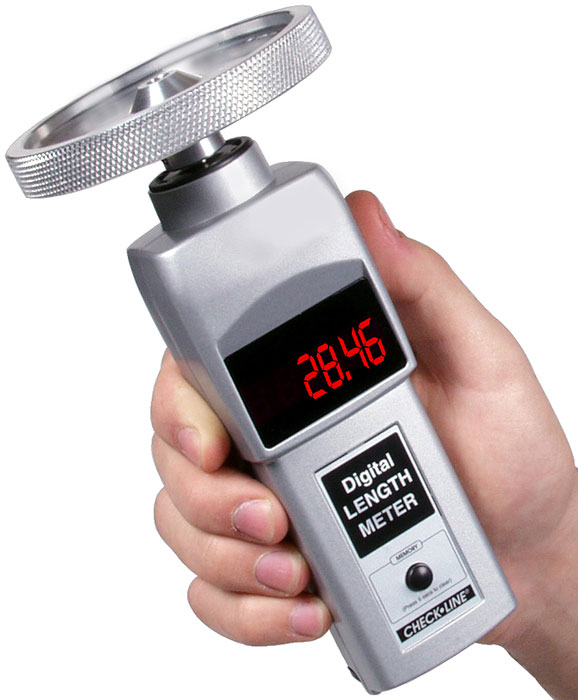
Understanding this relationship is also crucial for anyone working in science, engineering, medicine, or really any field that requires accurate measurements. Imagine a surgeon accidentally measuring something in meters instead of centimeters! Yikes! That's a recipe for disaster (and probably a very confused patient).
So there you have it! The groundbreaking, mind-blowing, absolutely revolutionary discovery that dividing a meter by 100 gives you a centimeter. Now go forth and measure things! Accurately! And remember to thank the Romans for the word "centi." They'd appreciate it.
And if anyone asks you what you learned today, just casually drop the "one-hundredth of a meter" knowledge bomb. You'll be the most popular person at the water cooler. (Or at least, the most metric-savvy).