
What's The Purpose Of Daylight Savings
Okay, picture this. It's a Sunday morning in early spring. The birds are doing their thing, sunlight is just starting to peek through the curtains, and your internal alarm clock is gently nudging you awake. You stretch, you yawn, you might even think about that second cup of coffee. Everything feels right. Then you glance at your phone, or maybe your trusty bedside clock that hasn't changed itself, and BAM! It hits you like a cold splash of water: Daylight Saving Time. Suddenly, that cozy, perfectly-timed wake-up feels an hour too early, and you're left with that distinct, slightly disoriented feeling of having been robbed of an hour of precious sleep. You know the one, right?
You stumble out of bed, fumbling with clocks, mentally adjusting your schedule, and grumbling about the whole thing. "Why do we even do this?" you might ask, as you squint at the sun that now seems to mock your earlier wake-up. This annual ritual, this collective sigh across millions of households, brings us to the big question: What's the actual point of Daylight Saving Time? Is it some ancient tradition? A secret plot by coffee companies? Let's dive in, shall we?
What's the Big Idea? (Spoiler: It's Not About Farmers)
Contrary to popular belief (and probably what you heard from your uncle at Thanksgiving), Daylight Saving Time wasn't actually invented for farmers. Farmers, bless their hearts, generally operate by the sun, not the clock. Changing their schedule to an arbitrary clock time often complicates things for them, especially with livestock and dew-covered fields. So, scratch that myth!
Must Read
The core idea, the original spark for this whole time-shifting shenanigans, was pretty simple: energy conservation. The thinking went that if we shifted an hour of daylight from the early morning (when most people are still asleep) to the evening (when people are awake and using electricity), we'd save on artificial lighting. Less need for lamps, less power used, win-win! Well, that was the theory, anyway.
The concept was famously — and somewhat ironically — floated by Benjamin Franklin in a satirical essay back in 1784. He proposed Parisians save candles by waking up earlier to utilize natural morning light. He didn't suggest moving the clocks, though; he was just having a laugh and pointing out how much time people "wasted" sleeping through sunrise. The modern interpretation is a bit different, as you can probably tell.

A Brief History Lesson (Promise it's quick!)
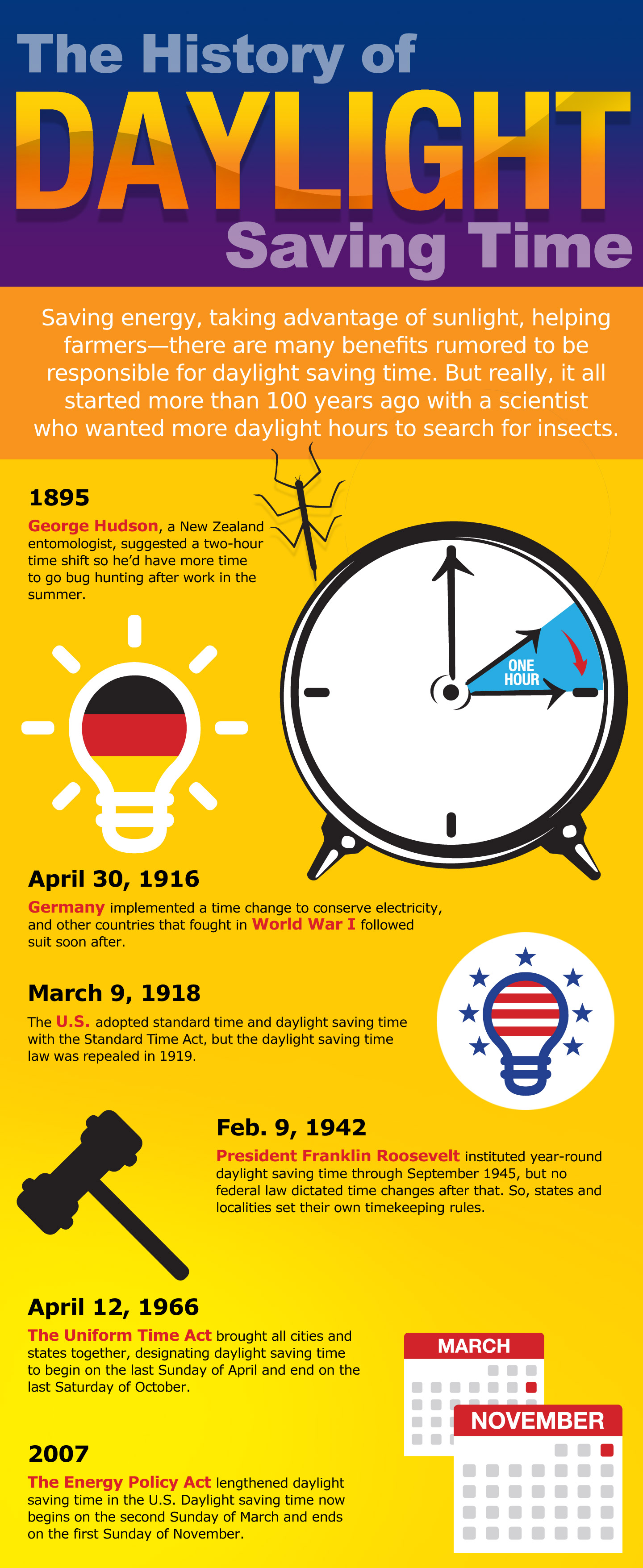
The first serious push for a clock-shifting system came from a New Zealander, George Hudson, in 1895, who wanted more daylight hours after work to collect insects. Yes, you read that right – insects. But the idea didn't really gain traction until the First World War.
Germany and Austria-Hungary were the first countries to implement DST in 1916 as a wartime measure to conserve coal. Other European countries, and eventually the United States, quickly followed suit. The logic was clear: more daylight in the evening meant less need for artificial light, which meant saving fuel for the war effort. It was all about making the most of every resource, you see.
After the wars, many countries dropped DST, but it kept popping up. In the U.S., it was a bit of a chaotic mess with different cities and states doing their own thing. Imagine the travel headaches! Eventually, the Uniform Time Act of 1966 made it, well, uniform across the country, establishing the start and end dates we largely recognize today, though they've been tweaked a few times since.

The "Why" Today (and the "Why Not")
So, is it still about saving energy today? That's where things get a bit murky, my friend. Modern studies offer conflicting results. Some suggest marginal energy savings; others indicate that any savings on lighting are offset by increased use of heating and air conditioning. When it's lighter later, we might use AC more in summer evenings or turn on the heat longer in cooler spring/fall evenings.
However, proponents argue for other benefits:
- Economic boost: More daylight in the evening means people are more likely to go out, shop, dine, and participate in outdoor recreation like sports or barbecues. Think of all those impulse buys on a warm, bright evening!
- Reduced traffic accidents: Some studies suggest that the extra daylight in the evening reduces collisions by making commuters more visible.
- Lower crime rates: Again, the theory goes that less darkness in the evening means fewer opportunities for certain types of crime.

But let's be real, it's not all sunshine and rainbows. The opponents of DST raise some valid points:
- Health impacts: That "lost hour" in spring? It's not just annoying. The sudden shift can disrupt our circadian rhythms, leading to sleep deprivation, increased heart attacks, and even more workplace accidents in the days following the change. Your body definitely notices, even if you try to power through it.
- Actual energy waste: As mentioned, the energy savings are highly debated and potentially non-existent.
- Inconvenience: The sheer hassle of changing clocks (remember your car clock, or the oven?) and adjusting schedules is, frankly, a pain.
So, Is It Worth It?
That's the million-dollar question, isn't it? Many places around the world have abandoned DST, while others are debating whether to stick with it permanently or abolish it entirely. There are movements to "lock" time into either permanent DST or permanent Standard Time. Imagine never having to think about "spring forward" or "fall back" again! A delightful thought for our sleep-deprived brains, I'd say.
Ultimately, Daylight Saving Time is a fascinating relic of a bygone era, born out of necessity and economic theory. Its relevance in our modern, globally connected, and climate-controlled world is highly debatable. Whether you love the long summer evenings or curse the biannual disruption, one thing's for sure: it's a conversation starter. And probably a reason for that extra cup of coffee. You're welcome.
