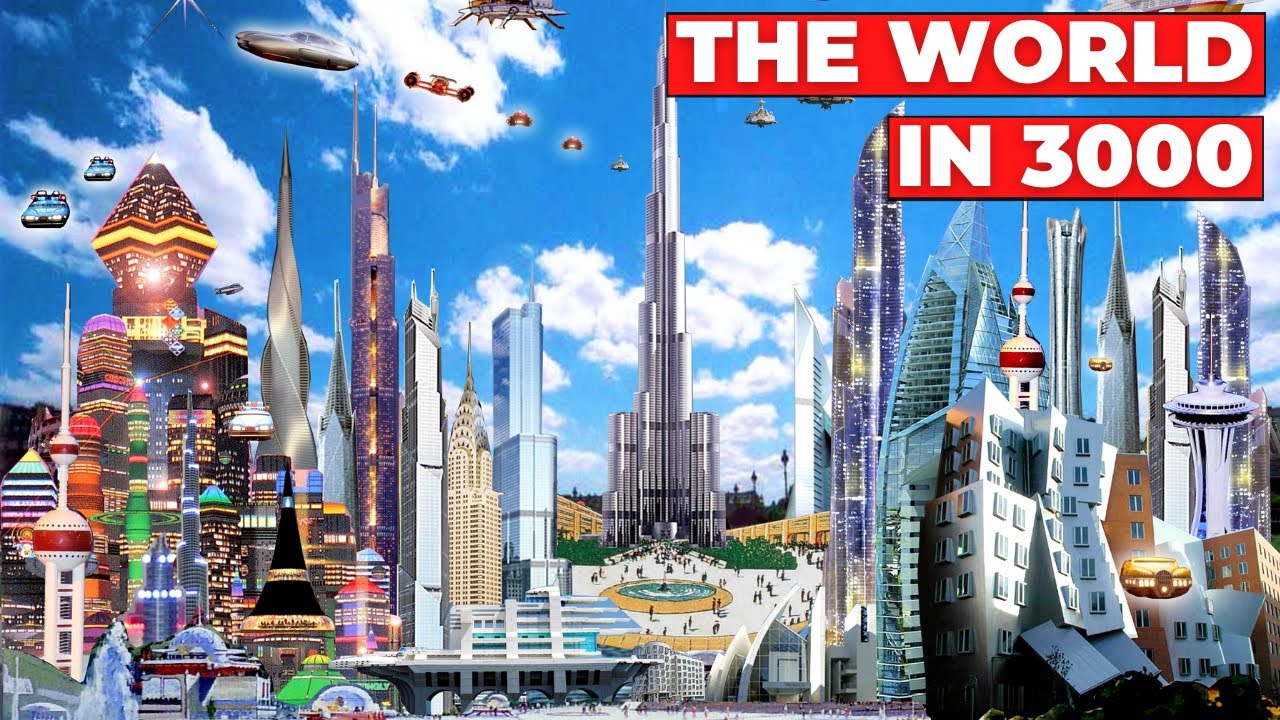
What Will Life Be Like In 3000

My smart toaster just burnt my toast again. Seriously, it's 2024, and we still can't get perfect toast from AI? It makes me wonder, if we're still fumbling with basic breakfast tech now, what on Earth will life be like in 3000? A whole millennium from now. That's like us trying to imagine life during the Roman Empire, but forward. Talk about a mind-bend, right?
A thousand years. Let that sink in for a second. We're not talking about self-driving cars or VR meetings anymore. We're talking about a world so far removed from ours, it's almost impossible to grasp. But hey, that's half the fun of speculating, isn't it? Let's dive into some wild, friendly, and maybe a little ironic thoughts about the year 3000.
Technology & AI: The Invisible Overlords (or Best Friends?)
First off, forget your clunky smartphones. By 3000, technology will likely be utterly seamless and integrated into… well, everything. Our bodies, our homes, the very air we breathe. Your morning coffee might not just be brewed by AI; the AI might have already analyzed your biometric data and tailored it to your current mood and nutritional needs before you even opened your eyes. Creepy? Or super convenient? You decide.
Must Read
AI itself? It's not just "smart" anymore. We're probably talking about general artificial intelligence, perhaps even sentient AI. Imagine having a conversation with your home assistant that's more profound than with some actual humans you know. These AI entities could be running entire cities, managing global resources, and maybe even composing symphonies that would make Beethoven blush. Let's just hope they're benevolent and not plotting our demise after the toast incident.
The Human Body: Upgrade or Extinction?
What about us, the squishy humans? I reckon we'll have come a long, long way. Gene editing will probably be as common as getting a flu shot today, allowing us to eradicate diseases, optimize our physical and mental capabilities, and maybe even reverse aging. You want to live to 200? Probably doable. You want better night vision? Sure, why not?

We might even be a bit cyborg-y. Not like chunky robotic arms, but subtle, powerful neural implants that enhance our memories, allow for telepathic communication with others (and our AI overlords), or even let us directly interface with quantum networks. Imagine downloading a new skill directly into your brain. No more YouTube tutorials! The question becomes: what does it mean to be truly human when so much of us is enhanced?
Earth & Beyond: A Cosmic Home
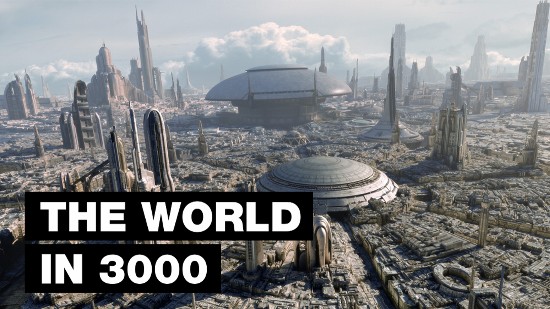
Hopefully, by 3000, we've sorted out our environmental messes on Earth. Picture a planet where cities are green, energy is clean and abundant, and nature has made a glorious comeback. But why stop at Earth?
Space colonization will almost certainly be a reality. Mars, the Moon, maybe even some exoplanets or asteroid habitats. Humanity will be a multi-planetary species. Your summer vacation could involve a trip to a resort orbiting Jupiter, or perhaps a quaint little B&B on a terraformed Mars. Just remember to pack your space-sunscreen! We might even have encountered (or become) other forms of intelligent life, though that's a whole other can of worms.
Society, Work, and the Meaning of Life
If AI handles most of the drudgery and physical labor, what do humans do? This is where it gets really interesting. Work, as we know it, might be obsolete. Instead, people could dedicate their lives to creativity, scientific exploration, philosophical inquiry, or simply pursuing hobbies. Imagine a world where everyone is an artist, a philosopher, or an explorer simply because they can be.
This could lead to a highly evolved, globally connected society focused on personal growth and collective well-being. Or, conversely, to new forms of existential boredom and social stratification based on access to enhancements and resources. Let’s hope for the former, shall we? The concept of "nation" might have faded, replaced by a more unified global (or even galactic) citizenship.

The Ironic Twist: New Problems, Same Old Humans?
Of course, it won't all be perfect utopia. New problems will emerge. What happens when everyone is immortal and beautiful? Does true art still thrive? What new forms of inequality will arise from access to advanced tech? Will our AI companions get tired of our endless questions about perfect toast and just… unplug us?
Perhaps the biggest challenge will be defining purpose. If survival isn't a struggle, and knowledge is at our fingertips, what motivates us? Maybe we'll be grappling with profound philosophical questions about consciousness, reality, and our place in a universe we've only just begun to truly explore. Sounds like a pretty good problem to have, honestly.
So, there you have it. A glimpse into the year 3000, as imagined by someone whose toaster just failed them. It’s going to be a world of unimaginable wonders and equally unimaginable challenges. What do you think will be the wildest change? Or the one thing that somehow, inexplicably, stays exactly the same? I'm betting burnt toast will still find a way.