
What Type Of Mixture Is Salt Water

Ever wondered what's going on when you stir salt into water? I mean, besides making your pasta perfectly seasoned (or ruining your coffee – we've all been there!).
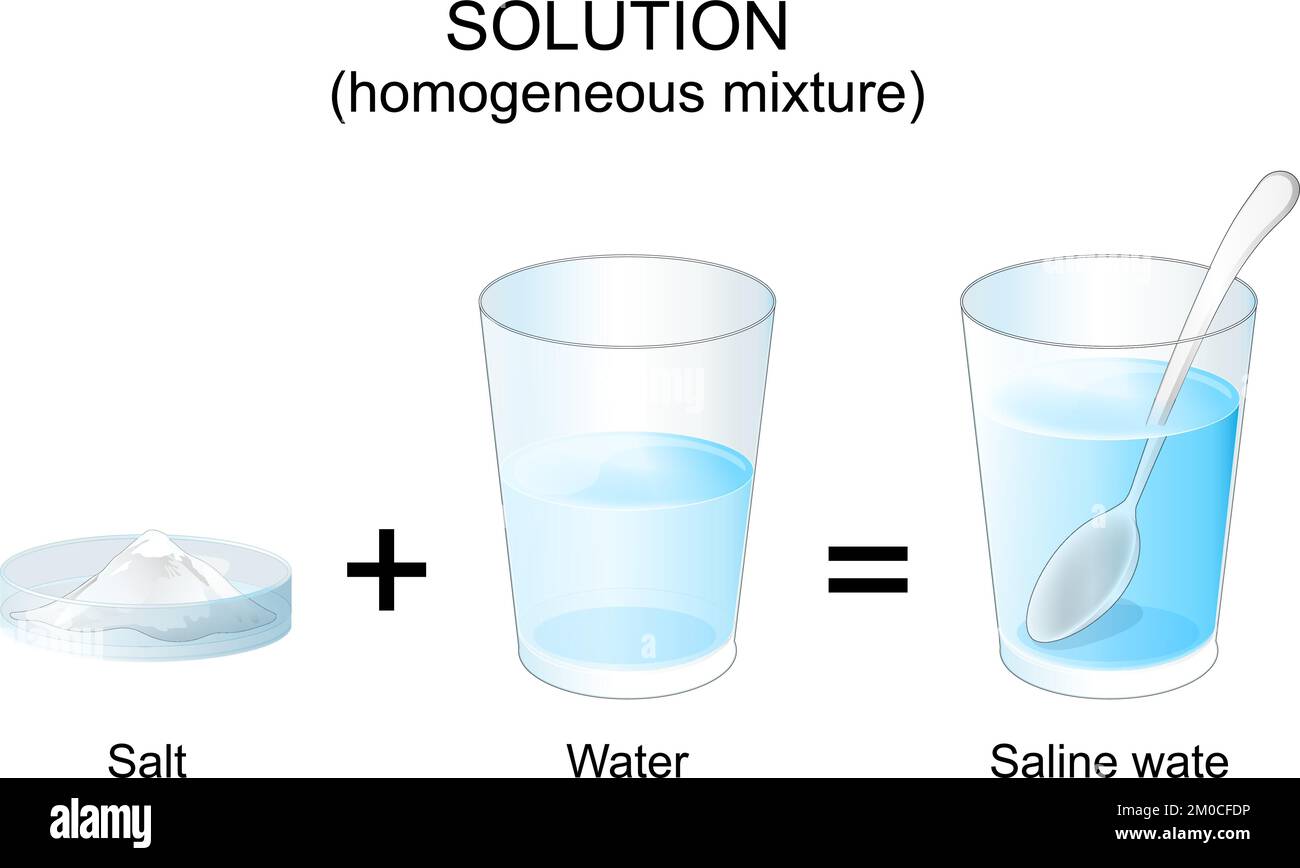
It's actually a fascinating example of a mixture, and not just any old mixture, but a special kind: a homogenous mixture. Buckle up, because we're diving into the wonderful world of saltwater!
The Great Saltwater Mystery (Solved!)
Okay, maybe it's not that mysterious. But let's pretend for dramatic effect, shall we? Imagine you're a tiny submarine, navigating through a glass of saltwater.
Must Read
Would you see chunks of salt floating around like rogue icebergs? Nope! That's because the salt has completely dissolved, disappearing into the water like a magician's rabbit into a hat.
Homogenous Heroes!
This disappearing act is what makes saltwater a homogenous mixture. The prefix "homo-" means "same," and in this case, it means the mixture is the same throughout.
Every sip of saltwater (not recommended, by the way) would taste equally salty. There are no sneaky pockets of pure water or super-salty zones lurking about.
Think of it like a perfectly blended smoothie. You wouldn't get a mouthful of just banana and then just spinach. Everything's evenly distributed, creating a harmonious blend of deliciousness (hopefully!).
Not All Mixtures Are Created Equal
Now, let's talk about the opposite of homogenous: heterogeneous mixtures. These are the rebels, the rule-breakers, the mixtures that refuse to play nice.

Think of a bowl of cereal with milk. You can clearly see the flakes floating in the milk. You can even separate them with a spoon (or your bare hands, if you're feeling particularly rebellious!).
That's a heterogeneous mixture. The components are easily distinguishable, and the composition isn't uniform throughout. Another great example is a pizza. You can clearly distinguish the crust, cheese, and toppings.
Saltwater: The Ultimate Team Player
Saltwater, on the other hand, is the ultimate team player. The salt (sodium chloride, for all you science nerds out there) breaks down into individual ions and disperses evenly throughout the water molecules.
It's like a microscopic dance party where everyone's moving in perfect synchronization. No one's left out, and the result is a uniform, homogenous solution.
This is thanks to the magic of solubility! Salt is soluble in water, meaning it has the ability to dissolve and form a homogenous mixture.
Examples in Everyday Life
Saltwater isn't the only homogenous mixture in town. They're all around us, playing crucial roles in our daily lives.
Consider air. It's a mixture of nitrogen, oxygen, and other gases, all blended together so perfectly that we don't even notice the different components.
Or how about sugar dissolved in water? That's right, your sweet tea is another example of a homogenous mixture. The sugar disappears just like the salt, creating a uniformly sweet beverage.
Beyond the Kitchen: Real-World Applications
The concept of homogenous mixtures extends far beyond the kitchen. In fact, it's essential to many scientific and industrial processes.
For example, many medications are solutions, where the active ingredients are dissolved in a solvent to ensure consistent dosage and effectiveness.
In manufacturing, homogenous mixtures are often used to create materials with specific properties, ensuring uniformity and quality control. Think of it as the secret ingredient to countless products you use every day!
The Saltwater Solution: A Recap
So, let's recap our saltwater adventure. We've learned that saltwater is a homogenous mixture, meaning it's uniform throughout.
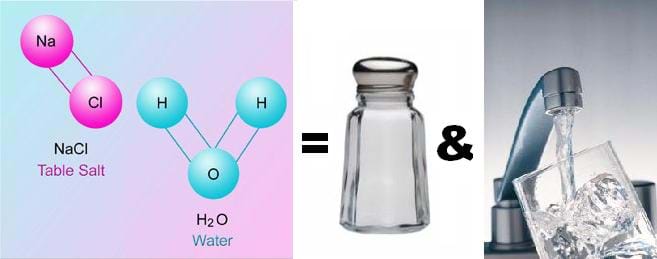
The salt dissolves completely in the water, creating a solution where the components are evenly distributed. This contrasts with heterogeneous mixtures, where the components are easily distinguishable.
From perfectly seasoned pasta to life-saving medications, homogenous mixtures play a vital role in our world. And it all starts with understanding the simple science behind things like saltwater.
Fun Facts About Saltwater (Because Why Not?)
Did you know that the Earth's oceans are essentially a giant homogenous mixture of saltwater? That's a lot of salt!
The salinity (salt content) of the ocean varies depending on location, but on average, it's about 3.5%. That means for every 100 parts of water, there are 3.5 parts of salt.
Seawater is essential for many marine ecosystems, providing habitats for countless species of plants and animals. It's a complex and fascinating environment, all thanks to the power of salt and water coming together!
Saltwater and You: A Personal Connection
Whether you're swimming in the ocean, enjoying a salty snack, or simply admiring the sunset over the water, saltwater is an integral part of the human experience.
It connects us to the natural world, reminding us of the power and beauty of science in everyday life. So, the next time you encounter saltwater, take a moment to appreciate its homogenous nature and the countless ways it enriches our lives.
And maybe, just maybe, avoid accidentally putting it in your coffee!
The End (But the Learning Never Stops!)
So, there you have it! The not-so-secret life of saltwater as a homogenous mixture. Hopefully, you've enjoyed this deep dive (pun intended!).
Remember, science isn't just confined to textbooks and laboratories. It's all around us, waiting to be discovered and appreciated. So, keep exploring, keep questioning, and keep learning!
And who knows, maybe the next time you're stirring salt into water, you'll remember this article and smile, knowing you've unlocked a tiny piece of the universe's mysteries.
"The important thing is not to stop questioning." - Albert Einstein