
What Type Of Battery Does A Smoke Alarm Take
Ever been jolted awake by that infamous, insistent chirp, only to realize it's your smoke alarm begging for attention? It's a common household drama, and it often leads to a moment of mild panic as you scramble to silence it. But once the immediate crisis is averted, a question often pops up: "What type of battery does this thing even take?" It might seem like a small detail, but understanding the humble power source of your smoke detector is actually pretty cool, and undeniably important for keeping your home safe and sound. Let's peel back the curtain on this vital piece of household tech!
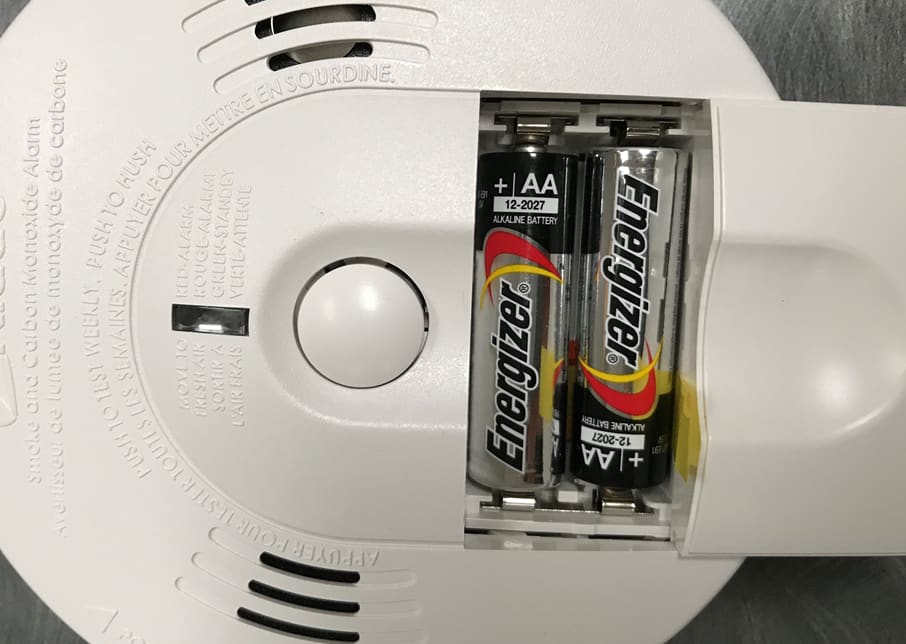
For decades, the undisputed champion of the smoke alarm world has been the 9-volt battery. You know the one – that rectangular block with two snap connectors on top. Its purpose is elegantly simple: to provide a reliable, long-lasting power source for your smoke alarm, especially as a backup in case of a power outage. Imagine the mains electricity going out in the middle of the night; your smoke alarm, thanks to that 9-volt, would still be standing guard. The benefit is clear: uninterrupted protection. While the 9-volt remains a classic, you might also find alarms powered by AA or AAA batteries, especially in newer models designed for longer lifespans, sometimes even boasting sealed-in batteries that last for a decade. The core idea remains the same across all types: to ensure your alarm is always ready to sound the warning.
Understanding battery types extends beyond just smoke alarms. In an educational context, the 9-volt battery is often a first step for kids learning about basic electronics and circuits – those snap connectors are just too satisfying! In daily life, thinking about these batteries teaches us a lot. When you're replacing batteries, you're engaging with practical science. You might notice the difference between alkaline batteries, which are standard, and lithium batteries, which offer longer life and better performance in extreme temperatures – a useful tidbit for things like outdoor sensors. This knowledge empowers you to make informed choices for all your battery-powered devices, from remote controls to children's toys. It's a subtle lesson in energy storage and device requirements.
Must Read
So, how can you become a battery detective in your own home? First, the most practical tip: know your alarm! Take a moment to open the battery compartment (usually a slide or twist mechanism) and see exactly what type it takes. Is it a 9V, a couple of AAs, or something else? Then, make it a habit to test your smoke alarms monthly by pressing the test button. And perhaps the most crucial tip: change your batteries annually. Many people tie this in with Daylight Saving Time changes, which is a brilliant way to remember. For those looking for ultimate convenience, exploring 10-year sealed-battery smoke alarms is a great option – just install and forget about battery changes for a decade! Take a curious stroll down the battery aisle at your local hardware store; it's a fascinating display of power solutions, each designed for a specific purpose. You'll be amazed at the variety and the thought that goes into keeping our everyday devices humming along.


