What Is The Wind Speed Of A Cat 4 Hurricane
There's something undeniably captivating about hurricanes. Maybe it's the raw power on display, the humbling reminder of nature's force, or perhaps it's the adrenaline rush of tracking these swirling behemoths across the ocean. Whatever the reason, hurricanes hold a strange fascination for many, from weather enthusiasts to coastal residents preparing for potential impact. Understanding these storms, especially their intensity, is crucial for preparedness and safety.
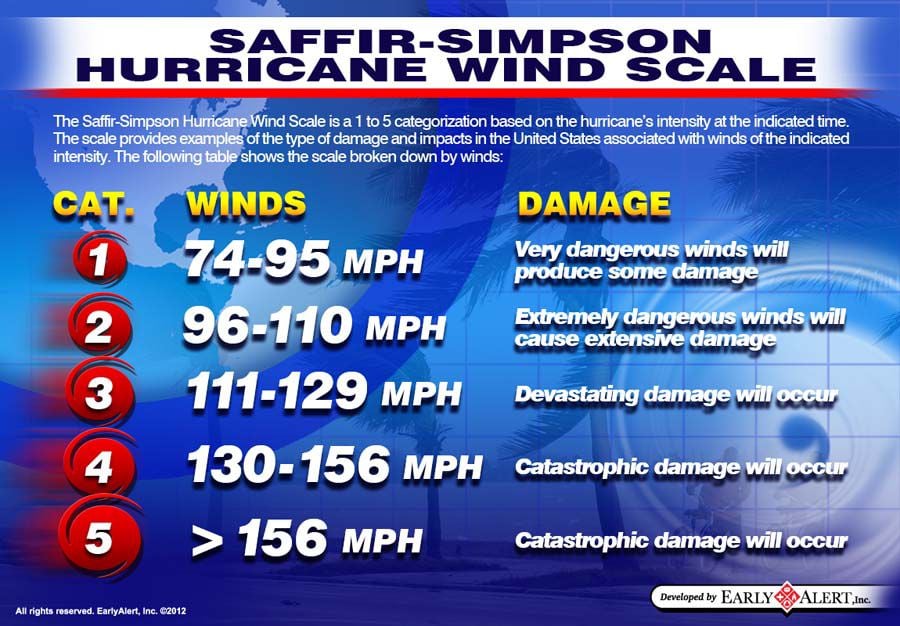
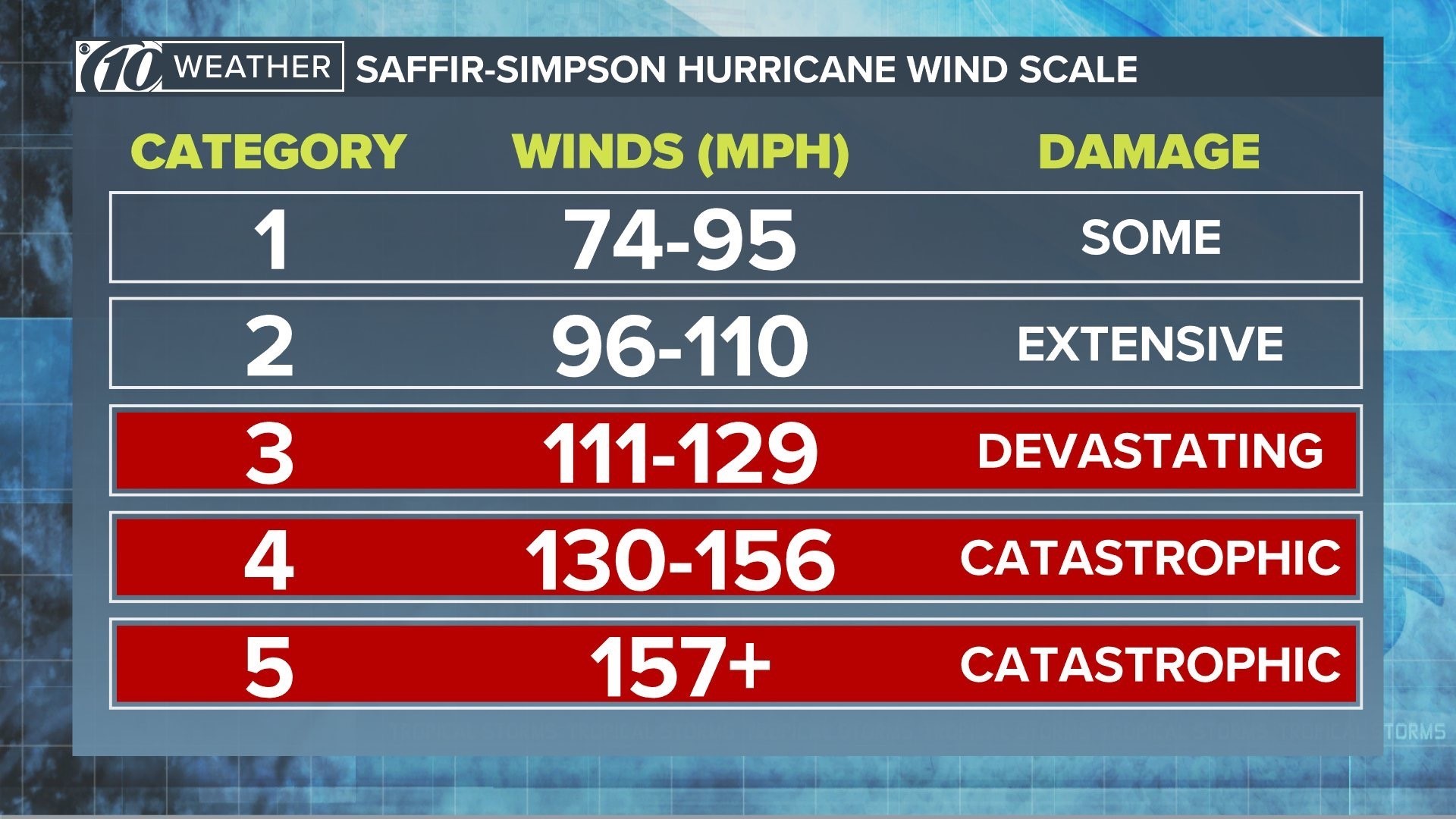
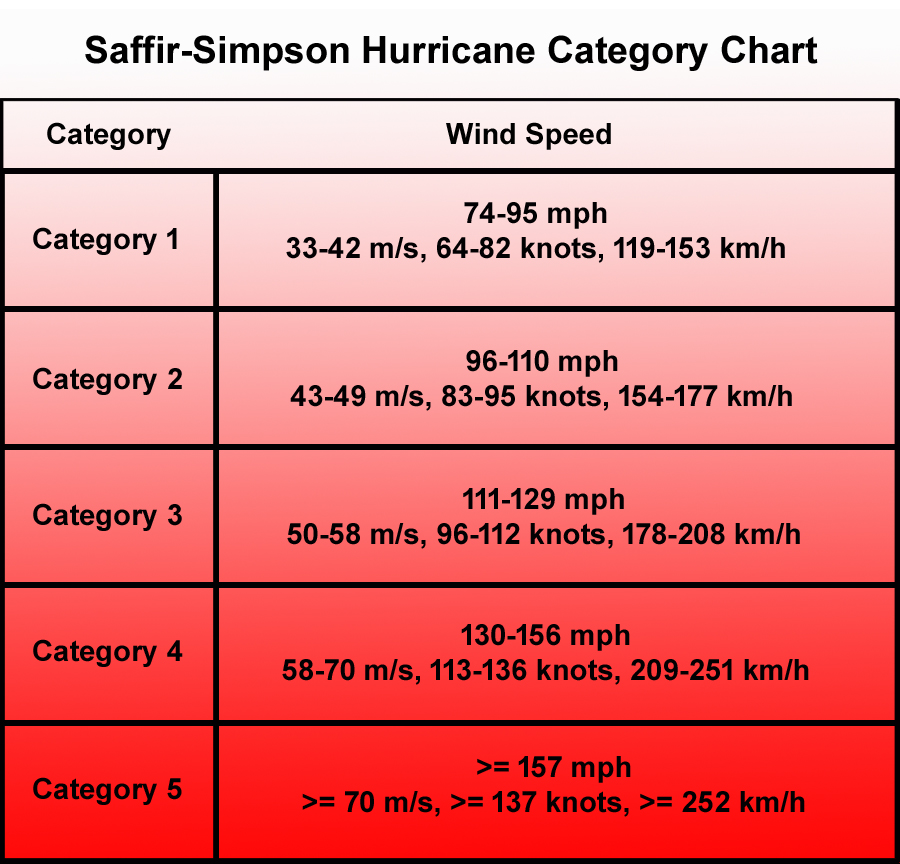
One of the key ways we measure a hurricane's strength is through its wind speed, categorized using the Saffir-Simpson Hurricane Wind Scale. This scale, ranging from Category 1 to Category 5, provides a standardized way to assess potential damage. And that brings us to the question: what exactly is the wind speed of a Category 4 hurricane?
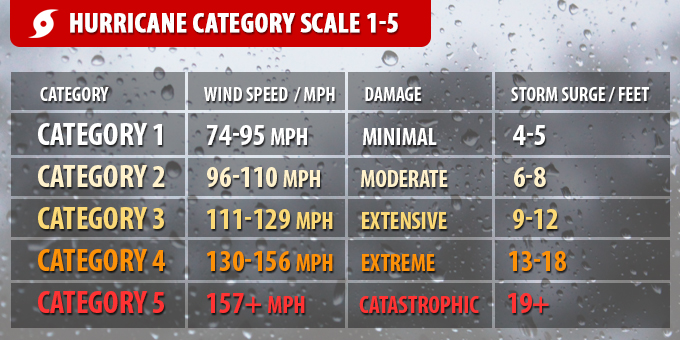
A Category 4 hurricane boasts sustained winds ranging from 130 to 156 mph (209 to 251 km/h). Let that sink in for a moment. These are winds strong enough to cause severe and catastrophic damage. Think of it this way: a Category 4 hurricane packs a punch that can topple trees, rip roofs off houses, and turn flying debris into dangerous projectiles.
Must Read
The purpose of understanding hurricane categories, and specifically the wind speeds associated with each, is directly tied to saving lives and minimizing damage. By knowing what to expect, communities can better prepare for evacuation, secure their homes, and take necessary precautions. Insurance companies use this information to assess risk and determine premiums. Emergency responders rely on category information to prioritize resources and plan rescue efforts.
Common examples of Category 4 hurricane impacts include widespread power outages lasting weeks or even months. Significant flooding, both from storm surge and heavy rainfall, is almost a certainty. Mobile homes and poorly constructed buildings are particularly vulnerable, often being completely destroyed. Coastal areas face severe erosion and potential inundation.
So, how can you learn more about hurricanes and better understand their potential impact? Here are a few practical tips:
- Stay informed: Follow reputable sources like the National Hurricane Center (NHC) and your local news for the latest updates and forecasts. Reliable information is your best defense.
- Understand your risk: If you live in a hurricane-prone area, know your evacuation zone and have a plan in place.
- Learn the Saffir-Simpson scale: Familiarize yourself with the wind speeds and potential impacts associated with each category.
- Practice preparedness: Prepare a hurricane kit with essential supplies like food, water, medication, and a first-aid kit. Regularly review and update your plan.
- Explore online resources: Numerous websites and apps provide interactive hurricane tracking maps, historical data, and educational materials.
Understanding the wind speed of a Category 4 hurricane – a staggering 130-156 mph – and its potential consequences is not just about satisfying curiosity. It's about empowering ourselves to make informed decisions, protect our families, and contribute to the safety of our communities. Knowledge is power, especially when facing the awesome power of nature.