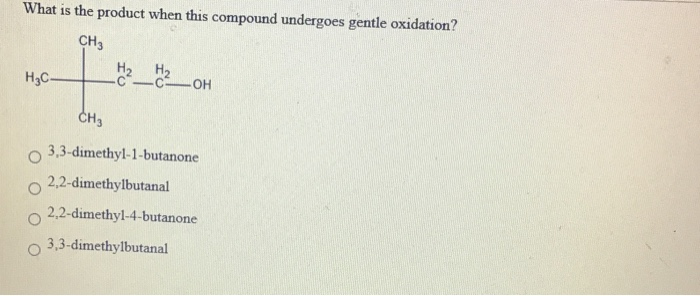
What Is The Product When This Compound Undergoes Gentle Oxidation
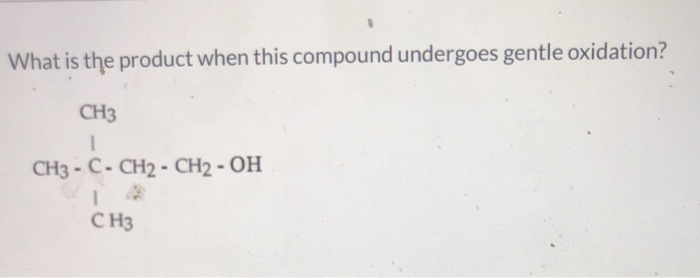
Okay, so imagine we're chilling, right? Coffee's brewing, maybe some pastries... and we're suddenly hit with a random chemistry question. "What happens when this mystery compound meets gentle oxidation?" Sounds kinda scary, but trust me, it's not that bad.
Gentle Oxidation? What's the Deal?
First things first: oxidation. Think rust on metal, but way less dramatic (and hopefully less messy!). It basically means a molecule is losing electrons. And "gentle?" Well, it means we're not setting anything on fire or throwing crazy strong chemicals into the mix. Phew!
We're talking about controlled oxidation, maybe using mild oxidizing agents. You know, the kind that won't rip your molecule apart (unless you want it to, of course. But we don't, right?).
Must Read
So... What's the Compound, Though?
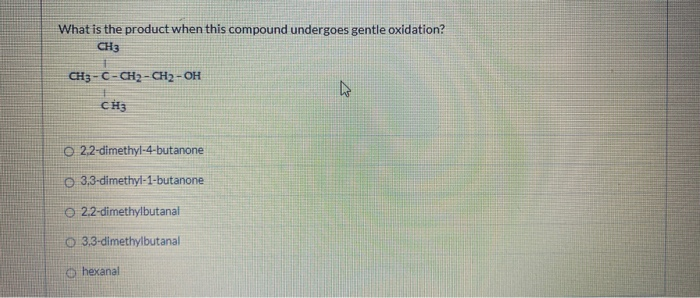
Alright, this is the kicker. Without knowing the actual starting compound, it's like trying to guess what cake we're baking without knowing the recipe! Is it an alcohol? An aldehyde? Maybe even a sulfur-containing compound? The possibilities are, dare I say, endless! (Okay, maybe not endless, but definitely a lot.)
Let's play a few "what if" scenarios, shall we? It'll be fun! (I promise. Mostly.)
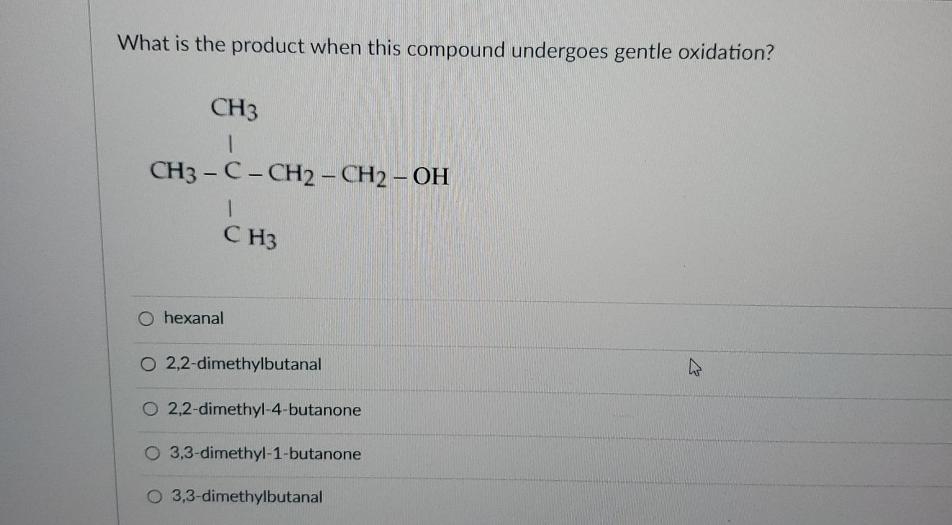
Scenario 1: The Alcohol Adventure
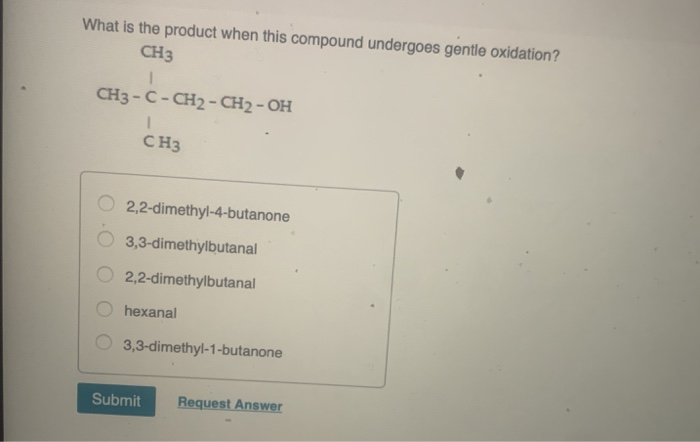
Let's say our mystery compound is a primary alcohol (basically an alcohol with the -OH group attached to a carbon with two hydrogens). Gentle oxidation of a primary alcohol usually leads to an aldehyde. Think of it as a pit stop on the way to a carboxylic acid.
Then, if we were to crank up the oxidation a notch, or maybe let things sit for a while (because sometimes oxidation just… happens… slowly), that aldehyde could further oxidize into a carboxylic acid. Mmm, acids. (Okay, maybe not mmm, but they’re important!). Think vinegar! That’s acetic acid, a carboxylic acid.
Now, if we had a secondary alcohol (the -OH group is attached to a carbon with only one hydrogen), things get a little simpler. Gentle oxidation usually leads to a ketone. Ketones are super useful solvents, and they smell... interesting. (Acetone, anyone?).
Scenario 2: Aldehyde Antics
Now, if our starting material was an aldehyde (already one step oxidized!), gentle oxidation would almost certainly push it to a carboxylic acid. It's like giving it that little extra nudge it needed. Easy peasy!
Scenario 3: The Mysterious Alkane
What if it's an alkane? (Just carbon and hydrogen, super boring... or are they?) Gentle oxidation of an alkane is... tricky. Under controlled conditions, and with some fancy catalysts, you might be able to introduce an alcohol group. But it’s definitely not the most common or straightforward reaction. Usually, you need to bring out the heavy artillery to get alkanes to play ball in oxidation reactions.
The Takeaway? It Depends!
The honest answer? It all depends on the starting compound! Knowing its structure is absolutely crucial. We need to know what we're starting with before we can predict the product. It's like trying to build a house without blueprints – you might end up with something… interesting… but probably not what you intended.
So, next time someone asks you about gentle oxidation, remember the coffee, the pastries, and the fact that context is everything. And maybe, just maybe, ask them what the darn compound is!
Until next time, happy oxidizing! (But, you know, gently.)