
What Is The Fulcrum Of A Forklift

Alright, gather 'round, folks! Let's talk forklifts. Specifically, that sneaky little thing called a fulcrum. Now, I know what you’re thinking: "Fulcrum? Sounds like a rejected Harry Potter spell." But trust me, it’s way more important than levitating your lunch. It's the reason those metal beasts don't tip over every time they pick up a pallet full of... I don't know… garden gnomes?
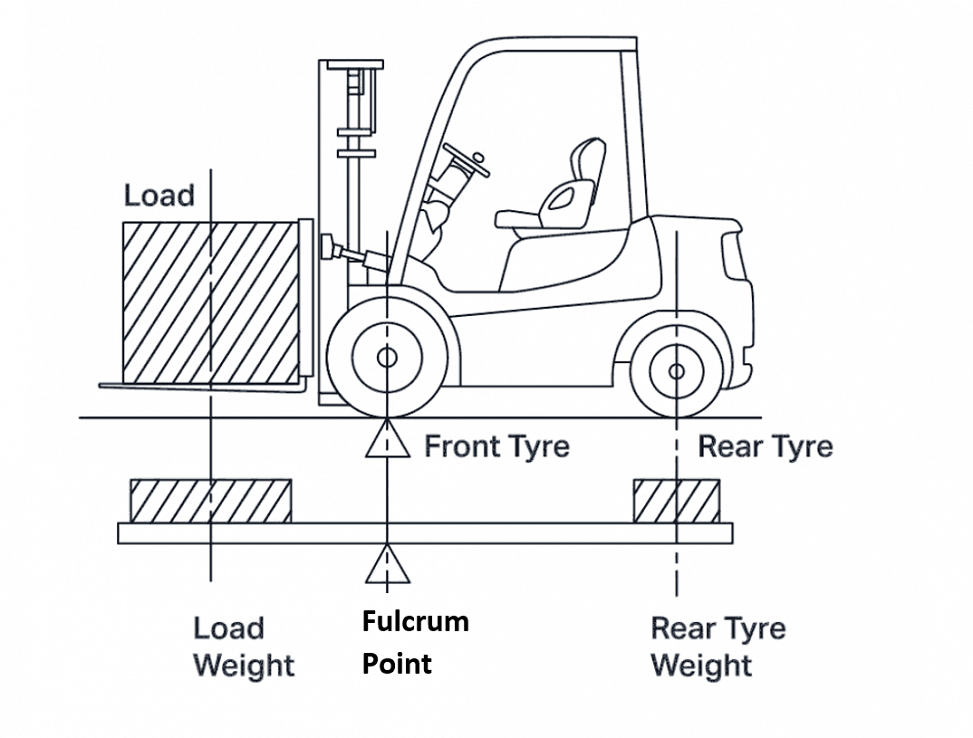
Imagine a seesaw. You've got a kid on one end, a surprisingly heavy grandma on the other (no offense, Grandmas!). To make it work, you need that central pivot point, right? That's your fulcrum! It's the magical spot where the seesaw balances. A forklift is basically a high-stakes, load-bearing seesaw. Only instead of kids and grandmas, we’re talking tons of potential… well, let's just say things that could really ruin your day if they fell on you.
So, Where IS This Elusive Fulcrum on a Forklift?
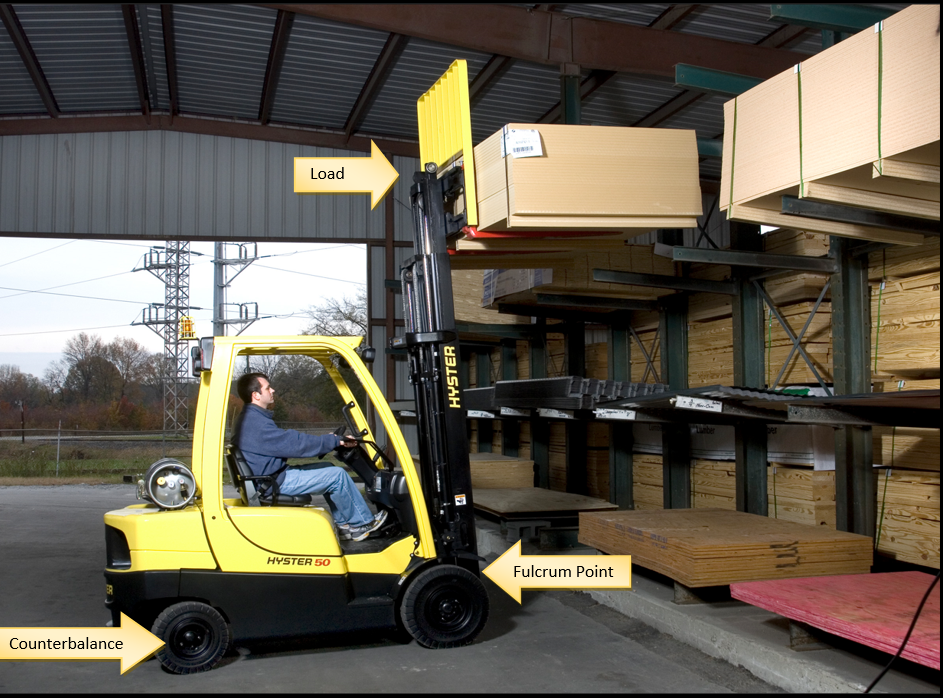
Here's the thing: it’s not some shiny button labeled “Fulcrum." Wouldn’t that be convenient? Instead, it’s an imaginary line that runs through the front axle of the forklift. Yes, the axle! That's the fulcrum! Picture it: all that weight, all that power, all balanced on this unassuming metal rod. Pretty impressive, huh?
Must Read
Think of it like this: The front axle is the belly button of the forklift. Everything revolves around it. (Okay, maybe not literally. But work with me here!).
The weight of the forklift itself is the anchor. It’s what prevents the whole thing from just face-planting every time you try to lift something. That weight is strategically distributed, putting most of it at the back. Think of it as the forklift having a really, really big… well, you get the idea. This counterweight is essential.
Why Should You Care About This Invisible Fulcrum Thingy?
Well, knowing where your fulcrum is will make you a much safer – and probably a much cooler – forklift operator. Okay, maybe not cooler. Operating a forklift is not generally considered “cool.” But definitely safer! You need to understand how weight distribution affects stability. Because trust me, tipping a forklift is not a fun experience.
Here's a fun fact: a forklift tipping over isn't just embarrassing; it’s actually one of the leading causes of forklift-related injuries. Nobody wants to be "that guy" whose obituary reads, "Died tragically beneath a mountain of poorly stacked artisanal cheeses."

The load center – the distance from the front forks to the center of the load – plays a big role. The further away the load center is from the fulcrum (the front axle), the less weight you can safely lift. It's physics, people! It's like trying to lift a barbell with your arms fully extended versus holding it close to your body. Which is easier? Exactly! Same principle applies to forklifts. Keep that load close, folks!
Overloading a forklift is a HUGE no-no. I mean, seriously. Don’t do it. It’s like asking your grandma to bench press a car. She might be a tough grandma, but even she has her limits! Every forklift has a load capacity plate. Read it! Understand it! Live by it! It’s there for a reason, and that reason is to prevent you from becoming a forklift-tipping statistic.
The Fulcrum: Not Just for Forklifts!
Here’s a mind-blowing fact: The fulcrum principle isn't just for forklifts! It's everywhere! Crowbars? Fulcrum. Scissors? Fulcrum. Your own limbs? You guessed it – fulcrums all over the place! Every time you bend your arm, your elbow is acting as a fulcrum. So, next time you're struggling to lift a particularly stubborn box, just remember you’re basically a highly evolved, organic forklift. (Okay, maybe that’s a bit of a stretch…)
In conclusion, the fulcrum of a forklift, while invisible, is the heart of its stability. Understanding its location and how it interacts with weight and load center is crucial for safe and efficient operation. So, go forth, forklift operators, and lift responsibly! And remember, always respect the fulcrum! Your life (and the lives of those artisanal cheeses) might depend on it.
