
What Is The Average Temperature Of A Room
Alright, gather 'round, folks! Pull up a comfy virtual chair, grab your imaginary latte, because we're about to tackle one of life's great mysteries, a question pondered by philosophers, debated by housemates, and silently judged by pets: What is the average temperature of a room?
Now, you might think, "Oh, that's easy! It's… you know… room temperature." And you'd be right! But also, spectacularly wrong. Because "room temperature" is less a fixed number and more a vibe, a feeling, a hotly contested battleground for the thermostat wars.
The Elusive "Average"
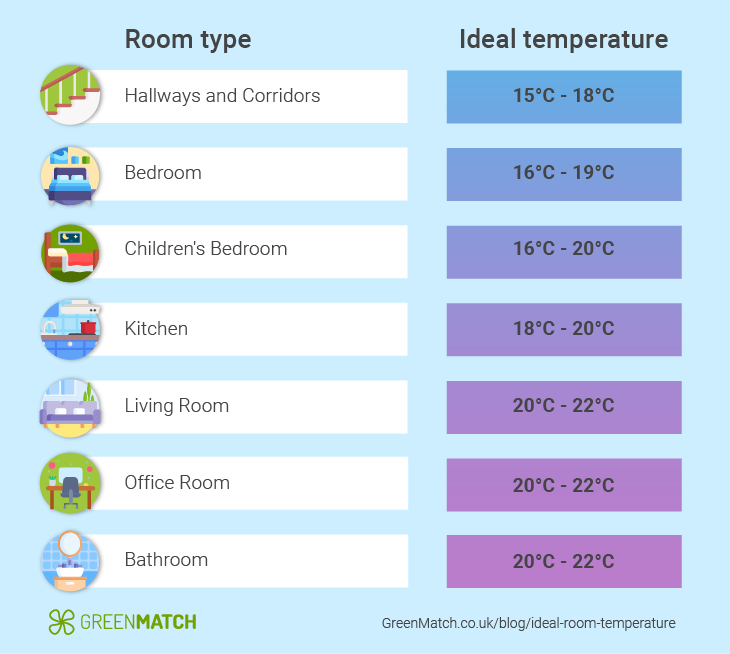
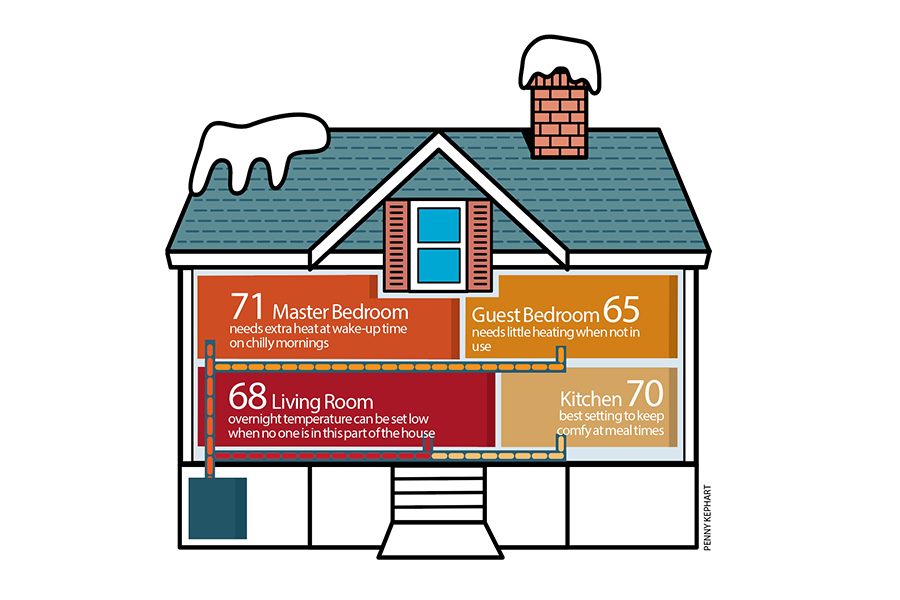
Let's start with the broad strokes, the kind of answer you'd give if someone put a gun to your head and demanded a number. Most people would ballpark it around 68 to 72 degrees Fahrenheit (that's about 20 to 22 degrees Celsius for our metric-minded friends). This is often considered the comfortable sweet spot, the Goldilocks zone where you're not sweating like a competitive eater nor shivering like a chihuahua in a snowstorm.
Must Read
But here's where it gets delightfully complicated. Because that "average" is like trying to find the average number of socks in a drawer – it varies wildly depending on whose drawer you're raiding and whether they've done laundry recently. Or ever.
The Many, Many Factors
Firstly, there's you. Are you a polar bear in human form who considers anything above 65°F (18°C) an inferno? Or are you perpetually bundled in a blanket, convinced that anything below 75°F (24°C) is an arctic expedition? Our individual comfort levels are like fingerprints: unique and surprisingly opinionated.
Then there's the season. In the dead of summer, when the sun is trying to turn your windows into magnifying glasses, a room at 75°F (24°C) with a gentle breeze might feel heavenly. Try that in winter, and you'll be calling a priest to perform an exorcism on your heating system. Conversely, 68°F (20°C) feels perfectly crisp in autumn but like a personal sauna when it's -10° outside.
Let's not forget the purpose of the room. A server room? It's probably being blasted with enough AC to turn you into a human ice sculpture, keeping those precious electrons from melting down. A yoga studio? Likely to be warmer, perhaps even intentionally hot, to help you achieve that perfect pretzel pose. A wine cellar? Definitely cooler, because nobody wants lukewarm Cabernet.
![What is the Average Room Temperature? [2025 Survey Results] | Angi](https://media.angi.com/s3fs-public/average-room-temperature-settings.png?impolicy=infographic)
And what about geography? An average room temperature in Dubai will likely be far different from one in Siberia, for obvious, fiery, or frosty reasons. The very idea of "room temperature" shifts with the equator.
Oh, and occupancy! A room packed with 20 sweaty, excited humans generating body heat is going to be significantly warmer than an empty room, patiently waiting for someone to finally tidy it up. Every person is essentially a tiny, walking heater, radiating approximately 100 watts of power. So, a room full of people? That's a small, very chatty power plant.
The Scientific Sneak Attack
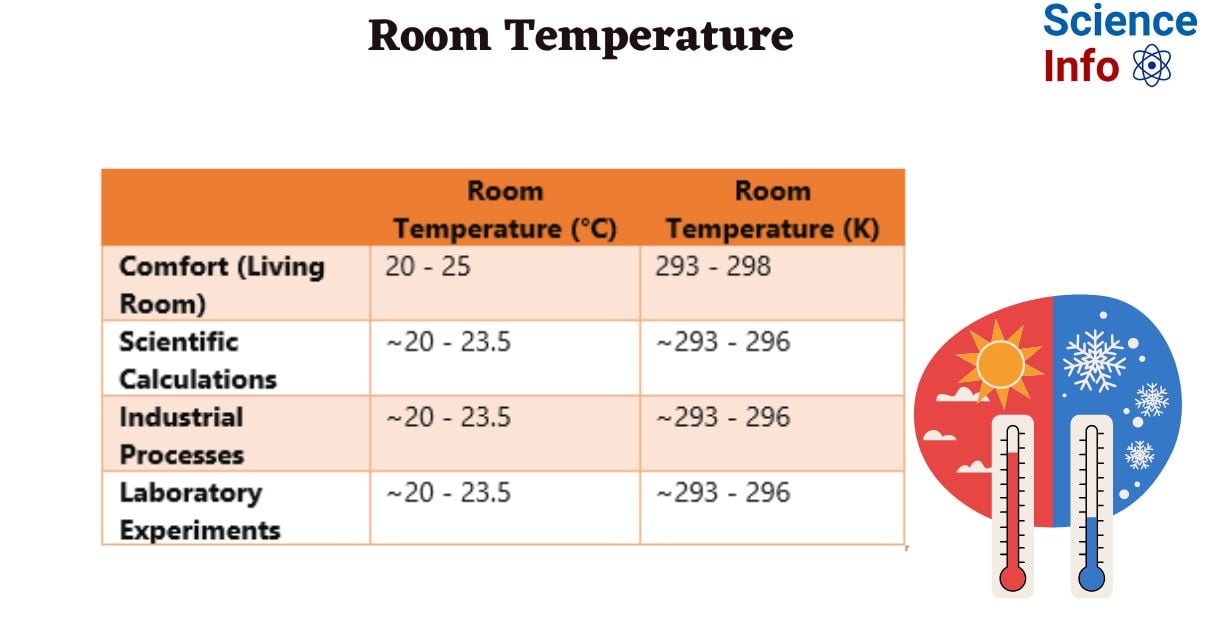
Here's a fun little curveball: when scientists, pharmacists, or industrial types refer to "room temperature," they often have a much more specific range in mind. For pharmaceuticals, "controlled room temperature" is often defined as 68 to 77°F (20 to 25°C), with excursions allowed up to 86°F (30°C) for short periods. So, your medication isn't just chilling out; it's living in a very particular climate-controlled spa.
And for those classic science experiments where it says "perform at room temperature"? They're usually thinking around 20-25°C (68-77°F). It's a standard, a baseline, a non-negotiable comfort zone for chemical reactions and lab equipment. They don't care if you're feeling a bit chilly; the molecules have a job to do!

The Great Thermostat Showdown
Ultimately, the "average temperature of a room" is a delightful fiction, a statistical ghost. It's the temperature that feels "just right" to the majority of people, most of the time, in a typical living space. But as anyone who's ever shared a thermostat with another human knows, that "just right" temperature is as subjective as deciding whether pineapple belongs on pizza (it does, don't @ me).
It’s the silent battle in every office, the passive-aggressive tug-of-war in every shared apartment. One person wants it to be a tropical paradise, the other wants to wear a parka indoors. The poor thermostat, a silent arbiter of domestic bliss or chaos, simply tries its best to appease everyone, often satisfying no one fully.
So, next time someone asks you the average temperature of a room, just smile mysteriously. Tell them it's somewhere between "sweater weather" and "swimming suit optional." Or, more accurately, tell them it's a beautifully chaotic symphony of personal preference, external climate, and the sheer will of the person who last touched the thermostat. And probably a cat, because cats always seem to find the warmest spot anyway.