What Is Prime Factorization Of 50

Okay, let's talk about prime factorization! Sounds intimidating, right? But trust me, it's like a puzzle, and puzzles are fun! Especially when we're breaking down something familiar, like the number 50. Think of it as reverse-engineering a number – figuring out what smaller numbers were multiplied together to make that number. It's surprisingly useful and kinda cool.
So, what's the big deal with prime factorization? Well, for beginners, it's a fantastic way to understand how numbers are built. You start to see that every number (well, almost every number!) is just a combination of these special building blocks called prime numbers. For families, it can be a fun math game to play together – who can break down a number the fastest? It's a great way to sneak in some learning without it feeling like homework. And for hobbyists – maybe you're into coding or even just enjoy problem-solving – prime factorization pops up in unexpected places, like cryptography! Knowing the basics can be surprisingly helpful.
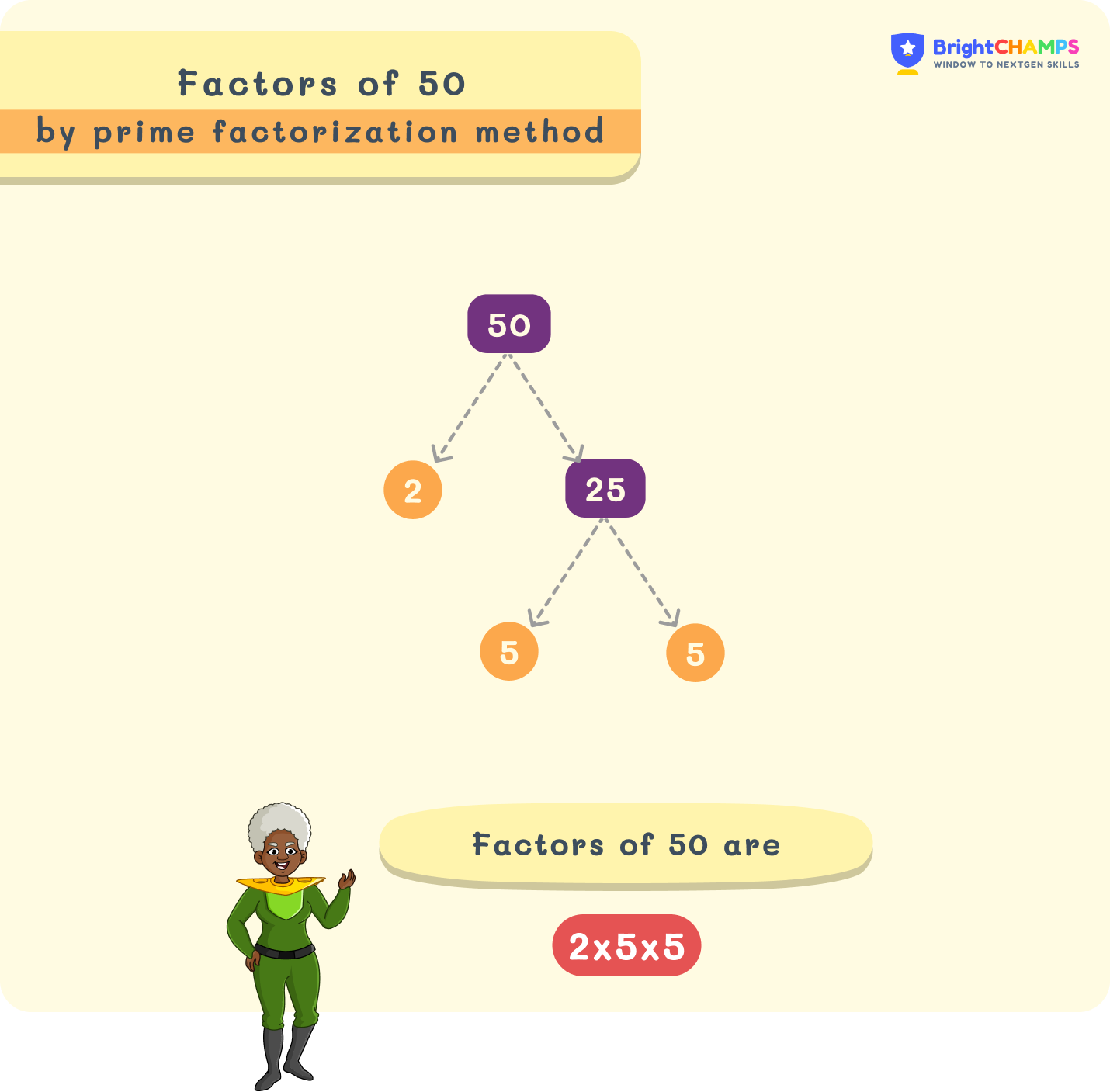
Let's get down to brass tacks: What's the prime factorization of 50? Here's how we do it. We need to find prime numbers that, when multiplied together, equal 50. Remember, a prime number is a number greater than 1 that's only divisible by 1 and itself (examples: 2, 3, 5, 7, 11...).
Must Read
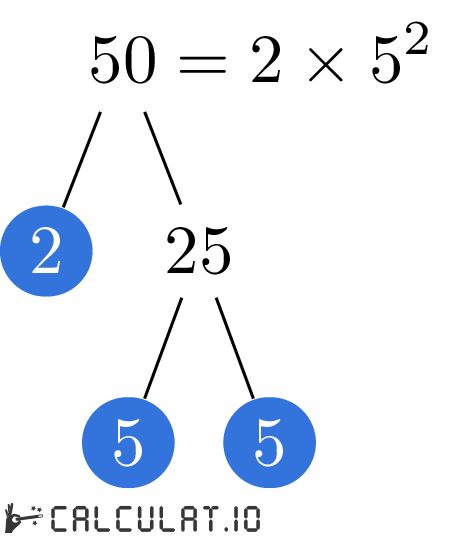
We can start by dividing 50 by the smallest prime number, 2. 50 divided by 2 is 25. So, we have 2 x 25. Now, 2 is prime, but 25 isn't. What prime number divides into 25? That's right, 5! 25 divided by 5 is 5. So, we have 5 x 5.
Now we have 2 x 5 x 5. And guess what? 2 and 5 are both prime numbers! So, we're done! The prime factorization of 50 is 2 x 5 x 5, which can also be written as 2 x 52. See? Not so scary!
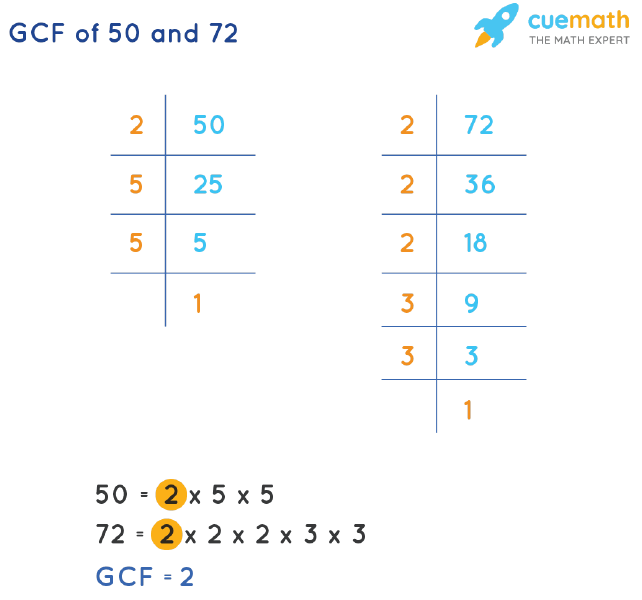
Want to try another one? What about 36? We can start with 2 again: 36 / 2 = 18. So we have 2 x 18. Then, 18 / 2 = 9. Now we have 2 x 2 x 9. Finally, 9 / 3 = 3. So the prime factorization of 36 is 2 x 2 x 3 x 3 (or 22 x 32).
Practical Tip: Start with the smallest prime number (2) and keep dividing by it as many times as you can. Then move on to the next smallest prime number (3), then 5, and so on. This helps you keep organized! You can also use a "factor tree," which is a visual way to break down the number until you're left with only prime numbers at the bottom.

Getting started is as easy as grabbing a pen and paper and choosing a number. Don't be afraid to experiment and make mistakes! That's how you learn. The more you practice, the easier it becomes to spot the prime factors. Have fun with it!
So, there you have it – the prime factorization of 50, explained in a way that hopefully doesn't make your brain hurt. It's a fun little mathematical adventure, and who knows? Maybe it'll unlock a secret passion for number theory! Now go forth and factorize!