
What Is A Olympic Gold Medal Made Of
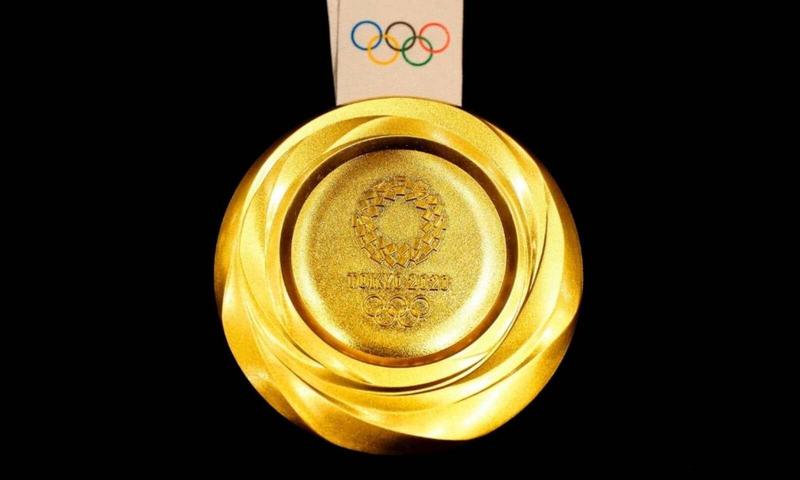
Okay, let's talk Olympic gold medals. You see those athletes biting them on TV, right? Ever wonder what they're actually chomping on? Is it pure, unadulterated gold like something you'd find in a pirate's treasure chest? Well, settle in, because the answer might surprise you! It's like ordering the "gold" package and finding out there are some cool "silver" and "copper" features bundled inside. 😉
The Golden Truth: It's Not All Gold!
Here's the deal: Olympic gold medals haven't been made of solid gold since 1912! That's right, over a century. Imagine going to your favorite coffee shop and finding out they haven’t used actual coffee beans in ages! It’s a bit like that. So, what are they made of?
Think of it as a delicious (though not actually edible!) layer cake. The base is mostly silver, usually around 92.5%. Yep, the same stuff that makes up your grandma's fancy silverware, or that cool necklace you got for your birthday! It’s the workhorse of the medal, providing the strength and structure.
Must Read
Then comes the frosting! This is where the gold comes in. It's a plating, meaning a thin layer, of at least 6 grams of pure gold. To put that in perspective, 6 grams is about the weight of six paperclips. Not a ton, right? But it’s enough to give that iconic golden sheen we all recognize and drool over.
And sometimes, there’s a little something else in the mix too, like copper. Consider it a secret ingredient in your favorite family recipe. It helps to bind everything together and adds to the medal's overall durability.

Why Not Solid Gold? Think Big (and Heavy!)
Why don't they use solid gold anymore? Several reasons! First, think about the sheer size of the Olympics. Hundreds of medals are awarded. Solid gold would be incredibly expensive. We're talking "mortgage your house" expensive for each medal!
Secondly, imagine lugging around a solid gold medal! They are pretty hefty, weighing in at around 500 grams (just over a pound!). Making them entirely out of gold would make them weigh even more. Can you imagine trying to run a victory lap with that thing hanging around your neck? It would be like running a marathon with a small bowling ball attached to you! 😅
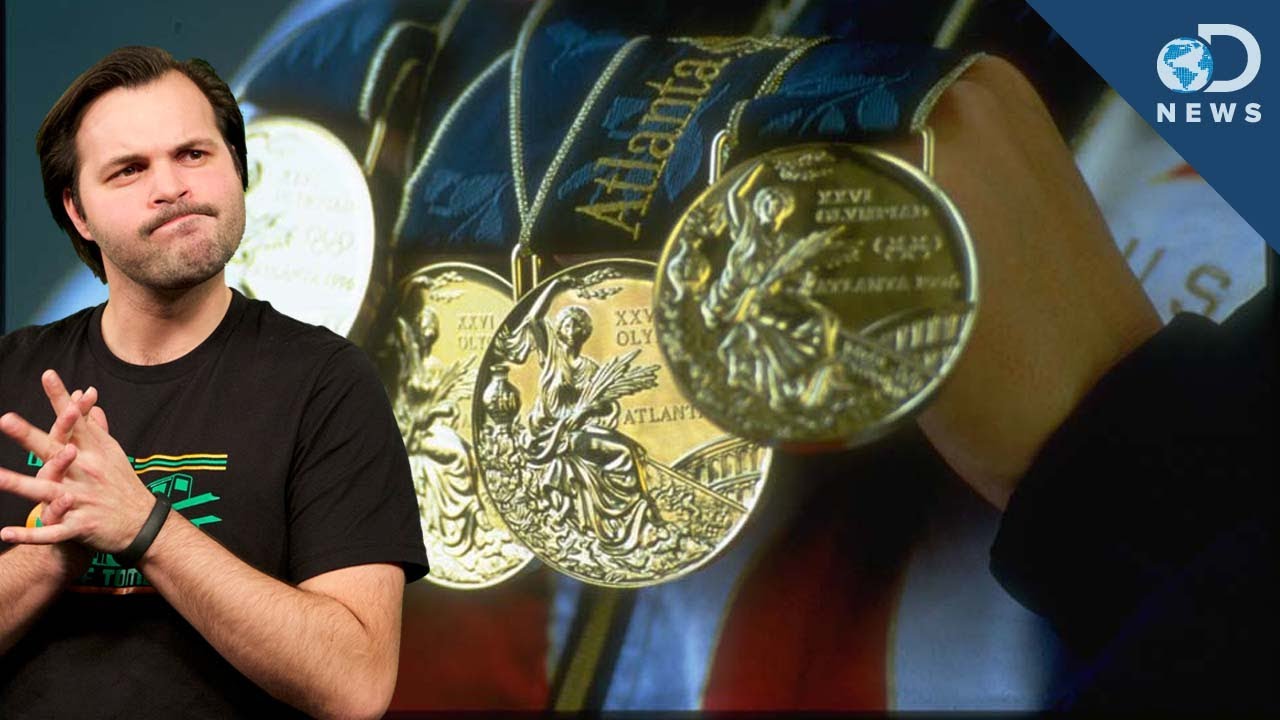
Finally, using a silver base makes the medals more durable. Pure gold is actually quite soft. It scratches and dents easily. Silver is a bit tougher, so it can better withstand all the celebrating, hugging, and (of course) biting that comes with winning gold.
So, Why Should You Care?
Okay, so it's not solid gold. Why should you even care? Well, think about it this way: The Olympic gold medal represents something far more valuable than the materials it's made from. It’s a symbol of:

- Unwavering dedication: Years of training, early mornings, sacrifices made.
- Unmatched skill: Honing your craft to be the very best in the world.
- National pride: Representing your country on the world stage.
- Inspiration: Inspiring millions to chase their own dreams, no matter how big.
The metal itself is almost beside the point. It’s the story behind the medal, the journey the athlete took to get there, and the impact they have on others that truly matters. It's like a beautiful frame holding an even more priceless piece of art.
So, next time you see an athlete clutching that gold medal, remember that it’s not just about the gold, silver, and copper. It's about grit, determination, and the unwavering pursuit of excellence. And that's something truly golden, no matter what it's made of. Now, go chase your own gold… whatever that may be!
