What Does Integrated Experience Mean Cpi
Hey there, ever stumbled upon a phrase that just makes your brain go, "Hmm, what does that actually mean?" I totally get that feeling. And lately, for me, that phrase has been "Integrated Experience", especially when it's paired with something like CPI. You know, the Crisis Prevention Institute? If you're anything like me, your initial thought might be, "Sounds important, but... what's the big deal? Is it just fancy jargon?"
Well, I've been doing a little digging, and it turns out, it's actually super interesting and, dare I say, pretty cool! It’s not just buzzwords; it’s a whole philosophy that makes a ton of sense when you break it down. So, grab a comfy seat, because we’re going to unravel what "Integrated Experience" means in the world of CPI, and why it’s such a game-changer.
First Off, What’s CPI All About?
Before we dive into the "integrated" part, let's just quickly touch on CPI. They’re kind of a big deal in the world of preventing and de-escalating crises. Think of them as the go-to experts for teaching folks how to handle challenging behaviors in a way that’s safe, respectful, and ultimately, helps everyone involved. Their training is used everywhere from healthcare and education to social services. Pretty important stuff, right?
Must Read
So, What's This "Integrated Experience" Really Mean?
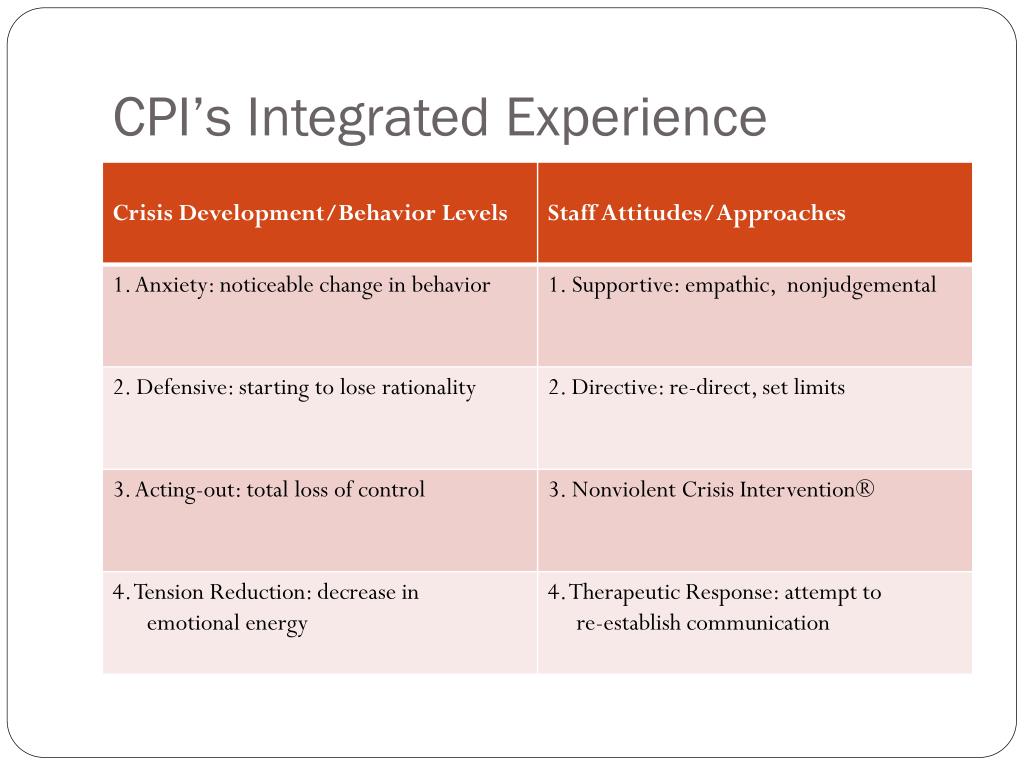
Alright, drumroll please! When CPI talks about an Integrated Experience, they’re not just talking about one single skill or one quick fix. Nope. They're talking about a holistic approach. Imagine trying to bake a magnificent cake. You wouldn't just throw flour, eggs, and sugar into a bowl and hope for the best, would you? You'd follow a recipe, measure ingredients, mix them at the right time, and bake it at the perfect temperature. Each step is connected, each ingredient plays a vital role in the final delicious outcome.
That’s essentially what an Integrated Experience is all about: bringing all the pieces together. It’s about creating a seamless, interconnected system where every aspect works in harmony. It’s not just knowing a de-escalation technique; it's about applying that technique while also understanding the person's history, the environment they're in, and how your own behavior impacts the situation. It’s like being a brilliant orchestra conductor, ensuring every instrument plays its part to create a beautiful symphony, not just a bunch of random noises.

Why Is This Such a Big Deal? (The "Cool" Factor!)
1. It's About More Than Just "Fixing" a Problem
Think about it: many approaches to challenging behavior tend to be reactive. Someone acts out, and then we react. But an Integrated Experience pushes us to think proactively. It asks, "What could we do to prevent this in the first place?" and "How can we create an environment where everyone feels safe and understood, reducing the likelihood of a crisis?" That's pretty smart, right?
2. It Puts People First (Always!)
At its heart, this approach is deeply human-centered. It recognizes that every individual experiencing distress is just that – an individual. They have feelings, a history, and needs. An integrated approach ensures that dignity, respect, and empathy are always at the forefront. It’s not about controlling behavior; it’s about supporting the person.
3. It Empowers Everyone Involved
This isn't just about training staff in a few neat tricks. An Integrated Experience means that everyone is equipped – from the person directly interacting with someone in distress, to their colleagues, to the supervisors, and even the organization's policies. When everyone is on the same page, speaking a common language, and understanding the same core principles, the entire system becomes stronger and more supportive. It's like having a superpower team where everyone knows their role and can jump in to help seamlessly.

4. It Creates Safer Environments
Ultimately, when you integrate understanding, techniques, empathy, and proactive strategies, what do you get? Safer spaces for everyone. For the individuals who might be struggling, they encounter people who are better prepared to help, more compassionate, and less likely to escalate a situation. For the staff, they feel more confident, less stressed, and better supported. It's a win-win-win!
Bringing It All Together: A Seamless Flow
Imagine a challenging situation unfolding. In a non-integrated approach, you might have someone who knows a de-escalation technique, but perhaps they don't fully understand the underlying reasons for the behavior, or the environment isn't supportive, or their colleagues aren't on board. It's like trying to navigate a puzzle with half the pieces missing.

But with an Integrated Experience, it’s a different story. You have staff who understand the person’s triggers (the 'why'), who are skilled in verbal de-escalation (the 'how'), who are supported by their team (the 'who'), and who operate within a culture that prioritizes safety and empathy (the 'where'). All these elements don't just exist side-by-side; they intertwine and influence each other, creating a powerful, cohesive response.
It's about having the right mindset, the right skills, the right policies, and the right team all working in concert. It’s about building a robust safety net, where every thread is connected, making it incredibly strong and reliable.
The Takeaway? It's Smart, It's Kind, It's Effective.
So, the next time you hear "Integrated Experience", especially from CPI, remember that it's far more than just a fancy term. It’s a commitment to a comprehensive, interconnected, and incredibly human approach to preventing and managing crisis situations. It’s about creating environments where everyone feels safer, more respected, and ultimately, more understood. And honestly, that sounds pretty amazing to me. It's a testament to the idea that when we work smarter, and more collaboratively, we can truly make a positive difference in challenging moments.