
What Do The Two Check Marks Mean In Google Messages
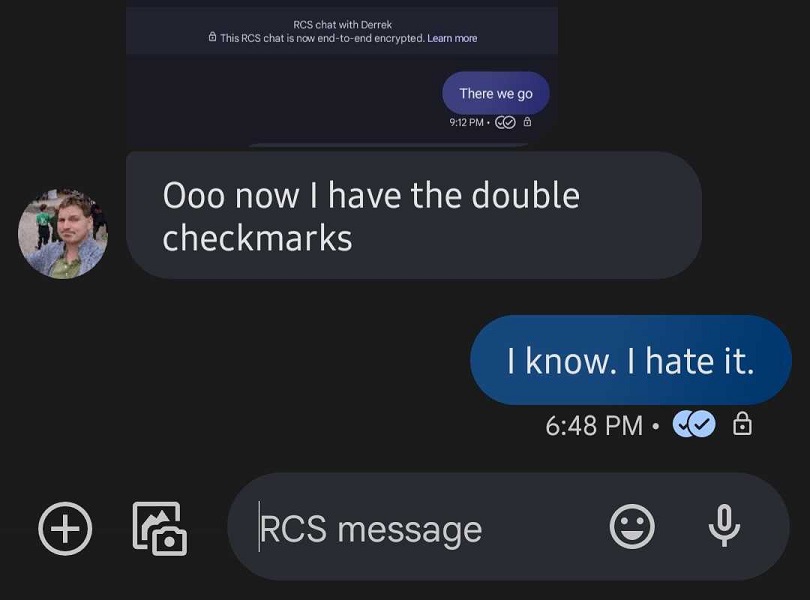
Ah, the modern digital age. We're all connected, all chatting, all sending little bits of ourselves flying across the invisible internet wires. And in the world of Google Messages, there's a tiny, unassuming detail that holds a surprising amount of power.
Yes, we're talking about those mysterious little check marks. They appear after you hit send, silent sentinels of your digital communication.
One check mark, then sometimes, two. What do they really mean? And more importantly, do we truly need both?
Must Read
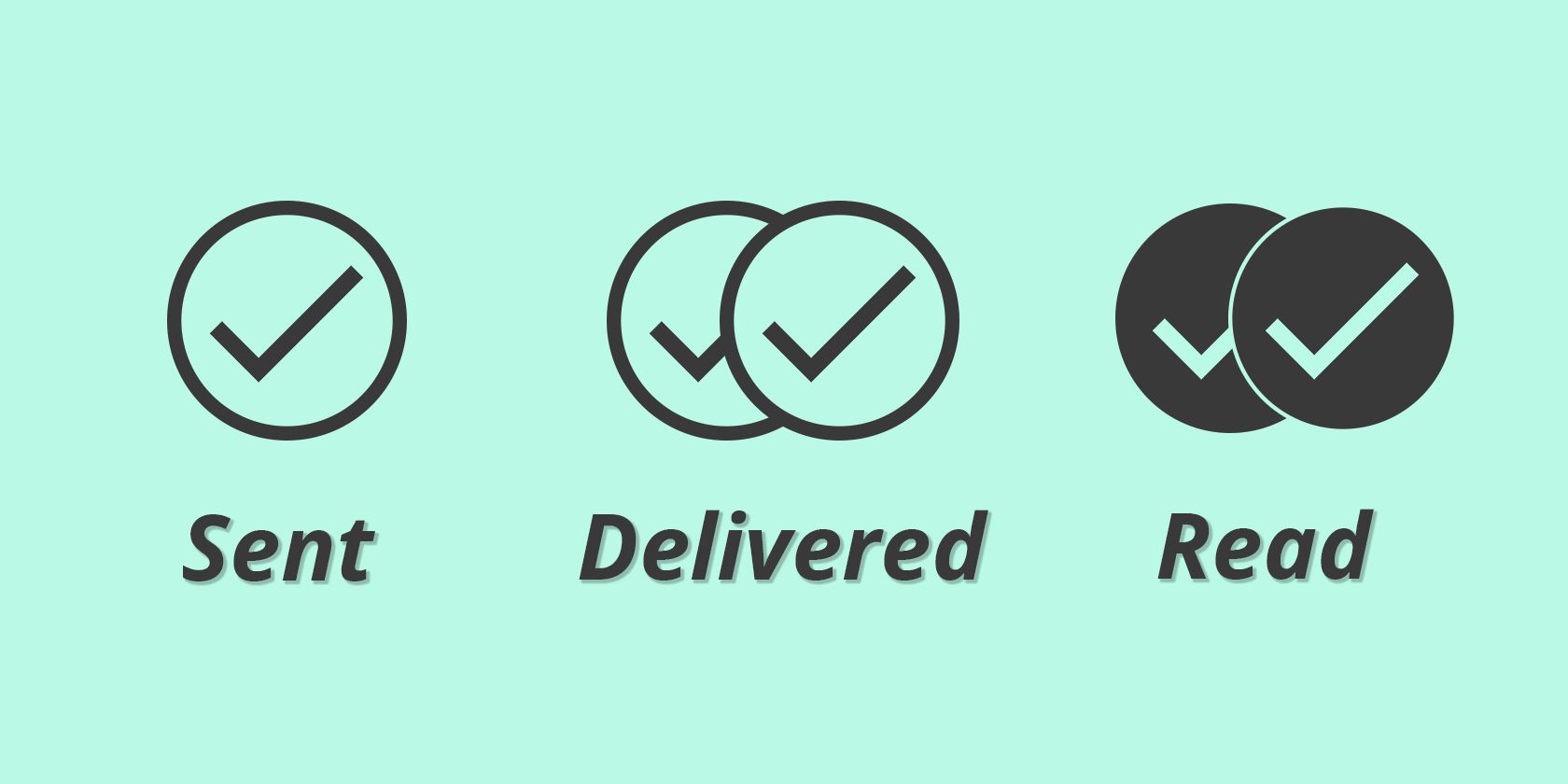
The Single Check Mark: A Gentle Nod
Let's start with the innocent one, the single check mark. It pops up, usually pretty fast, right after you tap that send button.
For years, we've all sort of agreed, without a single formal memo, what this means. It’s a quiet thumbs-up from the digital ether.
“Your message has left the building!”
Or perhaps, "Sent, and on its merry way." It’s a reassuring little ping, telling you your words are out there, traversing the digital landscape.
It's like dropping a letter in a mailbox. You know it's gone. It’s no longer your problem, at least not until you get a reply.
This single check mark is a comfort. It's the bare minimum of digital etiquette, assuring you that you didn't just type into the void.
Then Came The Duo: The Double-Edged Sword
But then, a second check mark often joins its friend. Suddenly, one becomes two, and the game changes. The stakes feel a little higher.
This is where things get interesting, and dare I say, a touch more complicated. The double check mark in Google Messages has a certain unspoken weight.
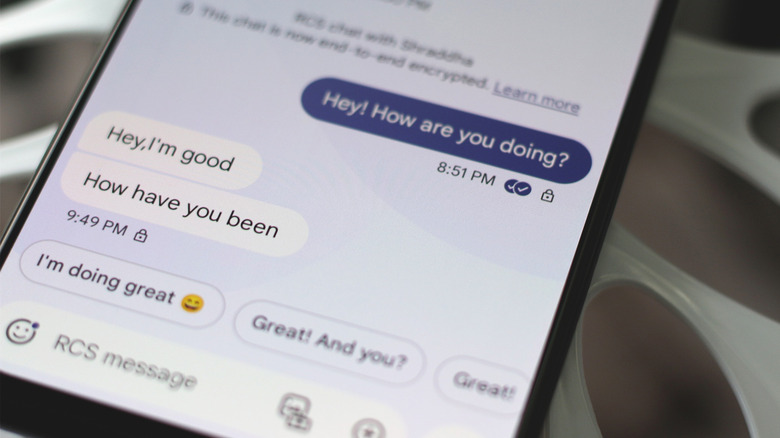
Most of us interpret this as, "Delivered to the recipient's device." Ah, success! The message landed.
But for many, especially in the modern age of instant gratification, it means something more. It means, "They saw it."
Or at least, "Their phone saw it, and presumably, they're probably near their phone." It’s a subtle shift from mere delivery to perceived awareness.
And that, my friends, is where our playful "unpopular opinion" begins to take root.
The Pressure of the Second Check
Do we really need to know the exact millisecond someone's phone received our message? Is that information truly essential?
The double check mark often morphs into a silent timer. A tiny, ticking clock that pressures us, both sender and receiver.
“Okay, they’ve seen it. Why haven’t they replied yet?”
We’ve all been there, staring at those two little checks, wondering if our perfectly crafted joke or urgent question is being ignored.
Is it being pondered? Or is it simply being relegated to the endless abyss of 'I'll get to it later'?
It's the digital equivalent of seeing someone pick up your note, glance at it, and then slowly put it back down without a word.
This small icon can transform a casual chat into an unintentional test of patience. The pressure mounts with every passing second.
The "Read Receipt" Undercurrent
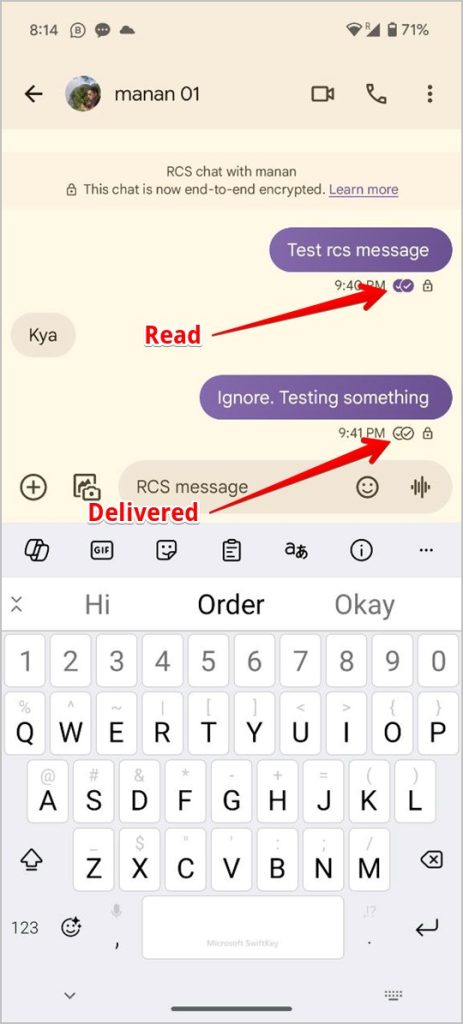
Technically, in Google Messages, the double check mark simply means "Delivered." It doesn't officially mean "Read."
The true "Read" confirmation is usually a separate thing, often a little profile picture popping up, or the word "Read" itself.
But let's be honest with ourselves. In the court of public digital opinion, two checks feel like "read."
It's an unspoken agreement, a collective hallucination perhaps, that turns a simple delivery confirmation into something much more profound.
And this subtle misinterpretation is where the delightful absurdity truly kicks in. It’s a leap of faith we all make.
The Art of the Strategic Unread
Think about it. We’ve all done it. Received a message, saw the notification, but carefully didn’t open the chat itself.
Why? To avoid sending those dreaded double checks! To keep the sender in the dark, just for a little while longer.
It’s a strategic move, a silent protest against the tyranny of instant gratification. We’re busy, okay? We’ll get to it!
“I saw it, I just didn’t officially see it yet.”
This digital dodging is a testament to the pressure these tiny indicators create. We become masters of notification management.
Sometimes, we just need a moment to formulate the perfect witty response, or perhaps, mentally prepare for a difficult conversation.
The double check mark robs us of that precious, unpressured thinking time. It eliminates plausible deniability with alarming efficiency.
The Accidental Tap: A Minor Crisis
And what about the accidental tap? You're scrolling through notifications, your finger slips, and BAM! You've opened the message.
Too late. The double checks are out. The sender now knows. Panic sets in. You weren't ready!
Suddenly, you feel compelled to reply instantly, even if you only meant to glance. It’s a tiny digital trap that springs without warning.
This miniature moment of panic highlights how much importance we unwittingly place on these tiny symbols.
It's like accidentally making eye contact with someone you were trying to avoid across a crowded room. A social faux pas, digitally amplified.
RCS: The Reason Behind the Ruckus (But Let's Keep It Simple)
Now, a tiny peek behind the curtain. These fancy check marks are largely thanks to something called RCS, or Rich Communication Services.
Think of it as SMS's cooler, more feature-rich sibling. It brings read receipts, typing indicators, and yes, those nuanced check marks.
It’s all part of making our messaging experience more app-like, less like the ancient flip-phone days.
But for our purposes, let’s not get bogged down in technical jargon. The effect of these checks is what truly matters.
The technology is just the messenger (pun intended) for the societal shifts in communication expectations. It empowers the checks to do their work.
The Joy and The Burden
Undoubtedly, these check marks offer a sense of security. You know your message reached its destination. That's a good thing!
They prevent that nagging doubt of whether your urgent message was lost in the digital abyss. No more wondering if your words ever landed.
But they also introduce a subtle, constant pressure. A gentle nudge that sometimes feels more like a shove, demanding attention.
It’s the digital equivalent of someone peeking over your shoulder as you open their note. You feel their presence, even when they're miles away.
A helpful feature, yes, but one that comes with its own peculiar set of social anxieties and expectations.
Our Unpopular (But Relatable!) Opinion
So, here it is, our slightly irreverent take: Maybe, just maybe, one check mark was enough.
The single check confidently stated, "Sent." It was simple, unambiguous, and blessedly free of implied obligation.
The second check, while technically meaning "Delivered," has become burdened with the weight of expectation and immediate response.
It’s the silent judge of our digital interactions, always there, always watching, always subtly asking, "And now what?"
“Did they get it? Yes. Did they see it? Probably. Should I reply now? Oh no, the checks are already there!”
Perhaps a little less information, a little more plausible deniability, would make our messaging lives a touch more relaxed.
We could all just send our thoughts out into the digital ether and trust they’d arrive when they arrived. Wouldn't that be a breath of fresh air?
A Call for Check-Mark Simplicity
Imagine a world where only the single check mark existed. Pure, unadulterated "sent" confirmation, nothing more.
No agonizing over delayed responses, no accidental "reads," no strategic avoidance tactics born from anxiety.
Just the simple knowledge that your message is on its way, without the added pressure of its immediate reception being broadcast to the world.
A digital utopia, perhaps, or just a longing for slightly less pressure in our hyper-connected lives. A little less transparency, for our peace of mind.
It’s a small detail, these two check marks, but they highlight a fascinating aspect of modern communication and its subtle demands.
The Enduring Mystery (and Charm)
Ultimately, whether we love them or playfully curse them, those two check marks are here to stay in Google Messages.
They’re part of the fabric of our digital conversations, guiding our expectations and sometimes, our anxieties.
So next time you send a message, and those two little checks pop up, give them a nod.
Acknowledge their power, laugh at their subtle demands, and remember that we’re all in this digitally interconnected boat together.
And hey, maybe, just maybe, take a moment before you reply. The checks can wait. You’re busy. Your time is your own, after all.