
What Are The Factors For 80

Ever stopped to think about all the secret lives a simple number leads? Take 80, for instance. It's not just a number between 79 and 81. It's a whole ecosystem of mathematical relationships, a bustling party where different numbers team up to create… well, 80! Let's crash that party and see who's invited.
The Obvious Guests: Multiplication and Division
These are the life of the party, the ones everyone expects to see. Think of them as the cool kids. Multiplication, the social butterfly, gathers numbers together. It's how we know 80 = 8 x 10. Or 16 x 5. Or even the slightly less common but equally valid 2 x 40! Multiplication is all about finding the perfect pair (or group!) that, when combined, adds up to the magic number.
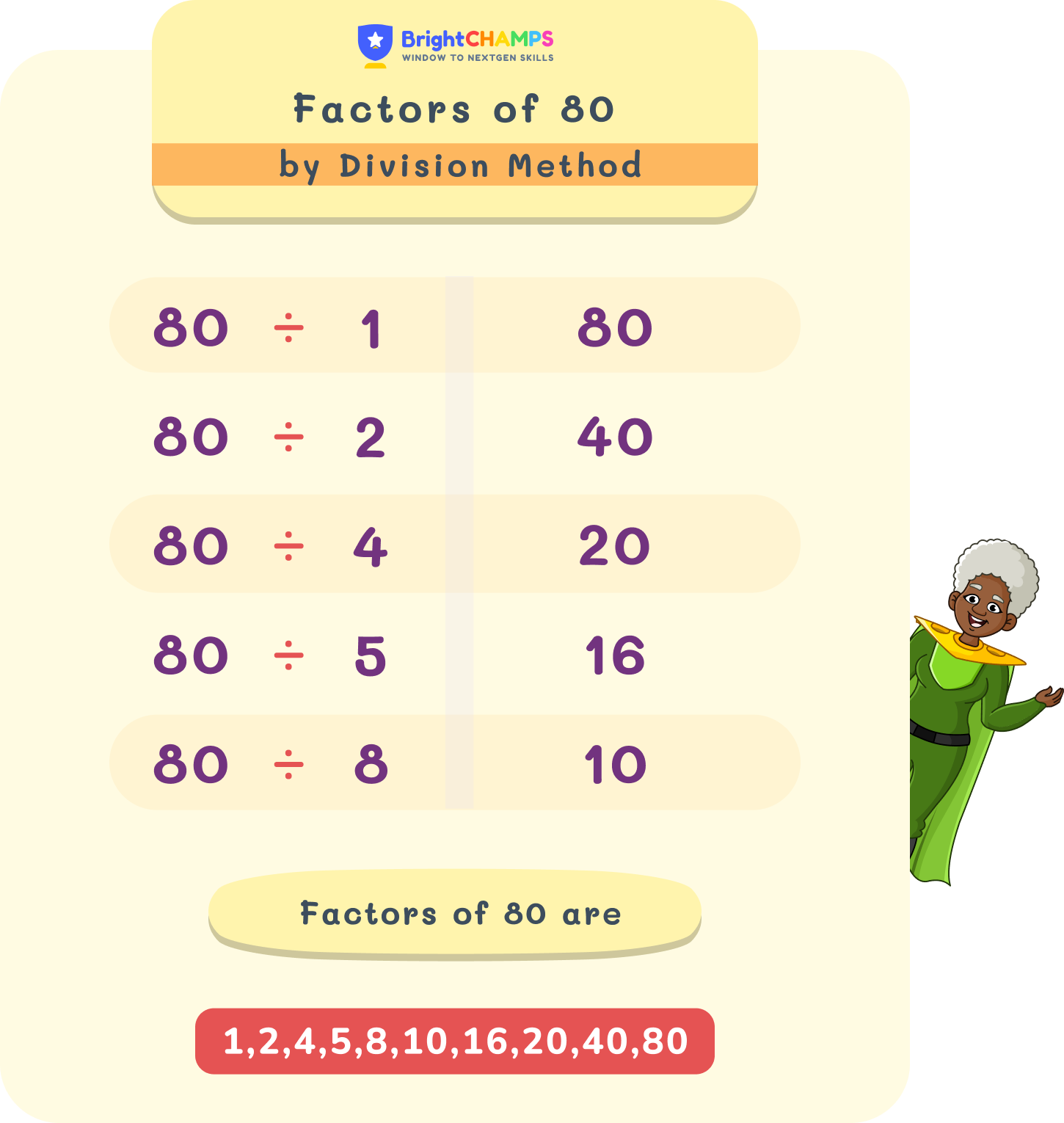
Division, on the other hand, is the organized one, neatly splitting things up. 80 ÷ 2 = 40. It's like saying, “If you have 80 cookies and want to share them equally with two friends, each of you gets 40!” Division is the anti-hoarder, ensuring everyone gets a fair share. It’s the mathematical equivalent of your mom yelling, "Share with your siblings!"
Must Read
These are your classic factors for 80 – the whole numbers that divide evenly into it. Those darlings are: 1, 2, 4, 5, 8, 10, 16, 20, 40, and 80. But hold on; the party isn't just about the obvious attendees.
The Unexpected Attendees: Addition and Subtraction
Okay, so addition and subtraction might seem like they're gatecrashing a multiplication/division-themed party. But they’re actually vital! Think about it: 79 + 1 = 80. 81 – 1 = 80. They’re the understated ones, happy to contribute quietly. They show us that factors aren't just about breaking 80 down; they can also be about building it up.
Imagine Addition, a kindly old lady who keeps inviting her friends over for tea, until they've all amassed 80 cookies between them! And Subtraction, the slightly grumpy but secretly generous neighbor, who always seems to have a few extra cookies she's willing to part with if someone's a bit short.
The Less Obvious (But Still Fun) Players: Prime Factorization
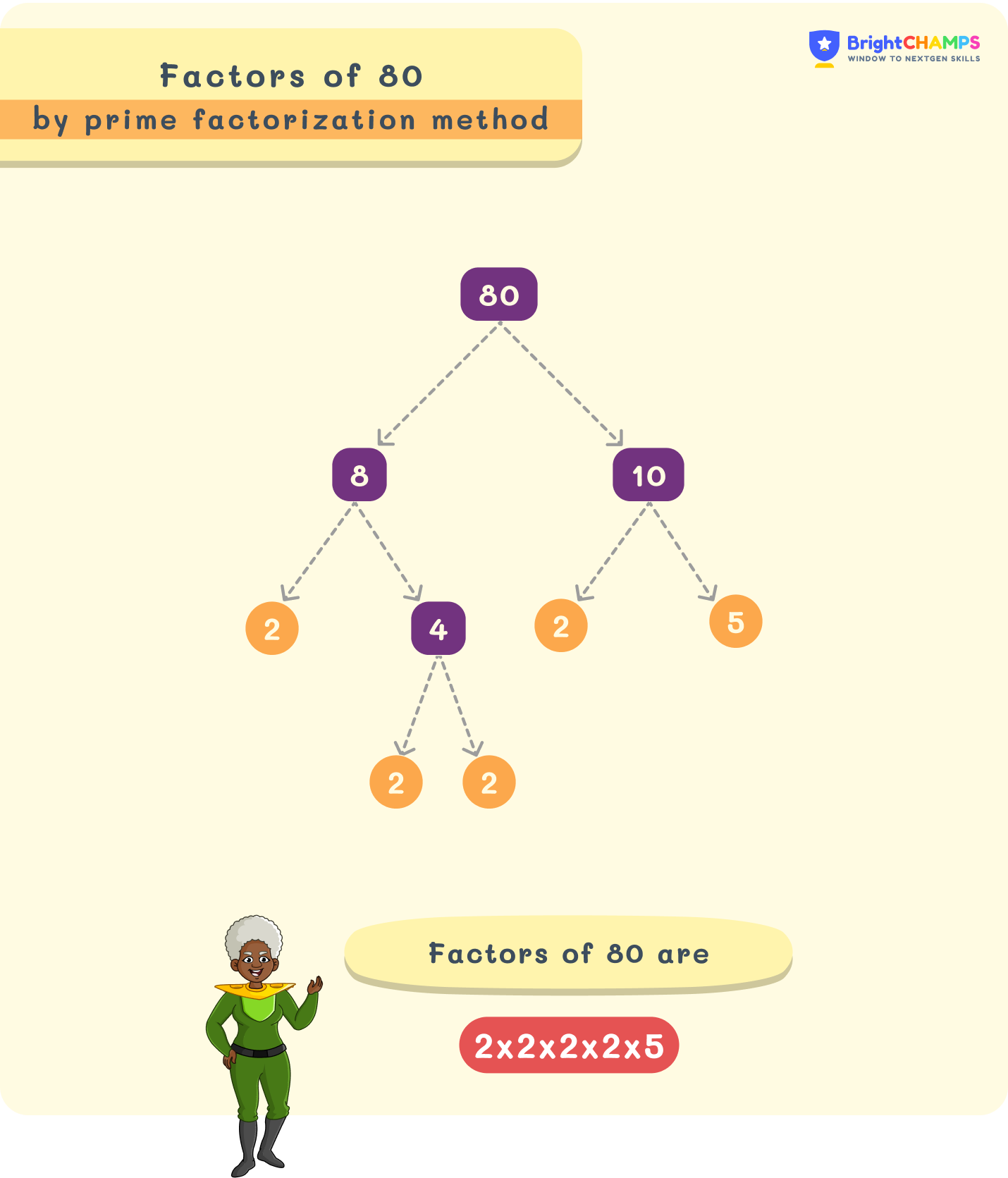
This is where things get a little nerdy, but stick with me. Prime factorization is like dismantling 80 down to its absolute, most fundamental building blocks: prime numbers. Prime numbers are those picky eaters that can only be divided by 1 and themselves (think 2, 3, 5, 7, 11…). For 80, that means 2 x 2 x 2 x 2 x 5. Or, to put it more elegantly, 24 x 5. It's like taking apart a LEGO castle piece by piece until you're just left with the tiny, individual bricks.
Why Bother Knowing All This?
Okay, so maybe you're not planning on using your newfound knowledge of 80’s factors at your next cocktail party (unless you're at a really interesting cocktail party). But understanding factors is like unlocking a secret code to how numbers work. It makes math a little less scary and a little more like a fun puzzle.
Think about dividing a pizza. Or sharing candy with your friends. Or even figuring out how many rows of plants to put in your garden. All of these involve factors, whether you realize it or not. Factors are everywhere!

The Heartwarming Factor: Community
Ultimately, the factors of 80 remind us that everything is interconnected. Just like those LEGO bricks need each other to build a castle, different numbers rely on each other to create other numbers. It’s a mathematical community, a bustling marketplace of relationships. And isn't that a nice thought?
So, the next time you see the number 80, don’t just think of it as a boring, everyday number. Think of the party, the friendships, the underlying structure that makes it what it is. Think of 80 as a testament to the beautiful, often-overlooked connections that make up the world around us. And maybe, just maybe, you’ll find yourself looking at numbers in a whole new light.
