What Are Good Poker Hands
Let's face it, poker can seem intimidating. All those serious faces, the chips clattering, and the seemingly endless possibilities! But scratching beneath the surface reveals a game of skill, strategy, and, yes, a little bit of luck. And knowing your poker hands is the first, crucial step to enjoying the game, whether you're dreaming of Vegas or just looking for a fun family night.
Understanding poker hands isn't just about winning (though that's a nice bonus!). It's about understanding the language of the game. For beginners, it unlocks the ability to participate with confidence. You'll know when to bet, when to fold, and when to bluff (we'll get to that later!). For families, learning the hand rankings provides a common ground for a fun and engaging activity. It's a great way to teach kids about probabilities and strategic thinking in a playful way. And for hobbyists, mastering the hand rankings allows you to focus on more advanced strategies and nuances of the game, making it even more rewarding.
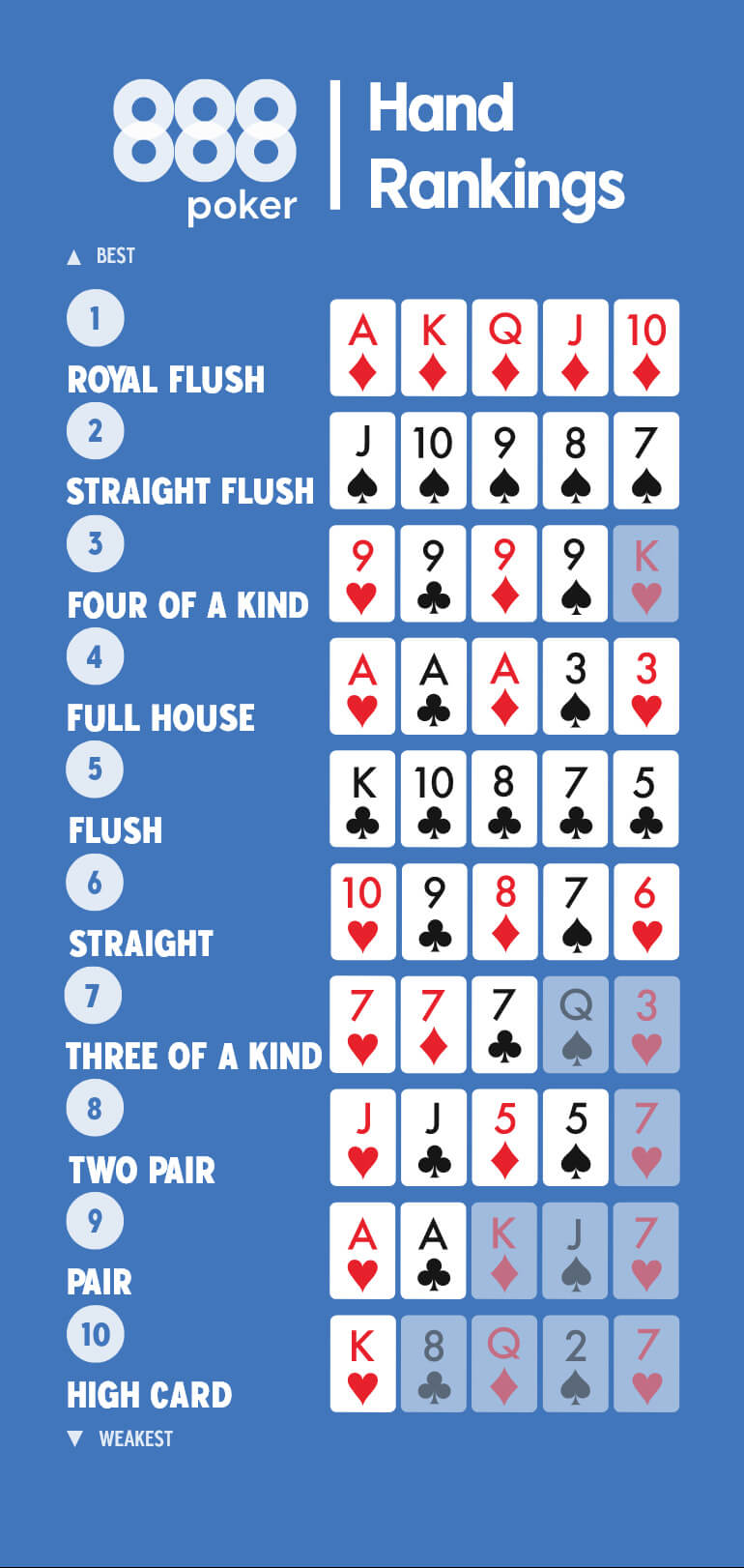
So, what are these magical poker hands? Here's a quick rundown from worst to best:
Must Read
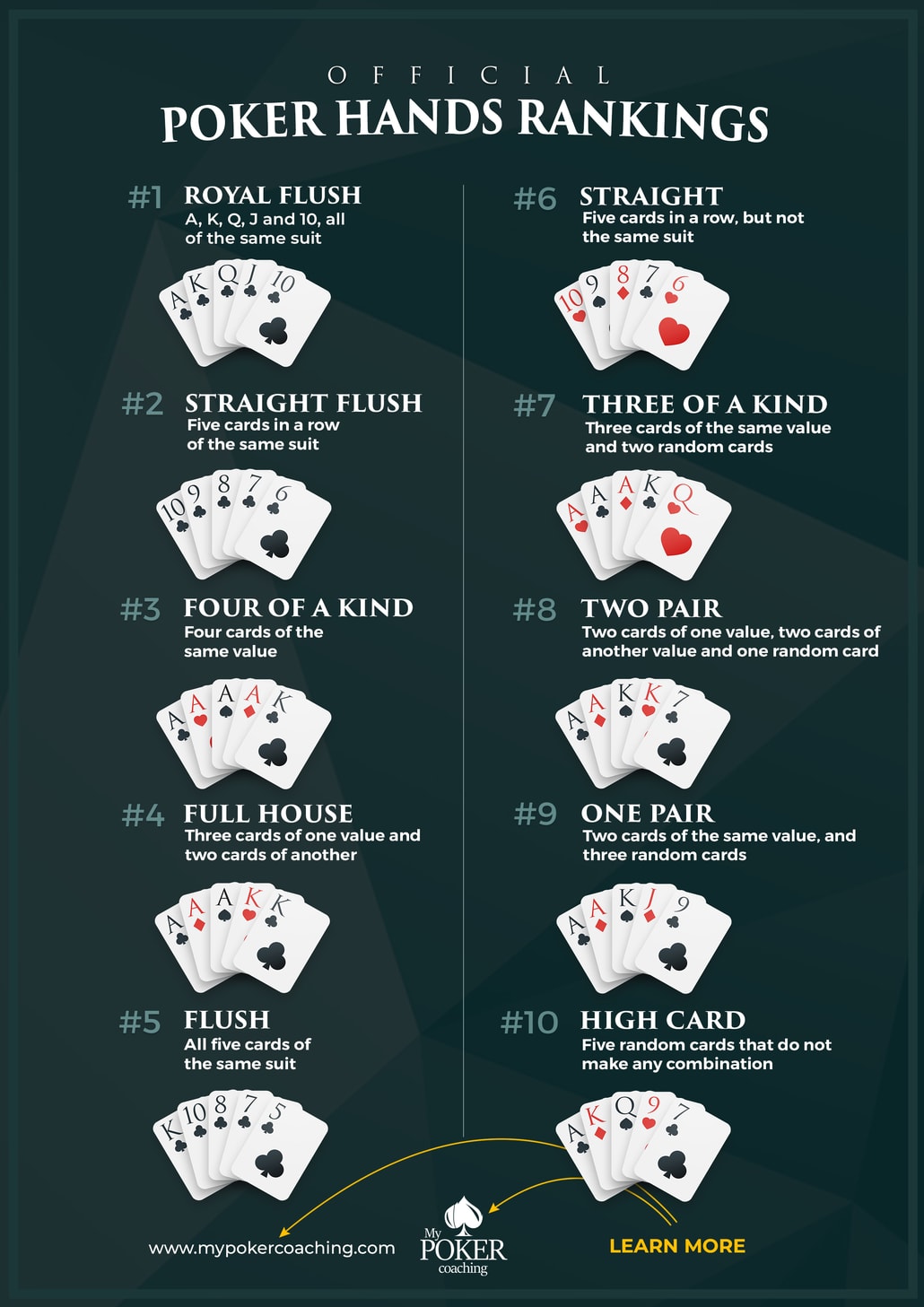
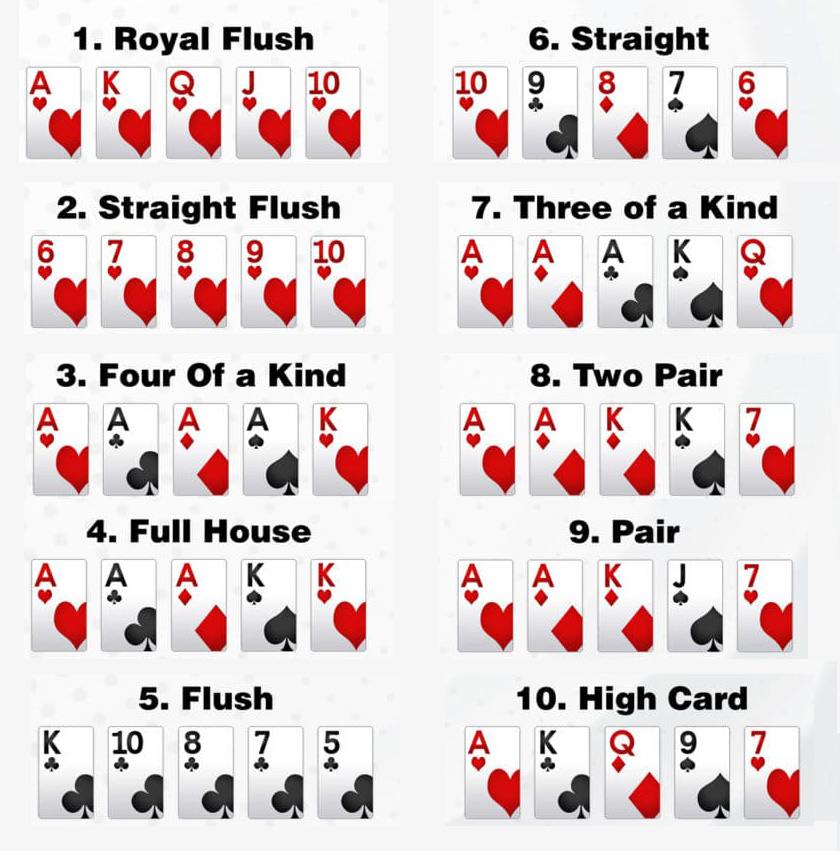
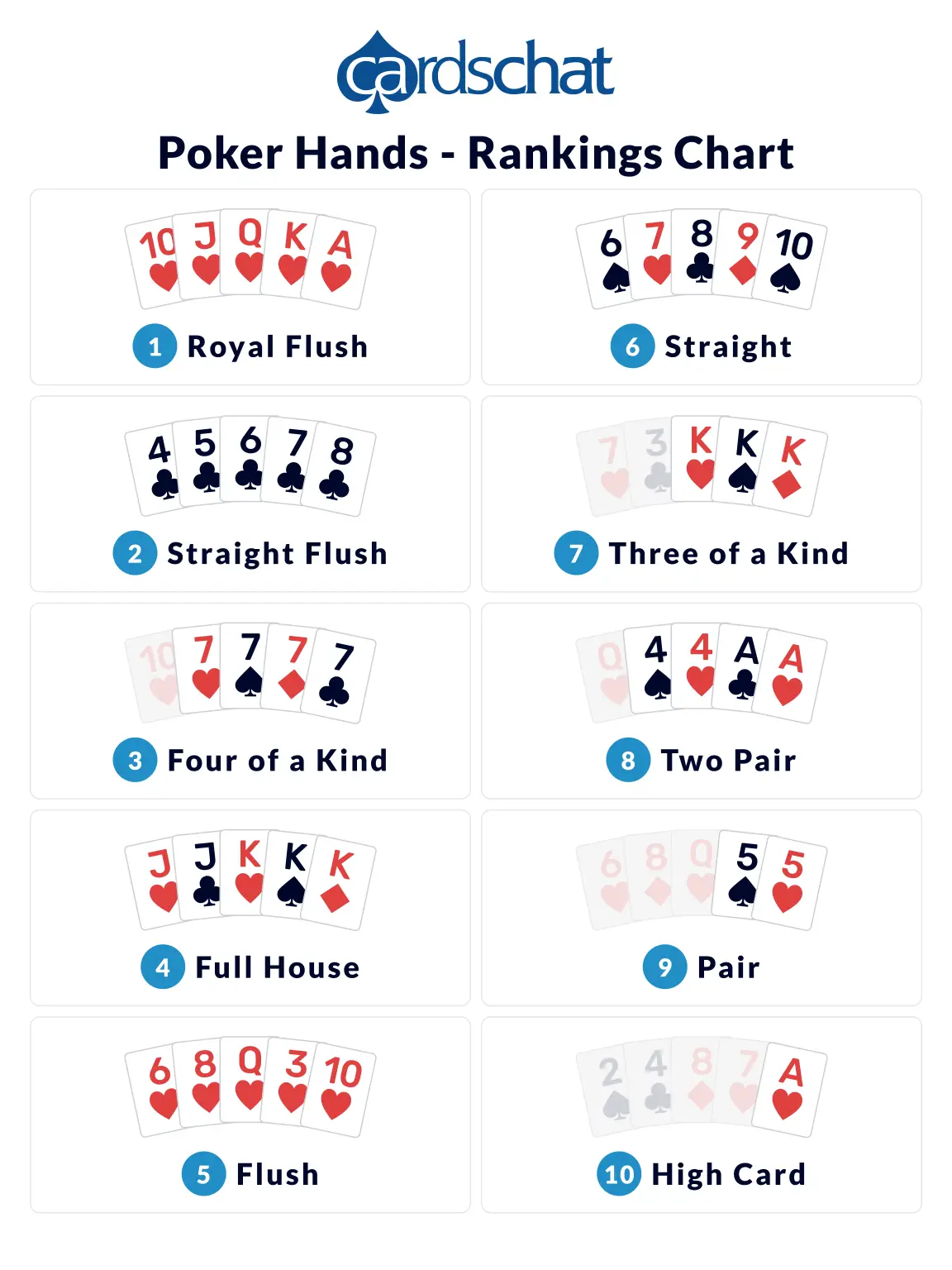
- High Card: When you have nothing else, the highest card in your hand wins. For example, an Ace high beats a King high.
- Pair: Two cards of the same rank (e.g., two Queens).
- Two Pair: Two different pairs (e.g., two Jacks and two Threes).
- Three of a Kind: Three cards of the same rank (e.g., three Sevens).
- Straight: Five cards in sequence (e.g., 5, 6, 7, 8, 9). Suit doesn't matter.
- Flush: Five cards of the same suit (e.g., five hearts). Rank doesn't matter.
- Full House: Three of a kind and a pair (e.g., three Kings and two Fours).
- Four of a Kind: Four cards of the same rank (e.g., four Tens).
- Straight Flush: Five cards in sequence, all of the same suit (e.g., 8, 9, 10, Jack, Queen of spades).
- Royal Flush: A 10, Jack, Queen, King, Ace, all of the same suit. This is the holy grail of poker hands!
Variations exist! For instance, some home games might use "wild cards" that can be anything you want them to be, significantly changing the odds and the potential for crazy hands. Other variations, like Omaha and Seven-Card Stud, have different dealing and betting structures, which impacts the value of certain hands.
Getting Started is Easy:
- Print a cheat sheet! There are plenty available online that visually show the hand rankings. Keep it handy while you play.
- Play online for free: Many websites and apps offer free poker games where you can practice without risking any real money.
- Start small: Don't jump into high-stakes games right away. Play with friends or family for fun with minimal bets.
- Observe: Watch more experienced players and see how they bet and react in different situations.
Learning the basics of poker hands is like learning the alphabet before writing a novel. It's the foundation upon which you'll build your poker skills and enjoyment. So grab a deck of cards, gather your friends, and get ready for an evening of strategic fun and maybe even a little bit of friendly competition. You might be surprised at how quickly you pick it up and how much you enjoy the challenge!