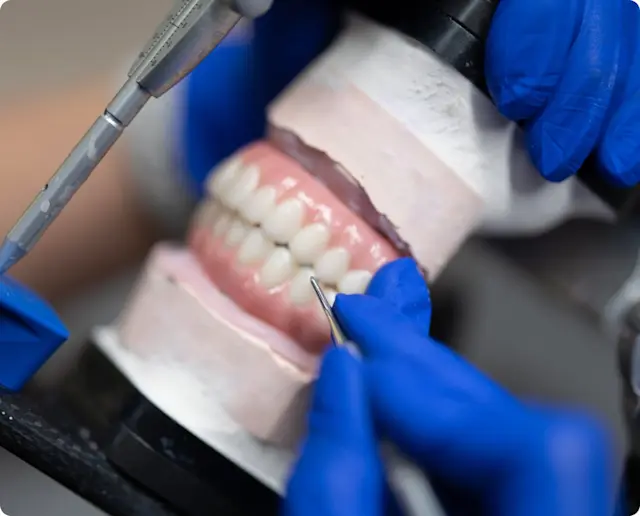
What Are Dental Implant Crowns Made Of

Okay, so picture this: I'm at a party, trying to impress a friend of a friend with my sparkling wit (or at least attempting to). I launch into a hilarious anecdote... and then, disaster strikes. A rogue olive pit, a poorly aimed bite, and suddenly I'm acutely aware of a slightly wobbly, very expensive, dental implant crown. Mortification city, population: me. But hey, it got me thinking! What exactly is this little lifesaver made of that’s holding my smile (and social life) together?
That leads us to the burning question: What are dental implant crowns made of? Buckle up, because we're about to dive into the fascinating world of dental materials – it’s way more interesting than it sounds, I promise! Think of it as uncovering the secrets of your own, potentially bionic, smile.
The Contenders: Materials Used for Dental Implant Crowns
There isn't just one single "magic" material used for every dental implant crown. Dentists have a few options, and they’ll choose the best one based on your specific needs, where the implant is located in your mouth, your bite, and, of course, aesthetics (nobody wants a crown that screams "fake!"). Let's explore the main players:
Must Read
Porcelain (All-Ceramic)
Porcelain, also known as all-ceramic, is a popular choice because it's super natural-looking. I mean, seriously, a skilled dentist can make these things practically indistinguishable from your real teeth. It's also biocompatible, meaning your gums are less likely to get irritated or inflamed. Which is a huge plus, trust me.
But here's the thing: while beautiful, porcelain isn't always the strongest option. It might not be the best choice for back teeth that endure a lot of chewing force. Though, modern porcelain is getting more and more durable, so always ask your dentist about the latest advances!
Porcelain-Fused-to-Metal (PFM)
PFM crowns are like the hybrid SUVs of the dental world – they offer a bit of both worlds. They have a metal base (usually a strong alloy) covered with a layer of porcelain. This gives them strength and durability (thanks, metal!) while still offering a relatively natural appearance (thanks, porcelain!). Think of it as beauty and brawn working together!
The downside? The metal base can sometimes create a dark line near the gumline, which isn’t ideal from a purely aesthetic point of view. Also, the porcelain layer can sometimes chip or fracture. Although this is less common now as dental materials have significantly improved.

Zirconia
Zirconia is a super strong and biocompatible ceramic material. It's known for its incredible durability, making it a great option for those back teeth that take a beating. Plus, it’s getting increasingly good at mimicking the natural translucency of real teeth (though, admittedly, some zirconia crowns can still look a tad more opaque than all-porcelain).
Consider it the tank of dental materials. Seriously, you could probably chew through a rock garden with a zirconia crown (but please don't... for your sake and your dentist's).
Gold
Okay, gold crowns might not be the most fashionable choice these days (unless you're going for a certain "look"). But believe it or not, gold alloys are incredibly biocompatible and long-lasting. They're also gentle on opposing teeth because they wear down at a similar rate to natural enamel. Think of them as the old-school, reliable option. You know, like that vintage car that just keeps running.
The Takeaway: It’s All About Finding the Right Fit
So, what's the best material for your dental implant crown? Well, that depends! Your dentist will consider a variety of factors before recommending the perfect material for you. This includes the location of the implant, your bite, your aesthetic preferences, and your budget. Think of it as a collaborative process – you and your dentist working together to create a smile that's both functional and beautiful.
Don’t be afraid to ask your dentist lots of questions about the different materials and their pros and cons. After all, it's your mouth (and your money!), so you deserve to be informed. And who knows, maybe next time you're at a party, you'll be the one impressing everyone with your vast knowledge of dental implant crown materials!