What A Tangled Web We Weave Full Poem

Ever hear someone say, "Oh, what a tangled web we weave"? It's a common phrase, often used when things get complicated after a little white lie or a hasty decision. But where does it come from? Turns out, it's from a poem, and understanding the whole thing is not only fun, but also surprisingly useful for understanding the consequences of our actions. Let's unravel this literary thread together!
So, who benefits from knowing the full poem "Marmion" by Sir Walter Scott and, more specifically, the famous line? Well, pretty much everyone! For beginners in literature, it's a fantastic introduction to 19th-century writing and a digestible example of a narrative poem. For families, discussing the poem’s meaning can spark conversations about honesty, responsibility, and the importance of thinking before you act. And for hobbyists like writers or actors, knowing the context of this famous quote adds depth to their understanding and allows them to use it more effectively in their own work.
The full quote is: "Oh, what a tangled web we weave, / When first we practise to deceive!" The poem "Marmion" tells a complex story of betrayal and intrigue, and this particular line appears when the characters are starting to realize the consequences of their deceitful actions. The "tangled web" is a metaphor for the complications and difficulties that arise from lying and dishonesty. One little lie leads to another, creating a messy and confusing situation that becomes increasingly difficult to escape.
Must Read
Think of it this way: imagine you tell a friend you can't make it to their birthday party because you have a family emergency. But really, you just wanted to stay home and binge-watch your favorite show. Now, what happens when that friend sees you at the grocery store later that evening? You have to come up with another lie to explain why you're there. And then, another. Before you know it, you're caught in a tangled web of your own making! That’s the essence of Scott's message.
Getting started with appreciating the poem is simple. First, read it! You can easily find the full text of "Marmion" online. Don't feel pressured to understand every single line; focus on the overall story and the context of the famous quote. Second, think about personal examples. Can you recall a time when a small lie led to bigger problems? Reflecting on your own experiences will help you connect with the poem's message. Third, discuss it with others. Talk about the poem with your friends or family and see what insights they have. You might be surprised at the different interpretations you uncover.
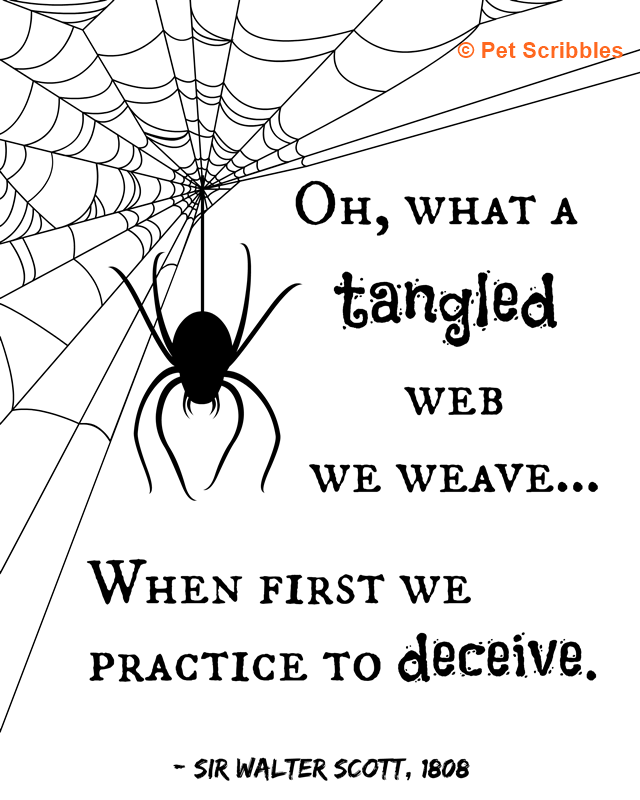
Variations of the phrase "tangled web" are frequently used in modern language. You might hear someone say, "He's created a real tangled web for himself with all those conflicting statements," or "They got caught in a tangled web of red tape." These variations demonstrate the enduring relevance of Scott's original image. Even without knowing the full poem, people understand the inherent warning about the dangers of deception.
Exploring "What a tangled web we weave" is more than just a literary exercise. It's a valuable lesson in honesty and the importance of considering the consequences of our actions. So, embrace the poem, reflect on its message, and maybe, just maybe, you'll be a little more careful about spinning those webs in the first place! The true enjoyment lies in understanding the powerful simplicity behind such a well-known and often quoted phrase.